
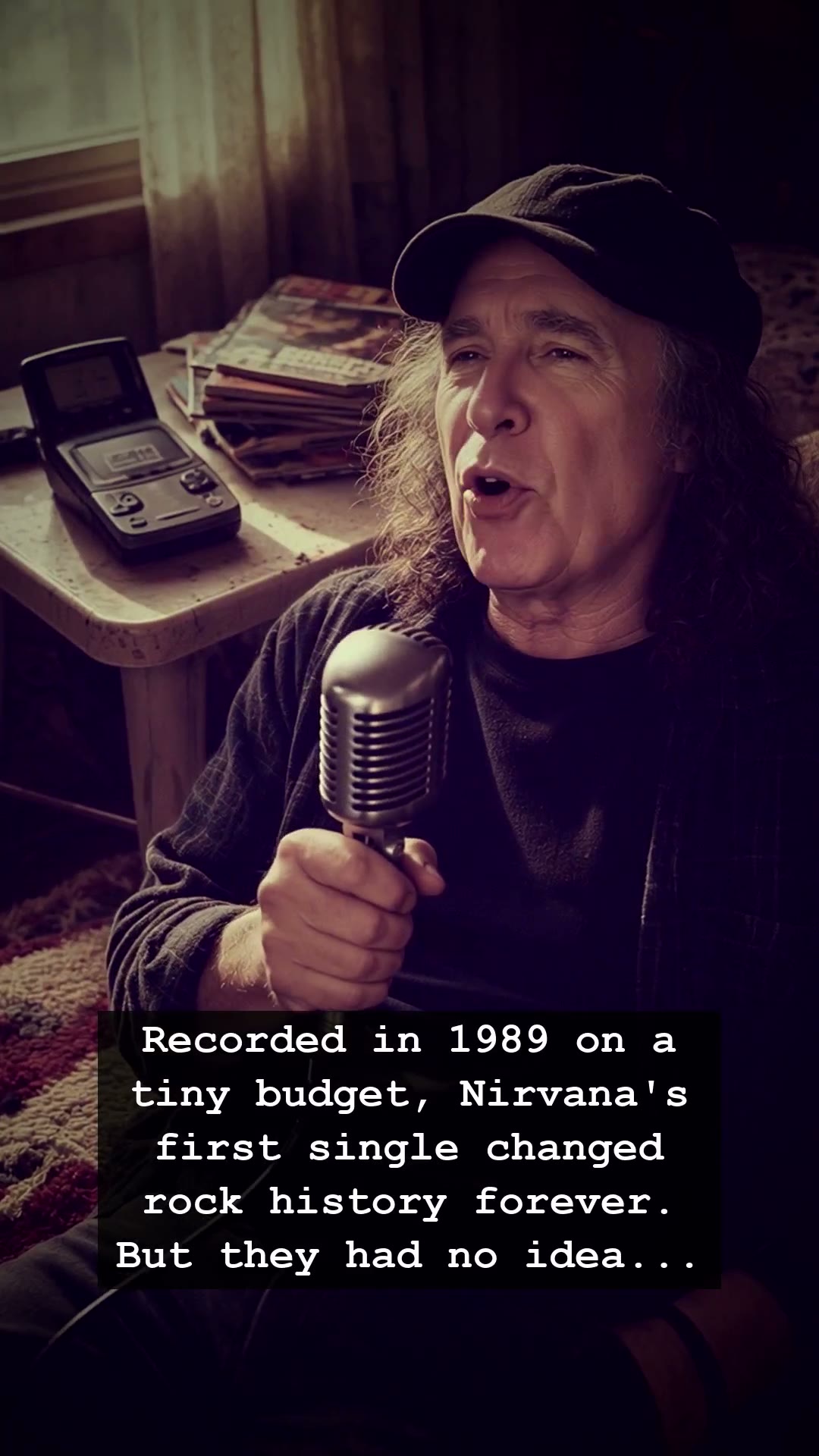
In 1989, a small, dimly lit studio in Washington state held the seeds of a cultural earthquake that nobody saw coming. Nirvana, a band then known to only a handful of local fans, stepped in to record their debut single, Love Buzz. With a meager budget of just six hundred dollars, they were merely trying to capture their raw, abrasive energy on tape for a tiny label called Sub Pop. The members of the band had no inkling that this humble session was the prologue to a total revolution. At the time, the airwaves were still crowded with the polished synthesizers of the eighties, and the world was utterly unprepared for the sonic hurricane that was about to hit.
To understand the magnitude of this moment, one must remember the landscape of the late eighties. MTV was dominated by hair metal and glossy pop stars, while the concept of the grunge movement existed only in the damp basements of Seattle. Kurt Cobain, Krist Novoselic, and their rotating drummers were not trying to become global icons; they were trying to survive the monotony of small-town life. That six-hundred-dollar investment produced a sound that was muddy, distorted, and dangerously honest. It was the antithesis of everything the music industry stood for at the time, yet it contained a magnetic, brooding intensity that would eventually dismantle the status quo of rock and roll.
When you listen to those early recordings today, you can hear the flickering ghost of a pre-fame Nirvana. There is a palpable tension in the tracks, a sense of creative desperation that defines the grunge era. While they struggled to keep the band together and constantly faced the pressures of poverty and creative instability, the music itself remained uncompromising. That early period of the band’s history is perhaps the most romantic and tragic, capturing three young men standing on the precipice of a fame they didn’t want and couldn’t escape. They were just kids with cheap instruments, yet their influence would soon make the Walkman the primary vessel for a generation’s angst.
What makes the Nirvana story so enduring is the stark contrast between their modest beginnings and the gargantuan cultural impact that followed. The journey from a six-hundred-dollar demo to global superstardom was a turbulent, often dark ride that ended far too soon. Yet, that initial spark in 1989 remains the purest distillation of their art. It serves as a reminder that history is often made in the quietest, most overlooked corners, far away from the glitz of the charts or the expectations of corporate labels.
Decades later, the legacy of Nirvana continues to haunt and inspire. We still look back at that grainy era with a sense of melancholic nostalgia, mourning the loss of a voice that articulated the feelings of an entire generation. Their story remains a testament to the power of authenticity in a world that often demands conformity. Even now, whenever that distorted opening riff echoes through the speakers, we are transported back to that small, rainy Seattle studio where everything began. It is a timeless reminder that sometimes, the smallest budgets yield the biggest revolutions.