
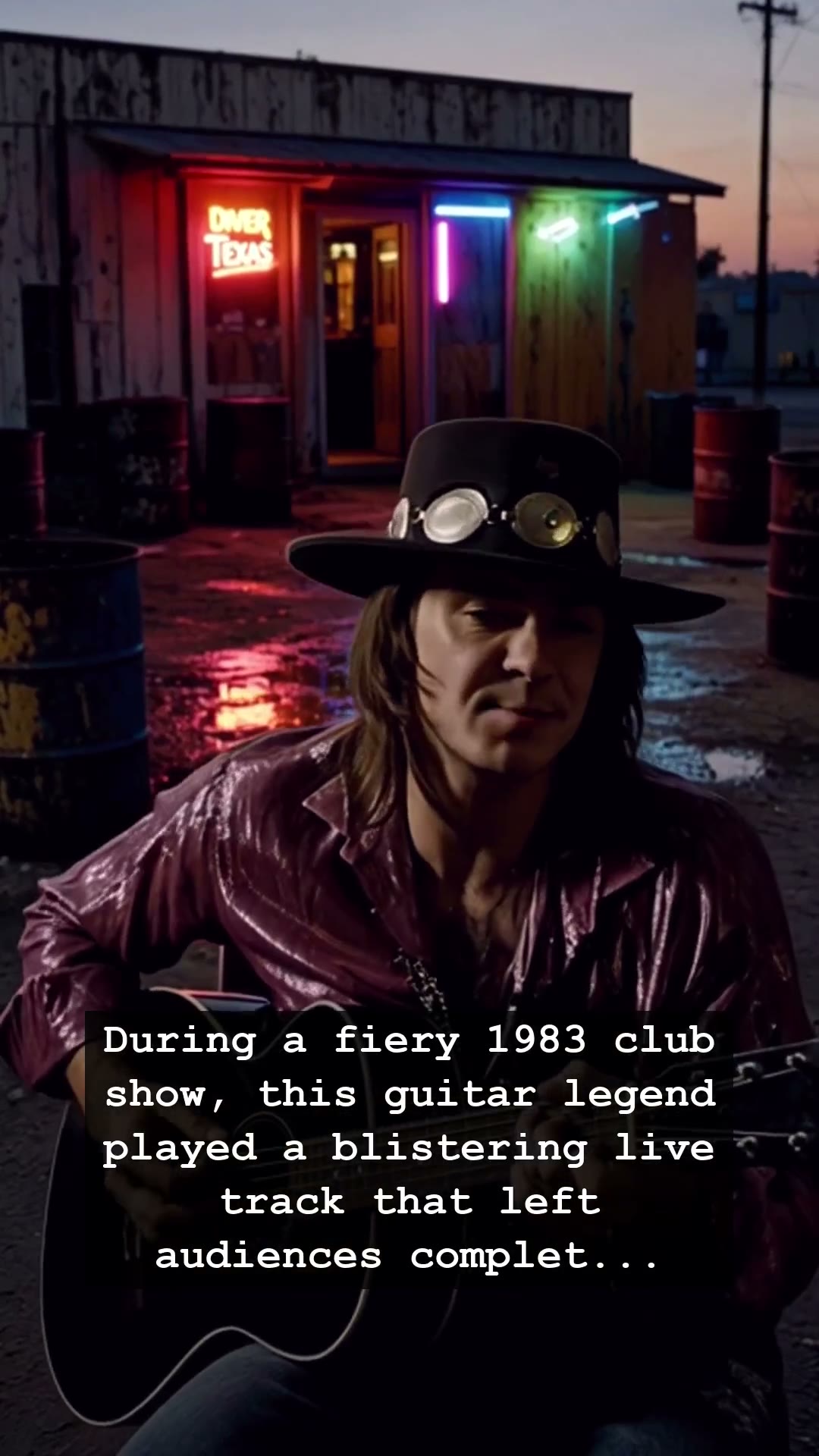
The air in the club was thick with the scent of stale beer and desperation, a familiar perfume for the blues scene in 1983. Amidst the hazy neon lights and the rhythmic hum of amplifiers, a man with a weathered hat and a battered Stratocaster stepped into the spotlight. Stevie Ray Vaughan did not just play the guitar; he waged a war against silence. On that particular night, the atmosphere shifted as he unleashed a blistering, high-octane performance that felt less like a standard blues set and more like an exorcism. Those who were lucky enough to witness it knew they were seeing something that completely terrified the blues purists of the era.
At the time, the musical landscape was dominated by the slick, synthetic pulses of the burgeoning MTV era. While the mainstream was busy embracing neon synthesizers and pop-rock gloss, Stevie Ray Vaughan stood as a defiant, rugged anomaly. He was channeling the ghosts of Albert King and Jimi Hendrix, but he was doing it with a ferocity that felt dangerous. His fingers moved with a frantic, supernatural speed, turning the guitar into a conduit for raw, unvarnished pain and ecstasy. For the traditionalists who believed the blues should remain tucked away in quiet, dusty corners, Stevie Ray Vaughan was a hurricane crashing through their glass house.
This wasn’t just technical proficiency; it was a visceral manifestation of his own demons. The story of Stevie Ray Vaughan is one written in the shadows of substance abuse and the crushing pressure of sudden fame. Before he became a stadium legend, he was a club warrior, sweating through his shirts in cramped rooms where the music was the only thing keeping reality at bay. His 1983 breakthrough, Texas Flood, served as a lightning bolt that forced the world to acknowledge that the blues was not a relic of the past, but a living, breathing, and occasionally violent force.
The drama behind the music was palpable. Stevie Ray Vaughan was a man constantly walking a tightrope, balancing a profound reverence for his influences with an irrepressible need to reinvent the genre. He played like he was running out of time, every lick and every bend of a string feeling like a final goodbye or a desperate plea. It was this authentic, turbulent energy that made his live shows legendary. When he hit the stage, the crowd didn’t just listen; they stood in a state of suspended animation, spellbound by the sheer intensity of a man who seemed to be channeling something beyond this world.
Looking back, his impact on the eighties is profound. He bridged the gap between the gritty, authentic soul of the sixties and the polished arena rock of his contemporaries. His legacy is etched into the very DNA of guitar culture. Decades later, we still reach for those records, searching for that spark of magic that only he could conjure. Stevie Ray Vaughan remains a reminder that music, at its best, should be a little terrifying, a little loud, and entirely true to the heart of the player.