
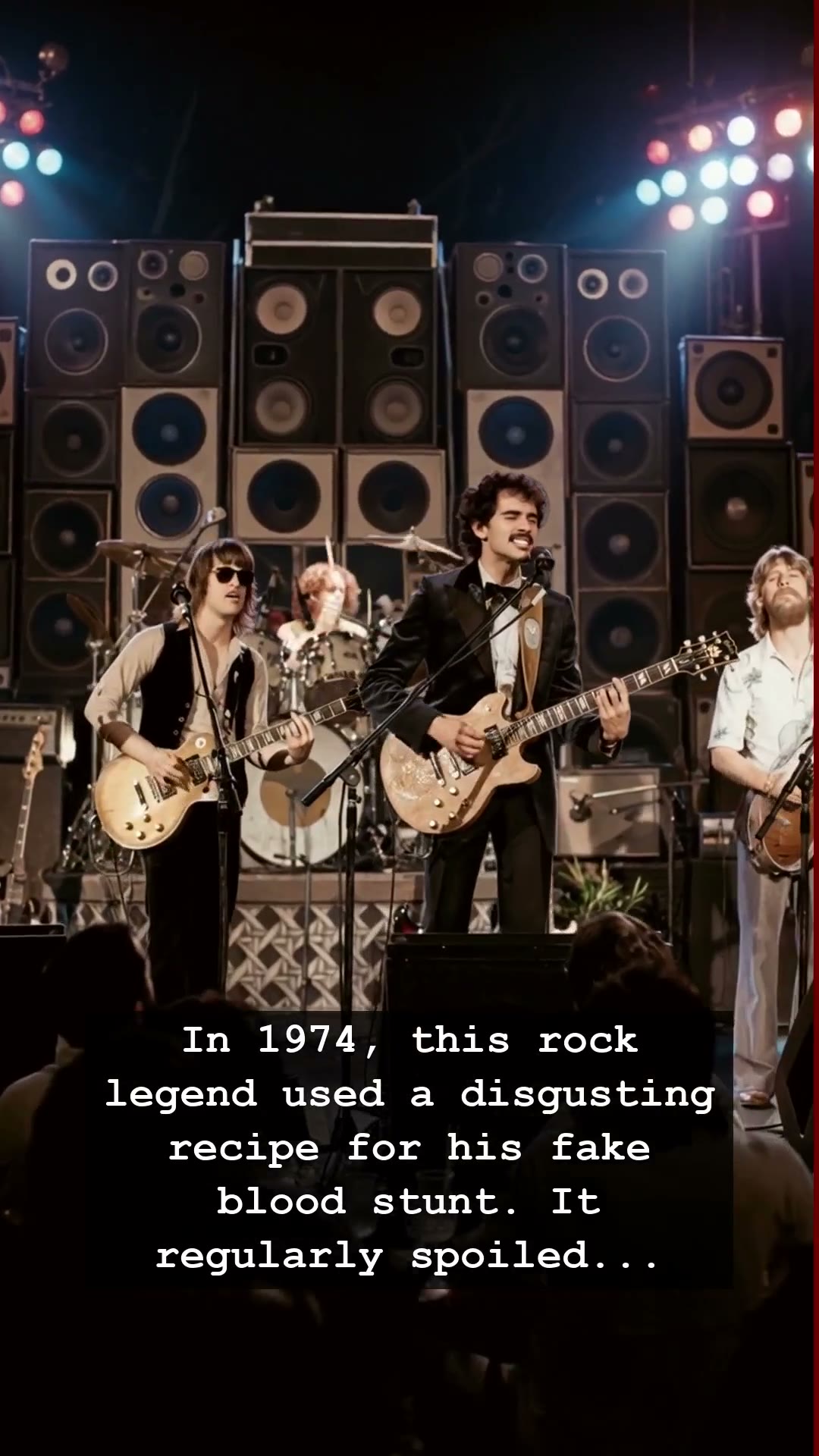
The year was 1974, and the world of American rock was undergoing a seismic shift. While the polished melodies of the radio waves still comforted the masses, a new beast was rising from the underground clubs. Gene Simmons, the tongue-wagging, fire-breathing demon of KISS, was determined to turn every concert into a grotesque spectacle that would haunt the memories of his audience forever. But behind the legendary makeup and the platform boots, a stomach-churning secret was brewing—a literal recipe for disaster that nearly brought the rock icon to his knees night after night.
To craft the perfect blood-spitting effect, Gene Simmons relied on a concoction that would be considered a health hazard by any modern standard. It was a vile mixture of raw eggs, red food dye, and various other liquids, designed to create a thick, viscous consistency that looked terrifying under the blinding heat of the stage lights. As Gene Simmons stood before thousands of screaming fans, his demonic persona in full swing, he would release a stream of this artificial gore. However, he had failed to account for the chemistry of the stage environment. The intense heat of the spotlights acted like an oven, causing the organic mixture to spoil rapidly inside his mouth.
Night after night, the rotting, fermented brew would make Gene Simmons violently ill. The stench alone was enough to induce nausea, yet the man behind the mask persisted. He viewed the sickness as a necessary price for the mythos he was building. This was an era before the sanitization of rock, an era where the Jukebox culture was dying and the visceral energy of the arena rock explosion was taking over. For Gene Simmons, being a true performer meant suffering for the sake of the spectacle, even if that meant dealing with severe stomach distress while playing iconic bass lines.
This grotesque stunt was more than just a trick; it was a testament to the sheer audacity of the seventies. It was a time when bands like KISS were pushing boundaries, challenging the status quo, and occasionally crossing the line into the truly absurd. The blood-spitting incident highlights the dark, often hidden cost of fame during this period. The pressure to maintain a larger-than-life image meant that legends like Gene Simmons often pushed their bodies to the breaking point, sacrificing comfort—and occasionally health—to keep the audience hooked on the drama of the performance.
Looking back, the story of this toxic, spoiled blood mixture serves as a fascinating lens into the wild creativity of the era. It reminds us that behind every iconic moment in rock history, there was a human being facing bizarre challenges and high stakes. Gene Simmons managed to turn his suffering into a lasting legacy that forever changed how bands approached live entertainment. Even decades later, the tale remains one of the most stomach-turning yet intriguing pieces of rock ‘n’ roll lore, proving that in the world of legends, the truth is often much stranger—and much more nauseating—than the fiction.