
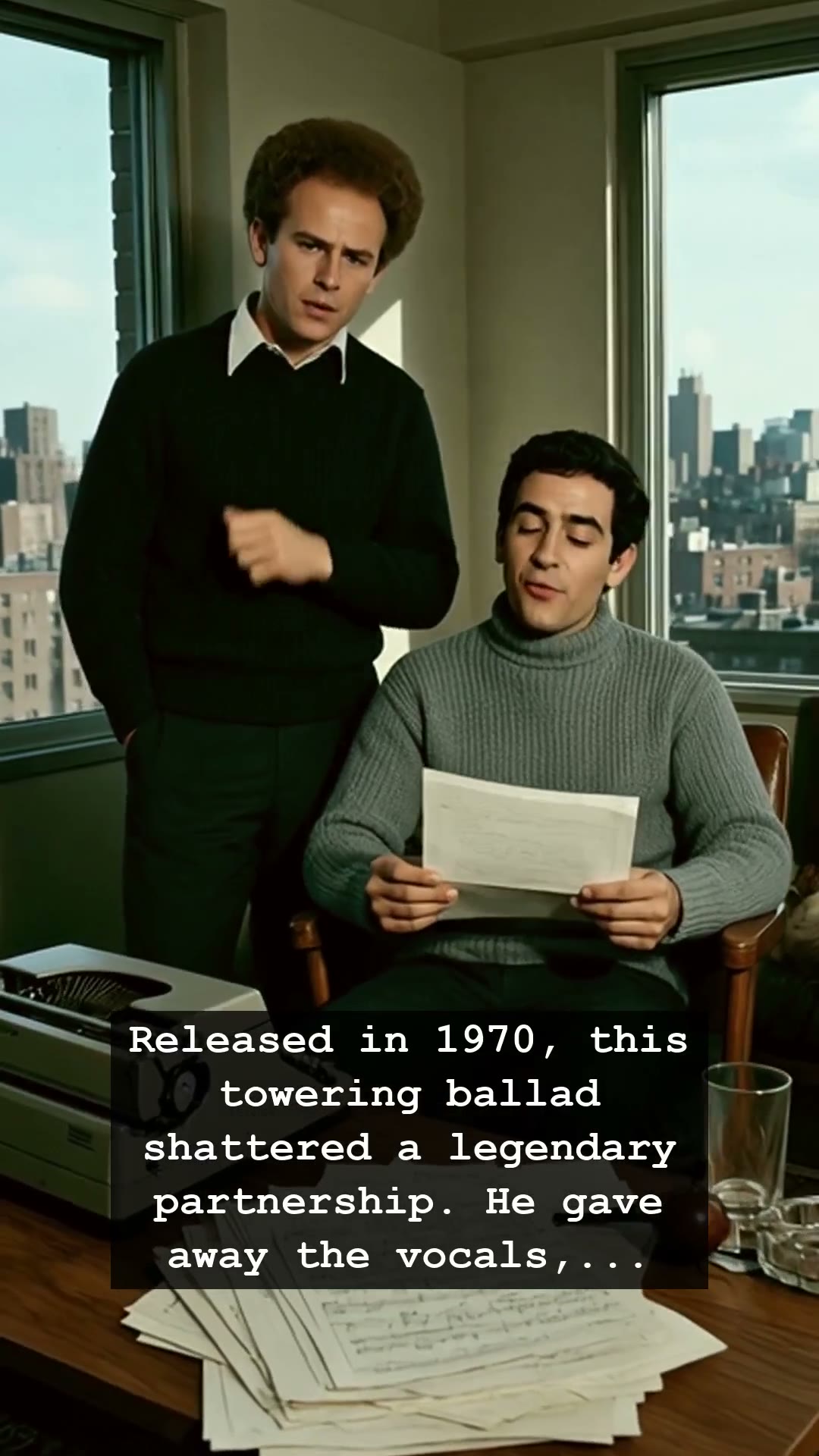
The year was 1970, and the world was changing. As the decade turned, the counterculture movement of the sixties began to dissolve, leaving behind a sonic landscape that shifted from the raw energy of Woodstock to the polished introspection of FM radio. Amidst this transition, Simon and Garfunkel released Bridge Over Troubled Water, an anthem that would crown the charts and solidify its place in history. Yet, beneath the lush, orchestral arrangement and the soaring harmonies that defined a generation, a quiet, devastating collapse was occurring. It was a masterpiece that demanded total surrender, and for Paul Simon, it would become the ultimate act of professional generosity that fueled his most private, enduring regret.
At the center of this tension was the song itself, a towering ballad that Paul Simon wrote but deliberately handed over to Art Garfunkel to sing. Simon recognized that Art’s ethereal, crystalline voice could carry the weight of the song better than his own. It was a choice rooted in artistic integrity, yet it became the catalyst for an irreparable rift. While the public fell in love with Art Garfunkel’s haunting delivery, Paul Simon found himself relegated to the background of his own creation. As the track climbed the charts and resonated in every jukebox and living room across America, the balance of their legendary partnership began to crumble under the weight of ego, creative frustration, and the crushing pressure of fame.
Imagine the scene in the studio. The air was thick with the scent of tobacco and the high-tension atmosphere of professional recording, the analog tape reels spinning as they captured a performance that felt like a goodbye. The tragedy of Simon and Garfunkel was never a lack of talent, but a collision of two distinct worlds. Paul was the master architect, the songwriter whose pen carved out the folk-rock identity of the era, while Art was the golden voice, the face that the world could not help but adore. By giving Art the spotlight on this definitive track, Paul inadvertently handed away the final thread holding their professional marriage together.
The fallout was swift and bitter. The glory that the song reaped—winning multiple Grammys and selling millions of copies—did nothing to heal the fractured trust between the two men. Their friendship became a ghost of its former self, transformed into a series of polite interviews and strained reunions. The song that offered solace to millions of listeners worldwide served as a stinging reminder to its creator of how easily a bond can be severed when art and vanity collide. It is the classic story of the music industry’s dark side, where the songs remain perfect while the people behind them bear the scars of the process.
Decades later, Bridge Over Troubled Water still echoes with a haunting power that transcends time. It captures the loneliness of the late seventies, a precursor to the polished sheen of the MTV era that would soon follow. Whenever those opening piano chords play, we are reminded of the price of excellence. Simon and Garfunkel left us with a legacy of beautiful music, but their story serves as a cautionary tale about the fragile nature of collaboration. It forces us to ask: how many masterpieces are built upon the ashes of lost friendships? As we look back at their catalog, we aren’t just listening to melodies; we are listening to the sound of a dream reaching its peak, only to shatter the moment it arrived.