
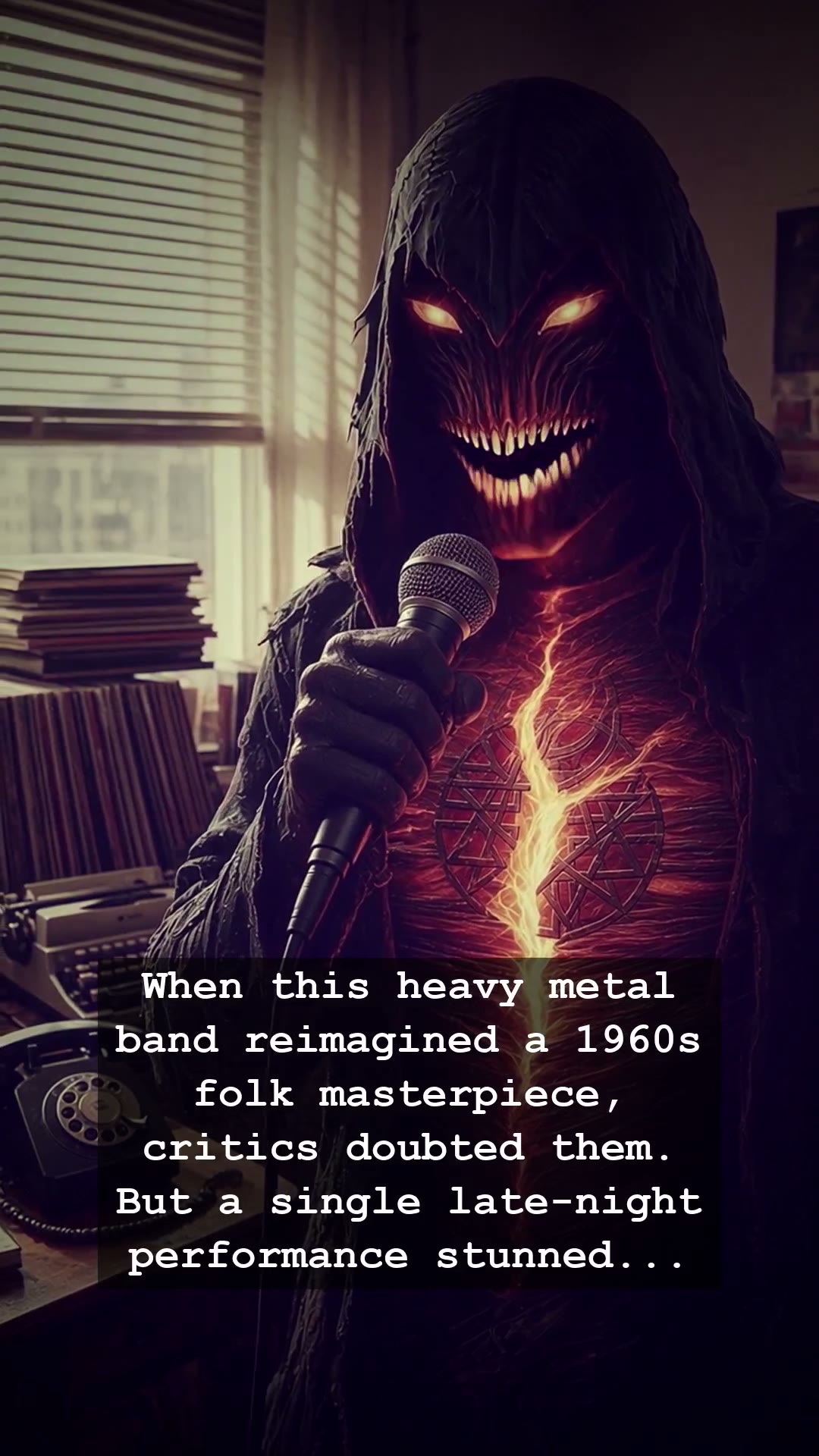
The air in the studio was thick with skepticism. When the powerhouse heavy metal band Disturbed announced they were taking on Simon & Garfunkel’s 1964 folk masterpiece, The Sound of Silence, the music world collectively rolled its eyes. How could a group known for raw aggression and crushing guitar riffs capture the delicate, whispered melancholy of a song that defined the introspective folk era? It felt like a sacrilege, a collision of two worlds that had no business overlapping. Fans of the golden age of American folk feared the worst, expecting the subtle, poetic atmosphere of the original to be buried under layers of distortion and unnecessary theatrics.
But as the recording sessions began, something transformative happened. Stripping away the typical metal machinery, lead singer David Draiman leaned into a haunting, operatic vulnerability that few knew he possessed. The track wasn’t just a cover; it was a complete sonic resurrection. As the song grew, the tension built with a cinematic weight that felt both ancient and eerily contemporary. It was as if the ghosts of the 1960s were being channeled through a modern lens, echoing the cultural anxieties that have always hummed beneath the surface of the American experience, much like the changing tides of the MTV generation or the late-night introspection of a lonely Walkman listener.
The real turning point, however, occurred after a raw, late-night television performance that left the audience in stunned silence. The intensity was palpable, radiating a level of emotional honesty that silenced every critic in the room. Even Paul Simon, the legendary songwriter who famously guards the integrity of his work, was moved. In a moment that would go down in music history, Simon reached out personally to the band. He sent a sincere, appreciative email, praising their powerful interpretation and acknowledging the unexpected depth they had unearthed in his classic lyrics. It was the ultimate stamp of approval, proving that true artistry transcends genre barriers.
This unexpected success highlighted the enduring power of music to bridge the gap between the baby boomers’ folk revival and the modern metal era. Disturbed didn’t just play the notes; they honored the dark, brooding soul of the lyrics, bringing them into a new century where silence still feels just as unsettling as it did in the sixties. Their version reminded us that songs are living, breathing entities, capable of shifting their skin while retaining their core, resonant truths.
Looking back at the trajectory of American music, from the jukebox hits of the fifties to the grunge explosions of the nineties, it is clear that only a few tracks have this kind of haunting longevity. Disturbed managed to tap into a universal frequency, turning a folk classic into a modern metal anthem that resonates with anyone who has ever felt the weight of a quiet, troubled world. It stands today as a testament to the fact that when you treat the past with both boldness and reverence, you create something truly timeless. Next time you play your old vinyl records, consider how much of that sound is still waiting to be rediscovered by a new generation of musicians.