
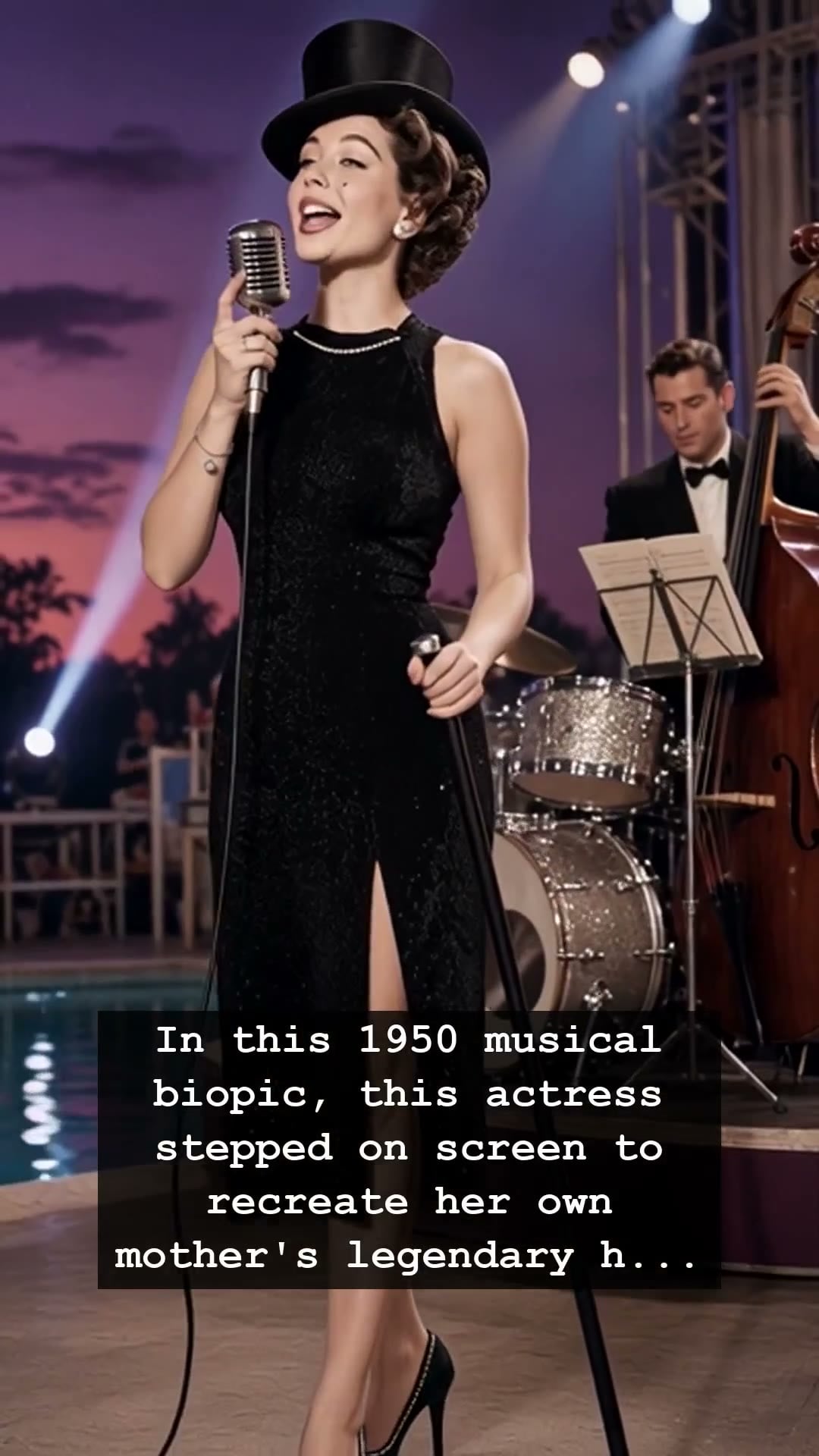
In the golden, haze-filled air of a 1950 MGM soundstage, a moment of haunting beauty unfolded that would bridge two disparate eras of American entertainment. Gloria DeHaven, a starlet whose grace seemed plucked from a bygone century, stepped into the bright, artificial glare of the film lights to recreate a legendary musical number. This was not merely an act of professional mimicry; it was a visceral, generational tribute. Gloria DeHaven was stepping into the shoes of her own mother, Flora Parker DeHaven, resurrecting a piece of vaudeville history that had long been buried under the shifting sands of mid-century pop culture. As the camera rolled, the spirit of the old Vaudeville circuit flickered back to life, reminding everyone on set that the ghosts of show business never truly leave the spotlight.
The atmosphere of the 1950s was a fascinating paradox. While the jukeboxes were beginning to hum with the early, rebellious tremors of rock and roll, Hollywood was still deeply enchanted by the polished, opulent remnants of the vaudeville tradition. Gloria DeHaven understood this duality better than most. Her career was a delicate dance between the fading elegance of the old guard and the rapidly evolving demands of the silver screen. When she chose to channel her mother’s iconic performance, she wasn’t just checking a box on a film script; she was curating a legacy. The connection was electric, a rare instance where the artifice of cinema intersected with the raw, beating heart of family memory.
Imagine the scene: the smell of heavy stage makeup, the frantic energy of the grips and lighting technicians, and the silence that fell when Gloria DeHaven began to move. Those who witnessed it described it as a breathtaking transformation. It was a time before the digital age, before the Walkman would eventually isolate us in our own private soundtracks, and long before the frantic, neon-soaked chaos of the MTV generation. In that moment, the studio felt like a temple to the past. It serves as a reminder that every hit song or cinematic dance number carries with it a weight of history that we rarely see behind the glitz and glamour of the finished product.
Yet, the life of Gloria DeHaven was not without its shadows. The pressure of living up to such a storied theatrical lineage was a common burden for the stars of that era, many of whom faced the suffocating expectations of the studio system. Beneath the polished veneer of the MGM musical lay the silent struggles—the exhaustion of endless rehearsals, the psychological toll of fame, and the constant fear of obsolescence. Gloria DeHaven navigated these choppy waters with a poise that defined her career, ensuring that her mother’s influence remained a guiding light rather than a stifling weight.
Today, we look back at such moments as relics of a more romanticized, yet demanding, time in entertainment. The legacy of Gloria DeHaven remains a poignant study in artistic preservation. In an age where content is consumed and discarded in seconds, the deliberate effort to honor the past feels like a radical act of love. She didn’t just play a role; she kept the heartbeat of a mother and the soul of an entire era alive for one more generation to witness. As we listen to the scratchy recordings of those vaudeville classics, we are reminded that the past is never truly dead as long as someone is brave enough to dance to its rhythm again.