
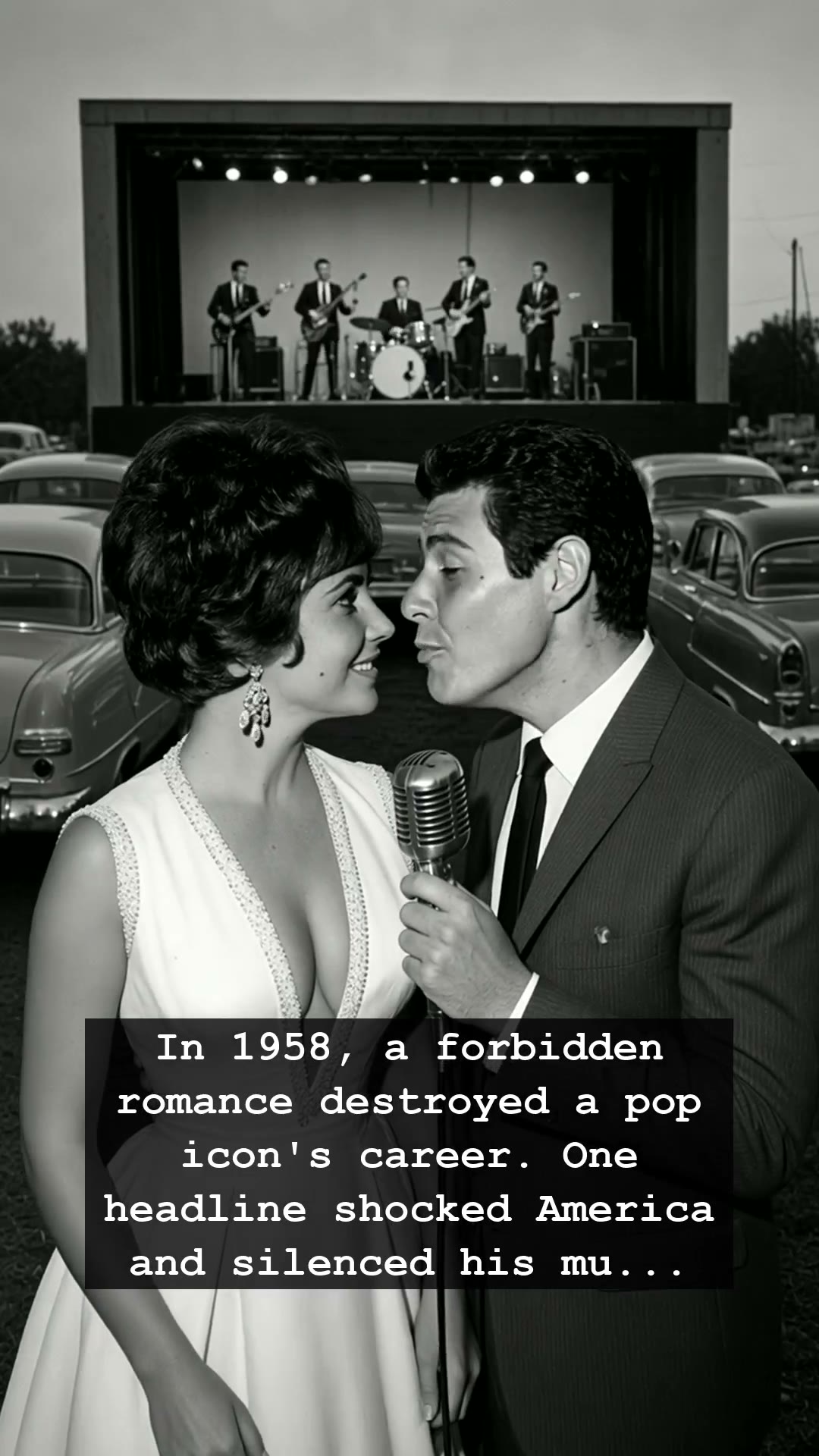
In the golden age of 1950s Americana, Eddie Fisher was the undisputed prince of the airwaves. With a voice that melted hearts and a polished image that felt like it belonged in every suburban living room, he was a jukebox staple. He was the man every mother wanted as a son-in-law and every teenager wanted to swoon over. But in 1958, a single headline ripped through the fabric of his squeaky-clean reputation, turning America’s sweetheart into a national pariah overnight. The forbidden romance that bloomed between Eddie Fisher and the world’s most tragic beauty, Elizabeth Taylor, didn’t just end a marriage—it effectively silenced one of the decade’s greatest voices.
At the time, Eddie Fisher was married to the bubbly actress Debbie Reynolds, and they were widely considered Hollywood’s golden couple. Meanwhile, Elizabeth Taylor was grieving the sudden death of her husband, Mike Todd, who had been Fisher’s best friend. In the flickering light of the black-and-white television era, the public watched, horrified and captivated, as Fisher transitioned from being the comforting crooner of hits like Oh! My Pa-Pa to being painted as the ultimate home-wrecker. The tabloids were relentless, fueled by a mid-century sense of morality that demanded perfection from its idols. The fallout was instantaneous and brutal.
Radio stations that once clamored for his latest tracks abruptly pulled them from rotation. The record labels, sensing the shifting tide of public opinion, distanced themselves from his professional endeavors. It was as if the very airwaves that had carried his fame suddenly conspired to erase his existence. He had dared to shatter the illusion of domestic bliss, and in 1950s America, there was no forgiveness for such a transgression. The scandal surrounding Eddie Fisher and Elizabeth Taylor became the original blueprint for modern celebrity obsession, proving that fame is a double-edged sword capable of cutting deep.
Elizabeth Taylor, with her piercing violet eyes and magnetic screen presence, became the lightning rod for all of the public’s misplaced anger. While she continued to conquer Hollywood, Eddie Fisher found himself relegated to the shadows of nightclub circuits, his chart-topping career permanently derailed. It was a stark reminder of the fragile nature of fame before the era of digital redemption. Behind the glitz and the glamour of the studio system lay a reality of isolation, where one wrong step in the public eye could lead to total professional exile.
Looking back from our modern perspective, the drama of Eddie Fisher and Elizabeth Taylor serves as a haunting window into a bygone era of cultural conformity. It captures the tension between the pristine image of the post-war years and the turbulent reality of the humans behind the microphones. While his records may no longer occupy the top of the charts, the echoes of his story remain etched in the annals of pop culture history. It stands as a poignant reminder that even the brightest stars can lose their luster when caught in the unforgiving glare of the public spotlight.