
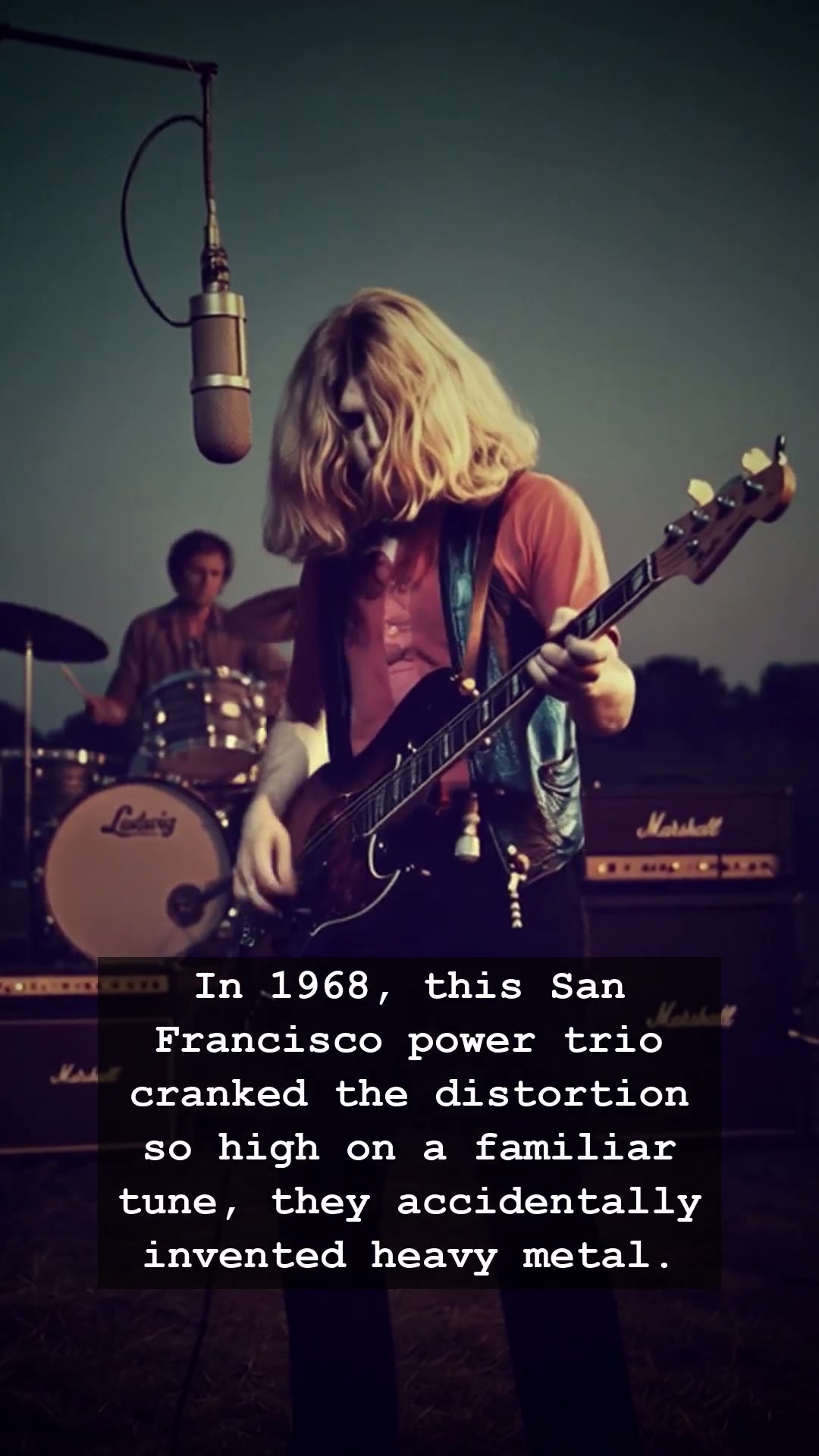
It was 1968, a year defined by the peace-loving ethos of the Summer of Love, yet somewhere in the damp, crowded basement clubs of San Francisco, a sound was gestating that would shatter that fragile tranquility forever. While the radio played the folk-rock harmonies of the era, a power trio known as Blue Cheer was busy plugging into amplifiers turned up until the vacuum tubes screamed for mercy. They were not aiming for peace; they were aiming for a physical assault on the senses. By taking Eddie Cochran’s rockabilly classic Summertime Blues and drowning it in a wall of ear-bleeding distortion, Blue Cheer didn’t just cover a song—they accidentally birthed the monster that would become heavy metal.
To understand the gravity of Blue Cheer, one must recall the sonic landscape of the late sixties. Most bands were experimenting with psychedelic sitars or sophisticated jazz-fusion arrangements. Then there was this trio: Dickie Peterson, Leigh Stephens, and Paul Whaley. They were the sonic equivalent of a wrecking ball. When they recorded their debut album, Vincebus Eruptum, they managed to capture a raw, unrefined aggression that had never been committed to tape before. It was loud, it was clumsy, and it was undeniably dangerous. They were the antithesis of the polished, studio-perfected sounds that were beginning to dominate the charts, and for the youth of that era, it felt like an authentic explosion of repressed frustration.
There was a dark, gritty drama to the rise of Blue Cheer that mirrored the shifting tides of the decade. As the dream of the sixties began to fray at the edges, replaced by the cynicism of the seventies, this band stood as a testament to the darker impulses of rock and roll. They were notorious for their excessive volume, often causing audiences to flee the room, clutching their ears in genuine distress. It was the sound of the post-Woodstock hangover—a sonic wall that signaled the end of naive idealism and the dawn of a heavier, more nihilistic chapter in American music history.
Looking back, it is easy to view Blue Cheer as the bridge between the loose, acid-drenched jams of the psychedelic era and the thunderous, high-gain future of bands like Black Sabbath and Motorhead. Their influence wasn’t just in the volume; it was in the attitude. They proved that music didn’t have to be technically perfect to be transformative. In their world, the feedback was a member of the band, and the chaos was the point. For those who were there, standing in front of those wall-to-wall stacks of speakers, the memory is likely burned into their eardrums forever.
Decades later, the legacy of Blue Cheer remains a fascinating, if somewhat underrated, corner of rock history. They were the pioneers who turned the distortion knob past the point of return, clearing the path for every heavy act that followed in their wake. Their story serves as a reminder that the most significant cultural shifts often come from the fringes, fueled by nothing more than an insatiable desire to be louder, heavier, and more authentic than everyone else. If you ever find yourself craving that original, earth-shaking rumble, go back and spin their records; the revolution is still ringing out.