
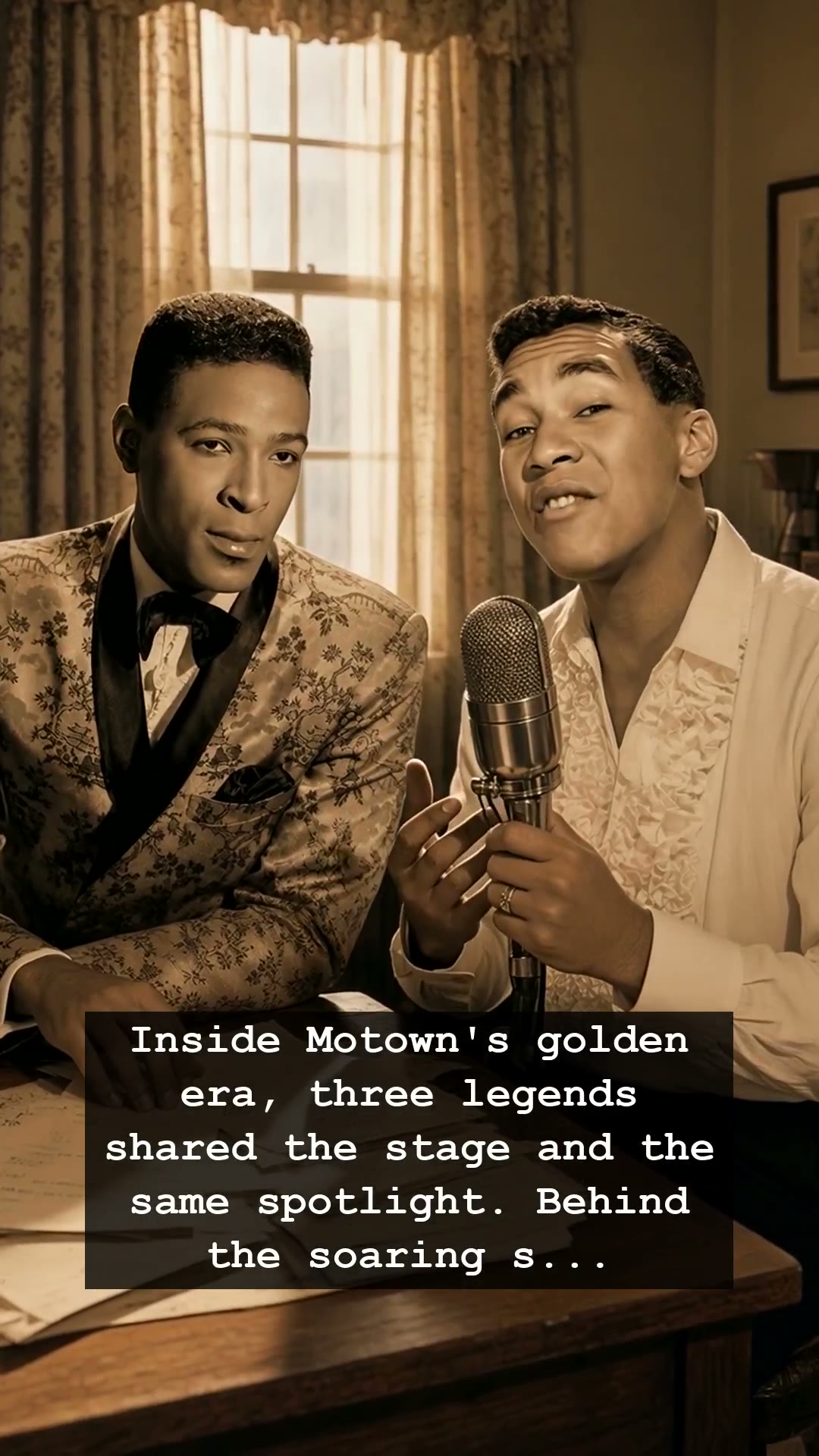
In the gilded halls of Hitsville U.S.A., the air was thick with the scent of floor wax and the relentless ambition of young dreamers. To the American public tuning in on their transistor radios, Motown Records was a seamless factory of joy, delivering perfect soul harmonies that soundtracked the optimistic 1960s. Yet, behind the velvet curtain, the reality was a high-stakes arena where icons fought for the favor of Berry Gordy and the ultimate crown of soul royalty. At the center of this golden storm were two titans: Smokey Robinson and Marvin Gaye, whose brotherhood was often strained by the crushing weight of their own extraordinary talent.
Smokey Robinson was the architect, the poet laureate of the label, whose pen could summon heartbreak with a single verse. Marvin Gaye, by contrast, was the tortured visionary, a man whose voice possessed a raw, spiritual urgency that threatened to eclipse everything else. While the world saw two friends collaborating on hits, those close to the studio floors witnessed a simmer of professional jealousy. Every time Smokey Robinson penned a chart-topping anthem, the pressure mounted on Marvin Gaye to reinvent himself. The rivalry was quiet, rarely erupting into open warfare, but it was felt in the way they paced the recording booths, each desperate to outdo the emotional resonance of the other.
This era was defined by a frantic, beautiful pace. It was the age of the Jukebox, where every single had to be a knockout punch in under three minutes. For Marvin Gaye, the creative friction wasn’t just about the charts; it was about the soul. He pushed against the constraints of the Motown machine, feeling that his voice—and his message—were being stifled by the label’s polished exterior. Meanwhile, Smokey Robinson remained the steady hand, the golden boy whose consistency became a benchmark that Marvin Gaye spent years trying to break away from. Their creative friction provided the spark that ignited some of the greatest records in American history.
It is fascinating to look back at how their paths diverged. Smokey Robinson stayed true to the romantic pop brilliance that defined the early soul sound, while Marvin Gaye moved toward a more sociopolitical, introspective sound that would redefine the boundaries of R&B. Their competition was not born of hate, but of a mutual realization that they were the two pillars holding up an entire industry. To listen to their tracks today is to hear a dialogue of ambition; you can sense the hunger in the phrasing and the sheer dedication to perfection that was required to survive within those legendary walls.
Decades later, the haunting echoes of their rivalry still define the Motown legacy. Their work captured a brief, brilliant moment in time, before the industry shifted toward the grit of the 1970s and the synthetic polish of the 80s. As we look back, the tension between these two giants feels like a necessary piece of the puzzle. Without the rivalry of Smokey Robinson and Marvin Gaye, the soul of America might not have reached the heights it eventually achieved. Next time you drop the needle on a classic Motown record, listen closely for the ghost of the battle fought in the studio shadows.