
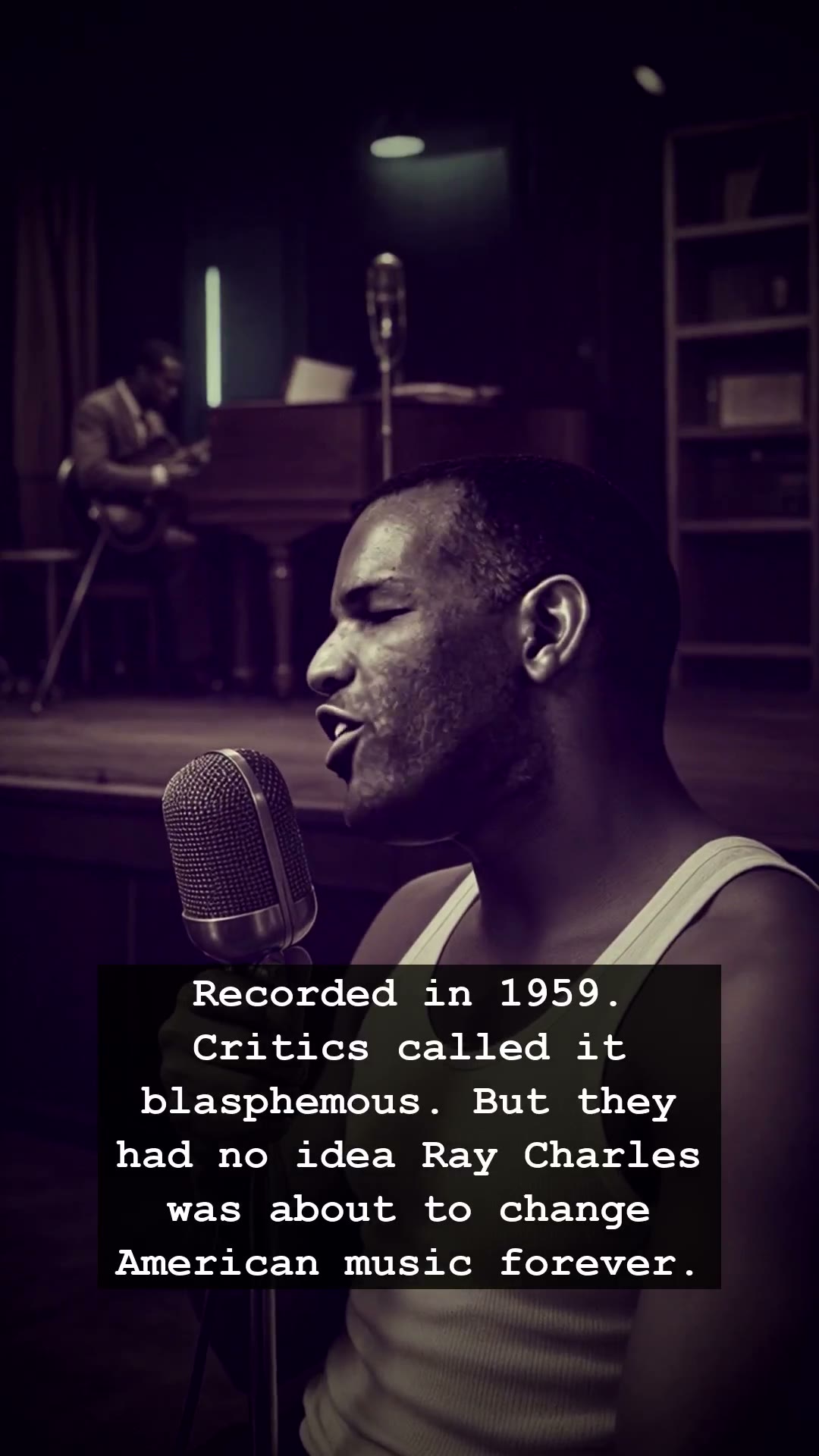
The year was 1959, and the airwaves were strictly segregated by unspoken rules of taste and tradition. Into this rigid atmosphere stepped a man whose vision would shatter the boundaries between the pulpit and the dance floor. When Ray Charles took the gospel melodies he learned in church and injected them with the gritty, carnal hunger of secular soul, the establishment did not just frown; they revolted. Critics called his music blasphemous, an affront to the sanctity of the hymn, but Ray Charles did not care for the opinions of the ivory tower. He was a man who lived in the dark, yet he saw a future for American music that no one else dared to imagine.
To understand the fire behind Ray Charles and his revolutionary sound, you have to picture the era. This was a time before the digital convenience of streaming or the endless choice of the internet. Music was discovered on a flickering jukebox in a smoke-filled diner or through the crackling warmth of a vinyl record playing on a Sunday afternoon. Ray Charles took that sacred gospel foundation—the wailing organ, the call-and-response dynamics, and the raw emotional transparency—and fused it with the rhythmic swagger of rhythm and blues. It was a dangerous cocktail in 1959, a volatile mix of devotion and desire that sent shockwaves through conservative America.
There was a profound, almost cinematic tension in his studio sessions during this pivotal transition. While the public labeled his transformation as scandalous, Ray Charles was busy weaving a bridge across the deep racial divide of his country. He was not just making records; he was documenting the human experience in its most honest form. His genius lay in his ability to make the secular feel holy and the holy feel intimate. Every key he pressed on that piano felt like a confession, a testament to his own complex life, marked by blindness, poverty, and the crushing weight of Jim Crow era prejudice.
What makes the story of Ray Charles so magnetic today is the sheer audacity of his artistic rebellion. He risked his burgeoning career and his reputation to follow a sound that felt true to his soul. When you listen to those late fifties recordings now, you can still hear the static of the era being torn apart. It was not just music; it was a cultural pivot point. He proved that genre was a construct and that a song, if it possesses enough soul, can transcend the narrow-minded accusations of the elite. He turned blasphemy into a beautiful, enduring legacy that paved the way for generations of musicians who would eventually break every rule he helped rewrite.
Today, as we look back at the golden age of American music, the shadow of Ray Charles looms large over every soul singer and piano man who followed in his footsteps. His influence is not just found in the chord progressions, but in the courage to challenge the status quo. The next time you find yourself listening to a track from that transformative era, take a moment to remember the man who stood alone against the critics and dared to turn the sacred into something truly universal. The music of Ray Charles remains a timeless reminder that sometimes, to change the world, you have to be willing to break a few rules.