
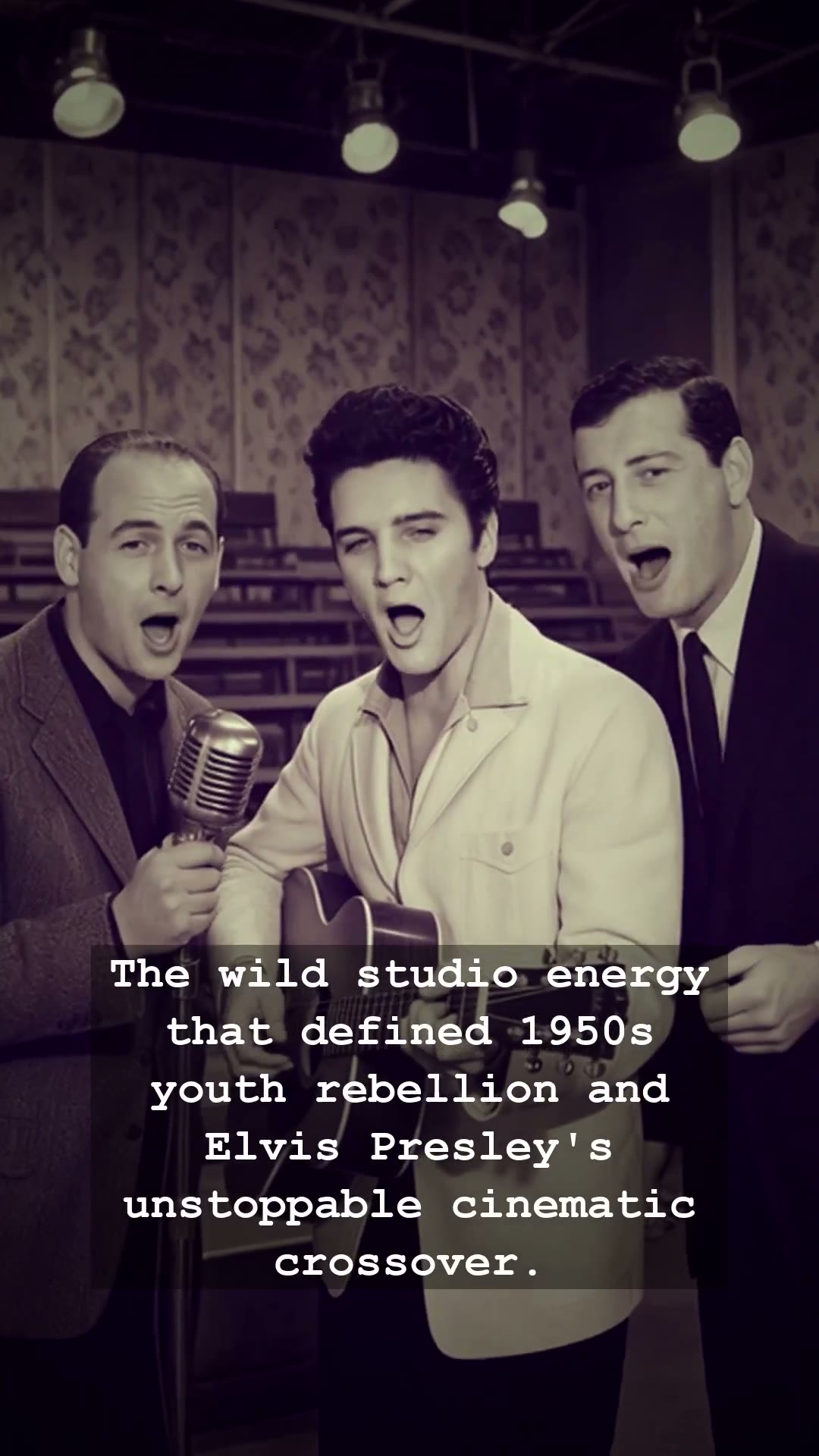
The year was 1957. A heavy, humid tension hung over the recording studio, the kind of atmosphere that preceded a cultural earthquake. Elvis Presley stood before the microphone, not as the polished icon the world would later know, but as a restless, untamed force of nature. In that moment, he wasn’t just recording a track; he was bottling the lightning of youth rebellion that was sweeping through America like a wildfire. For the teenagers of the fifties, clinging to the neon glow of a local diner or the crackling sound of a jukebox, Elvis Presley was more than a singer. He was a dangerous, magnetic mirror reflecting their own secret desires to break free from the buttoned-up expectations of their parents.
The raw, unrefined fury of his early recordings was a direct assault on the status quo. It was the sound of a generation realizing they had a voice, and that voice was loud, distorted, and unapologetically sexual. While the establishment scrambled to contain the spread of what they deemed moral decay, Elvis Presley was busy building an empire of grit and charisma. He understood the cinematic quality of his own existence long before Hollywood fully embraced his crossover potential. He walked, talked, and moved with a swagger that felt like a challenge to anyone daring to look away, turning every public appearance into a high-stakes dramatic performance.
Yet, beneath the glittering pompadour and the stage-ready smile, there was a profound sense of isolation. The pressure of stardom in the pre-MTV era was relentless, a constant grind of touring, radio spots, and the mounting toxicity of being a public commodity. Behind the scenes, the late-night sessions were fueled by a volatile cocktail of nervous energy and the heavy burden of sudden, global infamy. Elvis Presley was trapped in a whirlwind of his own creation, navigating a path where the line between the man and the myth became increasingly blurred. Those who witnessed his early studio sessions described an artist who was entirely possessed by the music, a conduit for a new, electrifying American reality.
It is fascinating to look back and realize how fragile that era actually was. We associate the 1950s with pristine lawns and idyllic suburban dreams, but the truth was far messier. Elvis Presley represented the crack in the facade, the moment when the youth of America collectively decided to stop following the rules. This rebellion wasn’t just about a rhythm or a dance; it was about reclaiming autonomy in an age of conformity. Even today, the crackle of his vintage records serves as a vivid time machine, pulling us back to that pivotal, explosive intersection of innocence and the wild unknown.
Decades have passed since the golden era of rock and roll, but the shadow cast by Elvis Presley remains incredibly long. He proved that music could act as a catalyst for societal change, forcing a generation to confront its fears and desires head-on. As we revisit these legendary studio sessions, we aren’t just listening to a hit song; we are witnessing the birth of a cultural revolution. Whether you were there to experience the tremor in real time or are discovering the echoes of his legacy today, one thing is certain: the pulse of Elvis Presley continues to beat at the very heart of rock and roll history.