
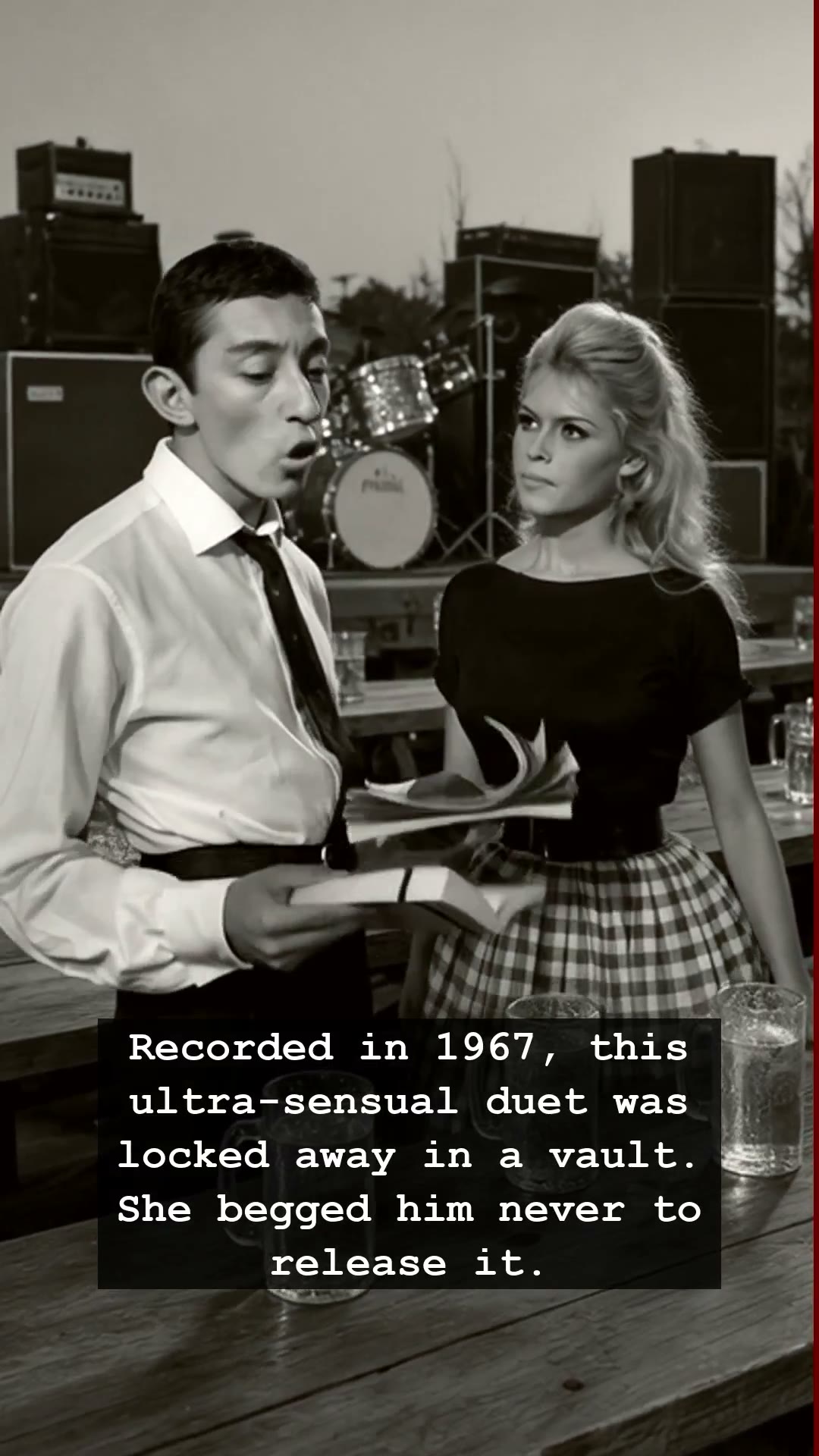
In the hazy, cigarette-stained air of a Paris studio in 1967, the world’s most iconic sex symbol and the quintessential enfant terrible of French music captured a moment of pure, unadulterated intimacy on tape. The song was Je t’aime… moi non plus, a breathy, experimental masterpiece that pushed the boundaries of what was considered acceptable for public airwaves. For Brigitte Bardot and Serge Gainsbourg, it was supposed to be a private confession of mutual obsession. But as the final notes faded, the reality of what they had created hit Brigitte Bardot like a cold splash of water. She realized that the raw, heavy breathing and whispered desires would not just be an artistic statement; it would be a public scandal that could destroy her carefully curated image.
Panicked by the potential fallout in an era where conservative values still held a tight grip on society, Brigitte Bardot made a desperate plea to the composer. She begged Serge Gainsbourg to lock the master tapes away in a vault and never let them see the light of day. For her, the recording felt too naked, too vulnerable, and far too scandalous for the tabloids to handle. Serge Gainsbourg, deeply infatuated and wounded by her rejection of their collaborative art, begrudgingly complied. The track vanished into the dark, silent depths of a music vault, becoming a ghost story whispered among French music insiders for decades to come.
The 1960s were a time defined by the transition from the polished innocence of early rock to the rebellious, psychedelic shifts that were transforming the cultural landscape. While the youth were busy dancing to the Beatles or gathering at Woodstock, Serge Gainsbourg was crafting a different kind of revolution—one built on erotic tension and provocative lyrics. When we look back at the era of the jukebox and the emerging influence of radio, the story of this lost duet serves as a haunting reminder of the immense pressure celebrities faced during the height of the mid-century fame machine. The art was often at odds with the public persona.
It was only years later, and with a different collaborator, that Serge Gainsbourg eventually released the song, causing the global firestorm Brigitte Bardot had feared. Yet, the original version, tucked away during the golden age of the late sixties, remains a symbol of an era where art and reputation were constantly colliding. The legend of Brigitte Bardot and Serge Gainsbourg lives on, not just in their films or albums, but in the secret history of a song that was deemed too intense to be heard.
Today, this story serves as a fascinating lens into the past, highlighting the tension between personal privacy and the insatiable appetite of the public. The mystique of this forbidden track remains, a testament to the undeniable chemistry between two legends who dared to challenge the status quo. If you ever find yourself wandering through the sonic history of 1967, remember that some of the best music was never meant for your ears at all. It is a haunting, beautiful relic of a time when icons were just as human as the rest of us.