
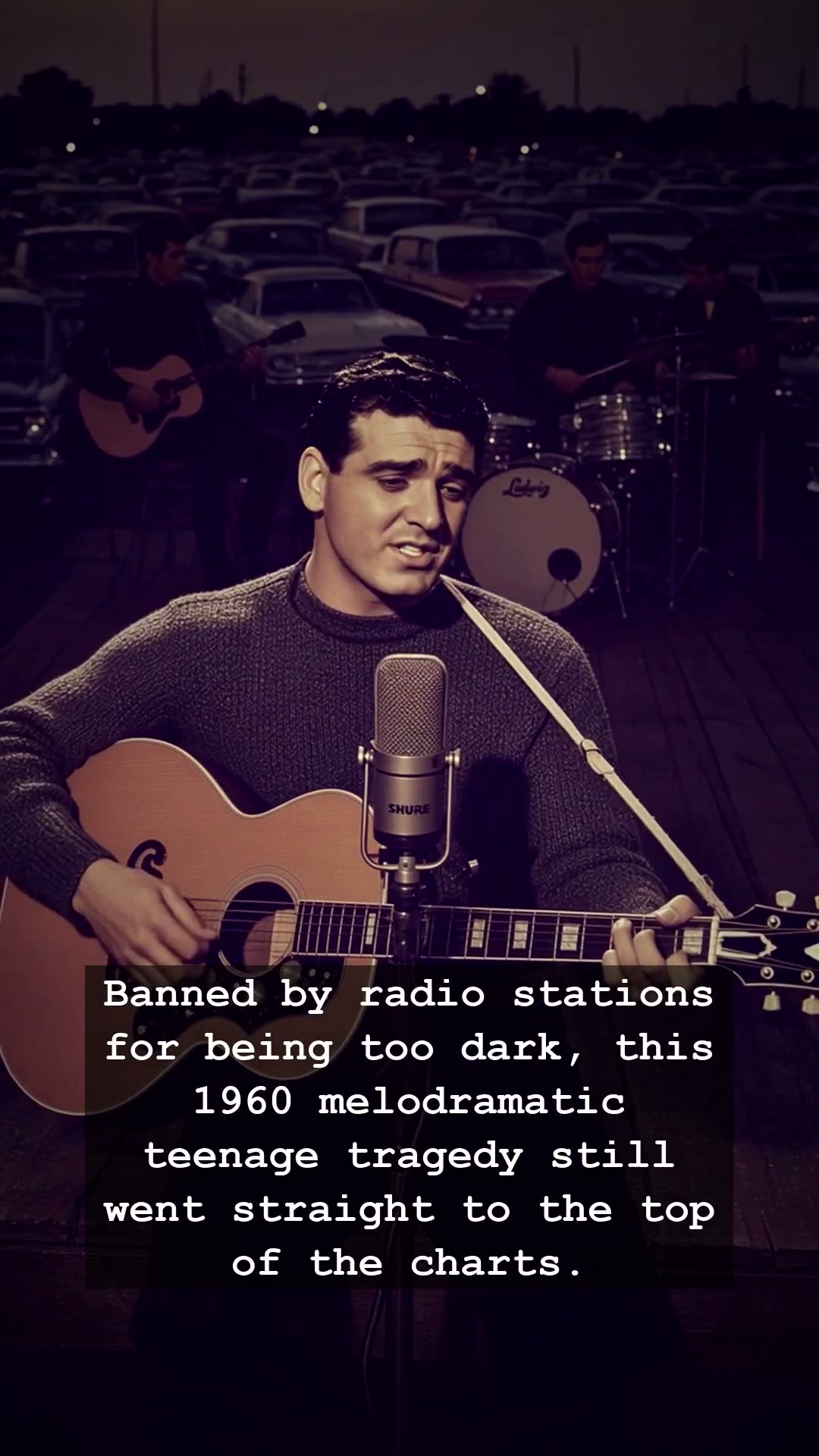
It was 1960, a time when the Jukebox in the corner of every local diner was pulsing with the innocent sounds of pop romance. But then came a voice that broke the mold, turning the golden era of sugary love songs into a haunting, melancholic nightmare. Mark Dinning, a young crooner with a smooth delivery, released a song that didn’t just climb the charts—it terrified the establishment. The track was Teen Angel, a harrowing ballad about a car stalling on railroad tracks and a tragic death. While the youth of the era were captivated by its dramatic storytelling, the radio censors were horrified. Across the country, stations began to ban the record, claiming its morbid themes were far too dark for the delicate sensibilities of teenagers.
Yet, in a twist of irony that defined the rebellious spirit of the late 1950s and early 1960s, the ban only served to ignite a firestorm of curiosity. The more the adult world tried to keep Mark Dinning off the airwaves, the more the song became a forbidden treasure for the youth. It was a classic clash between the status quo and the burgeoning curiosity of a generation coming of age. Despite the controversy, Teen Angel surged to the top of the Billboard Hot 100, becoming a global phenomenon that proved drama and tragedy could hold just as much sway over the public consciousness as any upbeat dance hit of the time.
Looking back, the success of Mark Dinning speaks to a unique cultural moment. It was an era where the divide between the suburban dream and the darker realities of life began to blur. The song utilized a classic trope of teenage tragedy, a storytelling style that had been lurking in the shadows of popular culture, but never before had it been presented with such chilling, cinematic clarity. When listeners heard the sound of the approaching train in the production, they weren’t just hearing a song; they were experiencing a visceral, emotional shock that mirrored the volatility of the times.
Beyond the scandal, the success of Teen Angel solidified Mark Dinning as a temporary titan of the airwaves. He captured a fleeting, morbid fascination that allowed teenagers to process their own fears through a medium they understood—the radio. It was a precursor to the dramatic narratives that would eventually dominate the rock and roll era. The production was clean, but the subject matter was visceral, creating a tension that kept the listener glued to their transistor radios, waiting for the haunting notes to return.
Today, Teen Angel remains a fascinating time capsule of 1960s anxieties and musical evolution. It serves as a stark reminder that even in the most sanitized eras of history, the audience has always craved the thrill of the macabre. Mark Dinning provided that spark, leaving behind a legacy that is equal parts tragic, controversial, and unforgettable. When we spin these old records, we aren’t just listening to melodies; we are reopening the dusty journals of the past, remembering a time when a single song could cause a national stir and change the trajectory of pop music forever.