
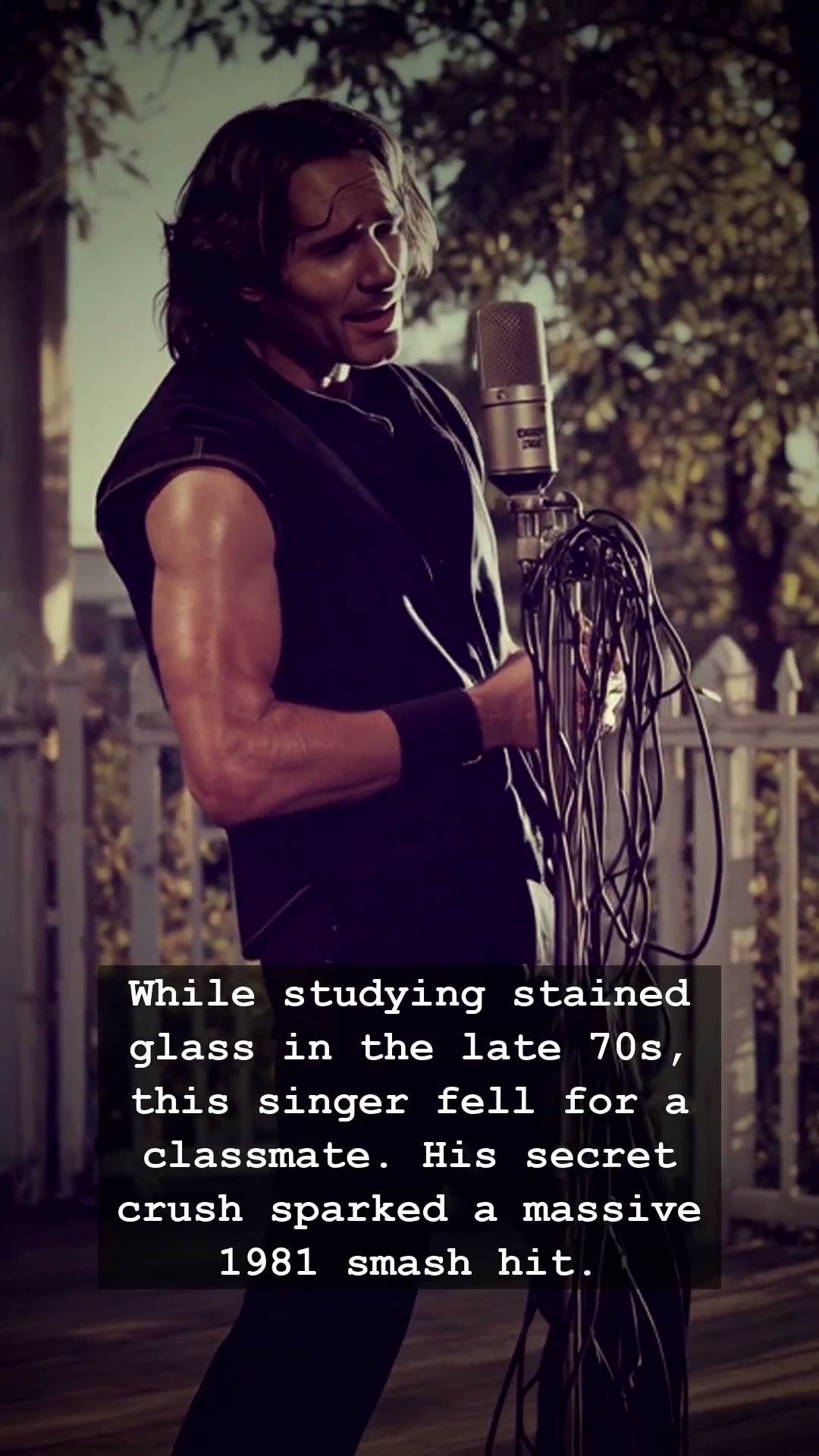
In the neon-soaked landscape of the early 1980s, where synthesizers dominated the airwaves and the MTV generation was just finding its footing, one song stood out as the ultimate anthem of unrequited longing. Jessie’s Girl, the blistering 1981 smash hit that catapulted Rick Springfield to international superstardom, feels like a quintessential pop-rock relic. Yet, behind the infectious guitar hooks and the soaring chorus lies a much quieter, more melancholic origin story that took place in a dusty classroom miles away from the glitz of the Hollywood stage.
Long before he was a household name and a staple of the soap opera world, Rick Springfield was just a man looking for creative refuge. During the late 1970s, as his career hit a lull, he found himself attending a stained glass making class. It was a humble, artistic pursuit that provided a stark contrast to the grueling grind of the music industry. Within that quiet workshop, Rick Springfield caught a glimpse of a classmate who would eventually consume his thoughts. She was bright, talented, and—crucially—she was already taken by a man named Gary. To spare the feelings of the actual couple, Springfield famously swapped the name Gary for the punchier, rhyming Jessie.
There is a specific kind of agony in watching the person you adore laugh at someone else’s jokes while you sit silently in the background, nursing a secret that feels both heavy and insignificant. Rick Springfield captured this universal pain perfectly. He channeled his frustration into a pen and paper, transforming his real-life heartbreak into a narrative that millions would eventually scream along to in arenas and living rooms alike. The song serves as a time capsule of that era, reminding us of a period when a Walkman on a bus or a grainy music video on MTV was our primary gateway to the raw, human experiences of our idols.
What makes the success of Jessie’s Girl so poignant is the duality of its existence. While the world saw a polished, energetic rock star riding the crest of the New Wave revolution, the man behind the microphone was still grappling with the stinging reality of a crush that never stood a chance. It is this authentic, vulnerable core that has allowed the track to transcend its 1981 roots. Even today, decades after the synthesizers faded from the top of the charts, the song remains a fixture of classic rock radio, proving that honest storytelling never loses its edge.
As we look back at the golden age of the early eighties, we often focus on the spectacle—the hairspray, the leather jackets, and the wild excess of the music scene. However, the true magic of Rick Springfield and his most iconic work lies in its grounded, relatable humanity. It turns out that even the biggest rock stars have sat in classrooms, hearts pounding in silence, wishing for a love that wasn’t theirs. Perhaps that is why, whenever those opening chords hit, we are all transported back to our own moments of longing, reminded that even the most bitter rejections can sometimes pave the way to legendary success.