
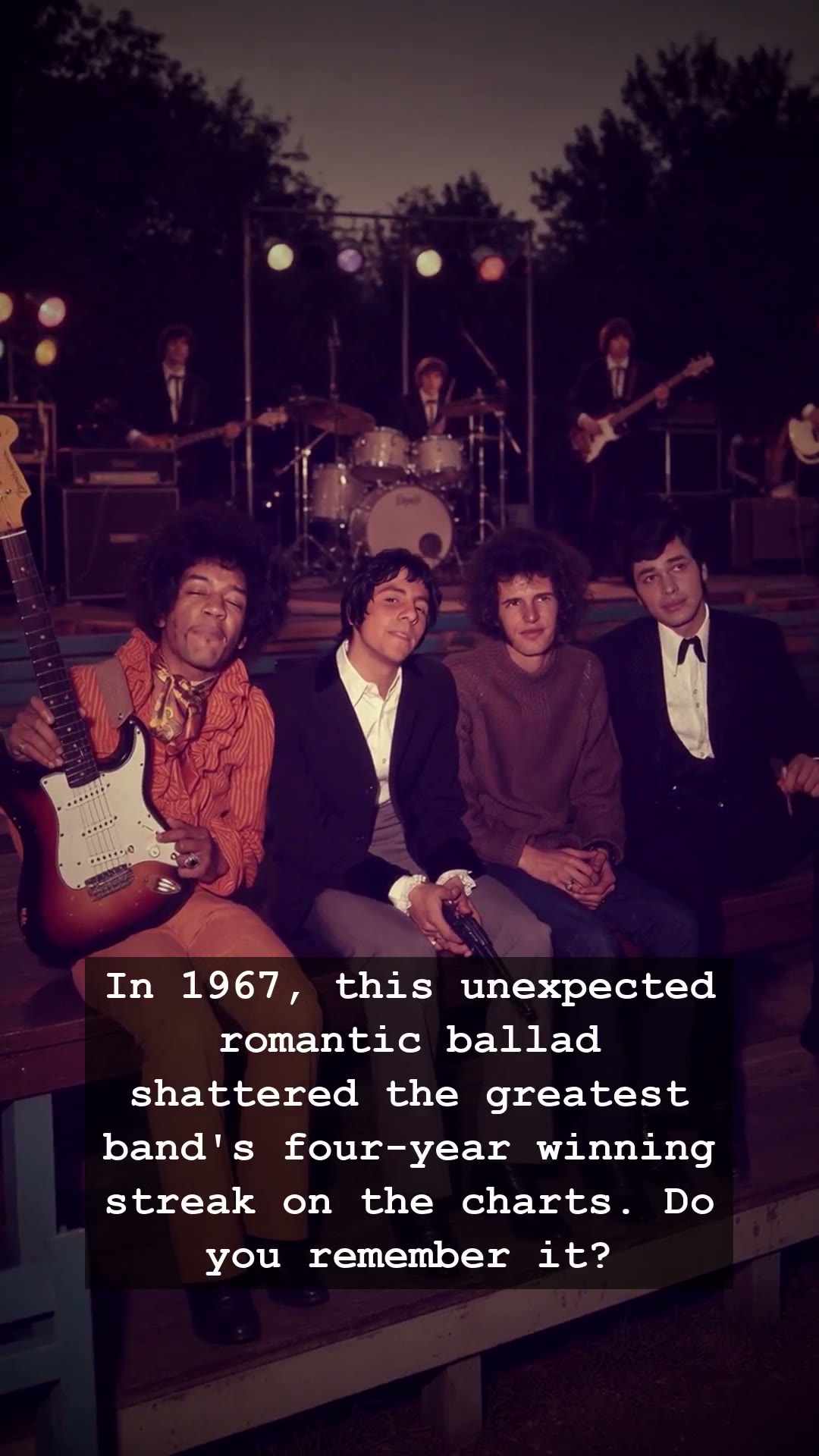
The year was 1967, a time when the cultural atmosphere in Britain was thick with the scent of change and the electrifying hum of revolution. The Beatles had reigned supreme as the undisputed kings of the charts for four long, glorious years. Their melodies were the soundtrack of a generation, a constant, unbreakable force that seemed destined to stay at number one forever. Yet, in a twist of fate that left the music industry reeling, a smooth-voiced crooner emerged from the shadows of obscurity to shatter that legendary streak. His name was Engelbert Humperdinck, and his weapon of choice was a haunting, sweeping ballad called Release Me.
Before that pivotal moment, Engelbert Humperdinck was merely a struggling performer, a man known to few and ignored by many. But when he stepped into the recording booth, something shifted. His baritone voice carried a desperate, aching longing that resonated deeply with the public. Release Me was not a psychedelic rock anthem or a experimental studio creation; it was a pure, unadulterated classic ballad. It spoke to the heart in a way that the complex, evolving soundscapes of the mid-sixties often could not. The song climbed the charts with a relentless momentum, culminating in a seismic shift that pushed Penny Lane and Strawberry Fields Forever right out of the top spot.
For those of us who lived through the era of the flickering television screen and the crackle of the home jukebox, this remains one of the most delicious ironies in pop history. The sudden triumph of Engelbert Humperdinck felt like a rebellion against the trend of the time. It was a moment of sheer musical whiplash for the fans who had grown accustomed to the innovative heights of the Fab Four. The story behind the hit is a classic tale of the underdog claiming his moment in the sun, proving that sometimes, the simplest, most sincere performance can derail even the most polished, global juggernauts.
The impact of that 1967 chart battle went beyond mere numbers. It created an enduring mystery and a point of heated debate in pubs and parlors across the country. How did a man with such a peculiar name and such an old-fashioned sound manage to silence the biggest band in the world? Engelbert Humperdinck became an overnight sensation, defined by his velvet suits, his sideburns, and his ability to turn a simple song into a massive, cinematic event. He embodied the lingering power of the romantic crooner in an era that was rapidly sprinting toward the future.
Decades later, the legend of Engelbert Humperdinck still looms large. Whenever we look back at the golden age of vinyl and the golden days of the radio, his name stands as a reminder that the music business is anything but predictable. His victory serves as a testament to the fact that greatness isn’t always found in the loudest innovation, but sometimes in the raw, emotive power of a man and a microphone. Do you remember where you were when the news broke that the streak was finally over?