
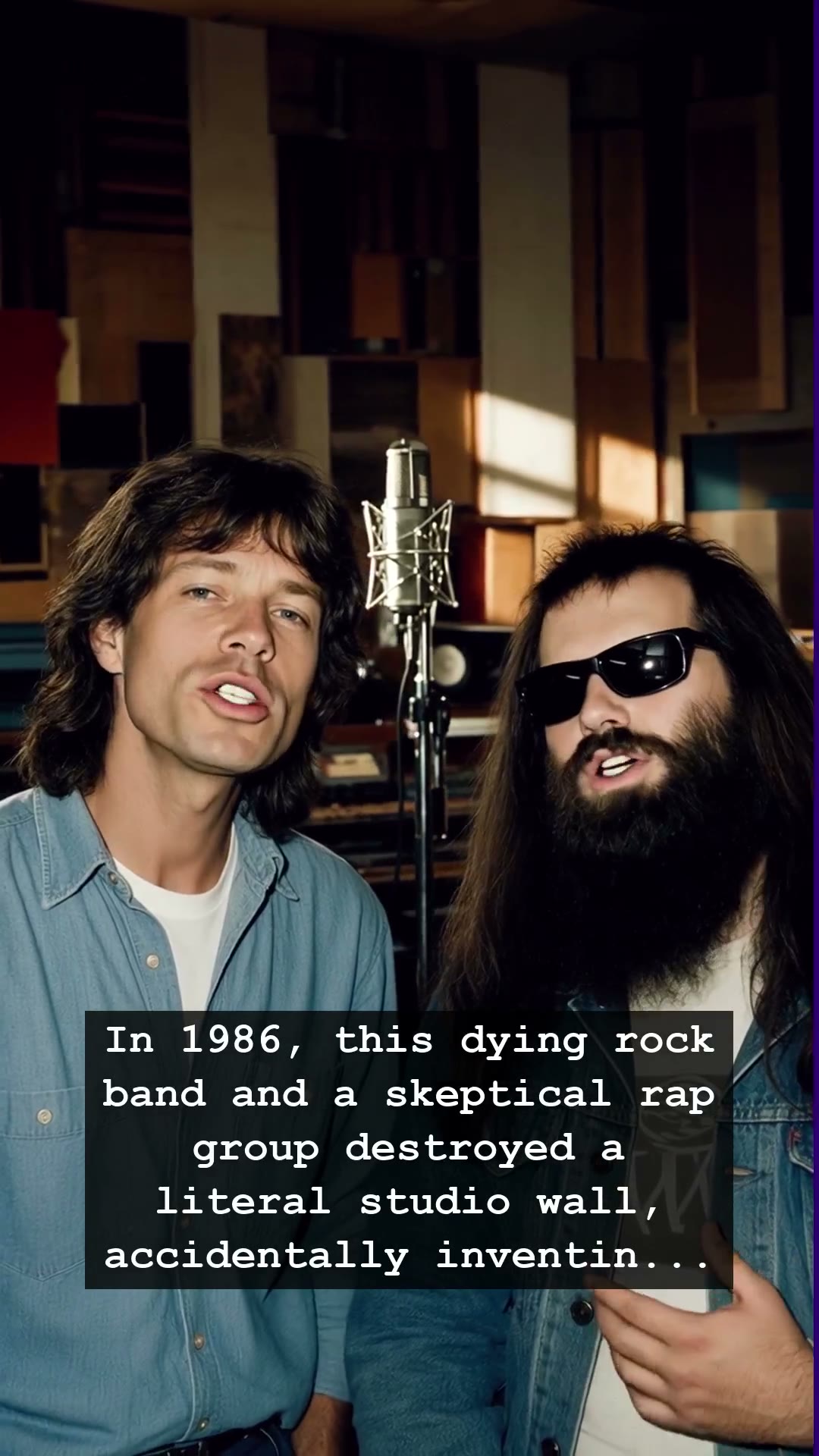
In 1986, the music industry was neatly divided by invisible lines of genre and culture. On one side stood the decaying empire of hard rock, where Aerosmith found themselves trapped in a cycle of substance abuse and plummeting record sales. On the other side was the raw, emerging force of hip-hop, led by the defiant trio Run DMC. The rock world viewed rap as a passing gimmick, while the rap world saw rockers as dinosaurs of a bygone era. Nobody expected these two worlds to collide, let alone set the foundation for the future of modern music.
The collaboration began as a reluctant experiment inside the legendary Electric Lady Studios. Aerosmith, clinging to the fading glory of their seventies peak, was skeptical of the loud, rhyming newcomers. The tension was palpable; as the story goes, the session reached a boiling point of creative frustration. In an act of symbolic destruction, the groups moved beyond the studio sound booth and literally knocked down the wall separating them. That crumbled barrier wasn’t just physical—it was the moment the industry’s rigid walls fell to the ground, paving the way for the cross-pollination of sound that defines our listening habits today.
The resulting remake of Walk This Way was more than just a song; it was a cultural shockwave. When the track hit MTV, it broke the racial and sonic segregation that had dominated airwaves for decades. Seeing Joe Perry’s jagged riffs tangle with the rhythmic precision of Run DMC forced a generation of listeners to rethink their biases. The track became the ultimate bridge, finding its way onto the Walkman of every kid from the suburbs to the inner city. It was the birth of rap-rock, a genre that would dominate the nineties, yet in that specific 1986 moment, it felt like an accidental miracle.
Looking back, the success of the collaboration reveals the dark, desperate edges of fame. Aerosmith was fighting for their very existence, and the newfound relevance brought by Run DMC saved their legacy from total obscurity. For Run DMC, the partnership was a daring maneuver that pushed hip-hop into the mainstream spotlight. Beneath the massive radio hits and the electric stage presence lay the hard reality of an industry that treats artists as disposable. The wall didn’t just break; it opened a door for a new era of artistic collaboration that refused to play by the rules of conventional pop music.
Today, we often take genre-bending for granted, but we owe that fluidity to the chaos of that day in New York. The echoes of that studio session still resonate in the way artists manipulate sound and cross boundaries without hesitation. It serves as a gritty reminder that the most revolutionary art often happens when people are pushed to the brink of collapse. Does the opening scratch of the record still give you chills? For those of us who lived through the era, it remains the ultimate anthem of a world transformed by the simple, destructive act of breaking down barriers.