
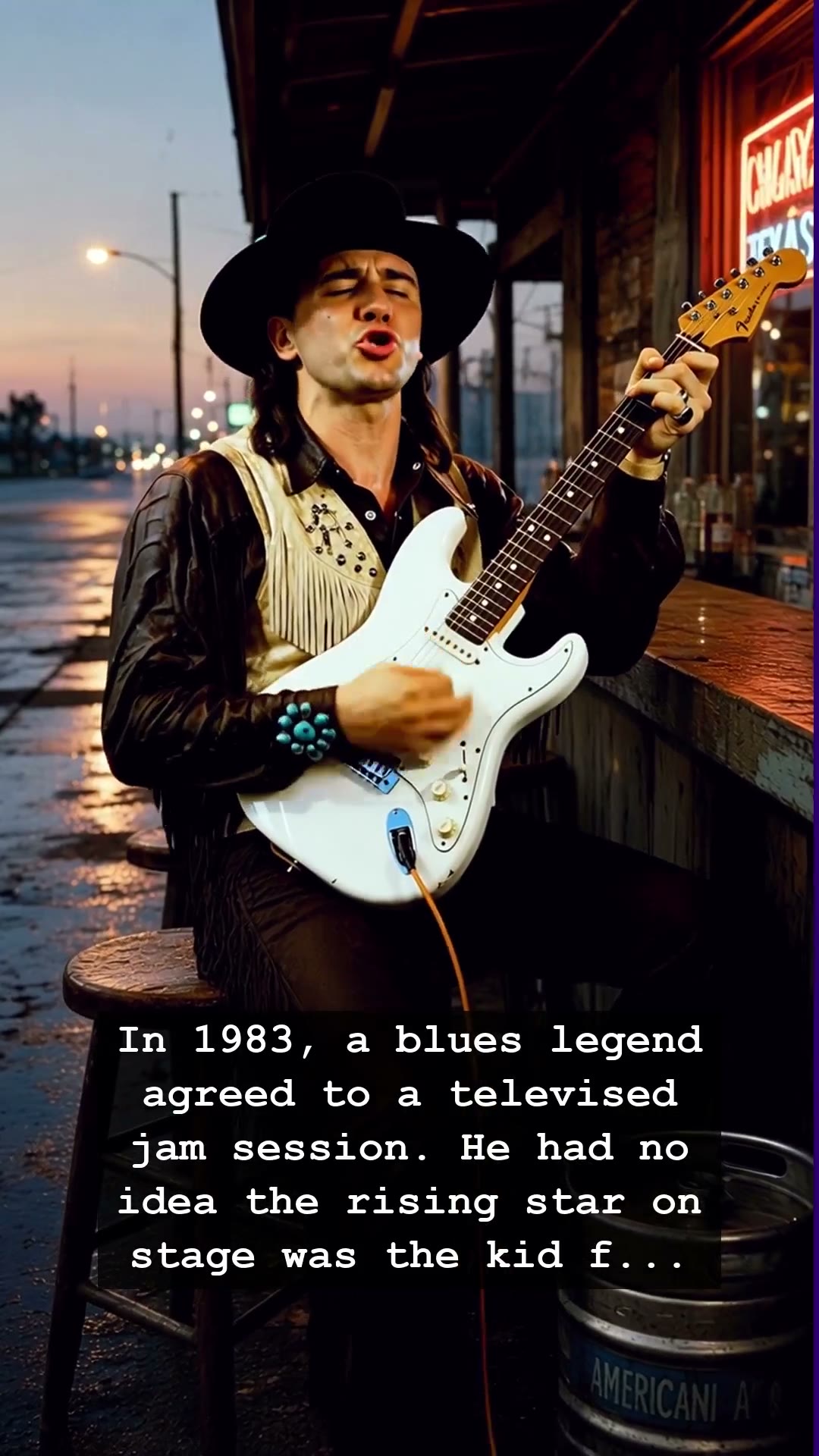
In 1983, the air inside the television studio was thick with anticipation, the kind of static charge that only happens when history is about to be made. Beneath the bright lights of the set for the Canadian show In Session, a blues legend sat poised with his iconic Gibson Flying V. Albert King, the titan of the blues, was ready to trade licks with a newcomer. He expected a standard collaboration, perhaps a routine run-through of blues scales. He had no idea that the young man across from him, with the wide-brimmed hat and the piercing eyes, was the same skinny kid who had haunted his front row for years, watching every movement of his fingers with the intensity of a devotee.
Stevie Ray Vaughan was that kid, a guitar prodigy from Texas who had spent his youth absorbing the raw, emotive power of King’s style. When the cameras began to roll, the dynamic was electric. Albert King was known for his formidable presence, a man who didn’t suffer fools lightly and certainly didn’t hand out praise. Yet, as the opening notes of the jam session filled the room, something shifted. The kid wasn’t just copying; he was engaging in a conversation. Stevie Ray Vaughan played with a fire that seemed to shock the older master, forcing King to stop, look over, and realize that the student had evolved into a peer capable of pushing his own boundaries.
This wasn’t merely a performance; it was a passing of the torch amidst the shifting landscape of 1980s music. While the era was dominated by the rising glitz of MTV and the sterile precision of early synthesizer pop, this session was a visceral reminder of the grit that built the American musical identity. It captured a moment of pure, unadulterated soul before the industry machine could polish the jagged edges off the blues. For a brief hour, the ghosts of old juke joints felt present, bridging the gap between the delta traditions of the past and the explosive, aggressive rock blues that Stevie Ray Vaughan would soon champion to the world.
The drama of the encounter was palpable—the silent challenge, the unspoken respect, and the eventual realization that they were both tethered to the same musical language. It remains a legendary collision of eras, a snapshot of the raw talent that defined the decade. Stevie Ray Vaughan, humble and visibly intimidated at first, eventually unleashed a barrage of notes that left even the seasoned Albert King visibly impressed. It was a masterclass in musical dialogue, recorded for posterity when music still relied on the chemistry between two humans rather than digital perfection.
Looking back at that night, it resonates as a poignant reminder of how greatness is inherited and refined. That televised performance remains a cult classic for collectors and blues enthusiasts, serving as the ultimate proof that the spirit of the blues never truly dies; it just finds new hands to carry the weight. If you close your eyes and listen to the interplay between them today, you can still feel the heat, the sweat, and the absolute magic of a night when two generations stood on equal ground, forever changing the trajectory of blues history.