
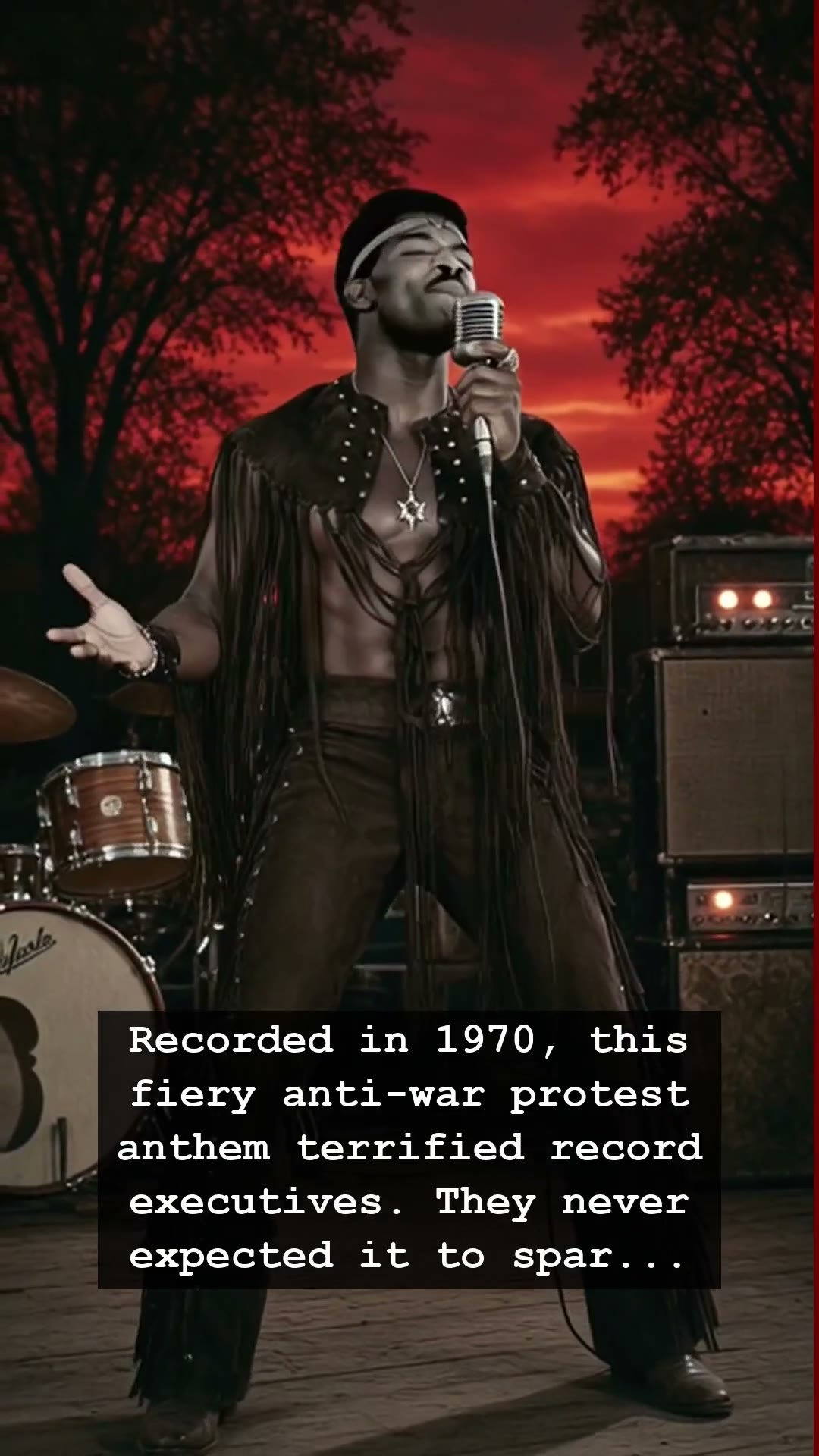
It was 1970, a year when the humid air of American summer felt thick with the static of protest and the bitter divide of a nation at war. In the hallowed, polished halls of Motown Records, a song was circulating that sent chills down the spines of the label’s executives. This wasn’t the smooth, choreographed soul that usually drifted from the studio; it was raw, it was aggressive, and it was undeniably dangerous. The man behind the microphone was Edwin Starr, and the track was a ferocious demand for peace that terrified the corporate suits, who feared that such a direct political stance would destroy their carefully curated commercial image. They were wrong.
Edwin Starr was never a man to shy away from intensity. With a voice that seemed to have been forged in the deep, gritty furnaces of soul music, he delivered the opening line with a level of conviction that cut through the noise of the Vietnam era. The track was meant to be a simple album cut, but the energy in the recording booth was electric. When the song hit the airwaves, it didn’t just climb the charts; it ignited a firestorm. The executives who had tried to bury the track soon found themselves watching in disbelief as it became an unstoppable counterculture cry, echoing from university protests to the very front lines of a divided nation.
What makes the story of Edwin Starr so compelling is the sheer friction between his artistry and the expectations of the industry. In an era where the Jukebox was often the only respite from the heavy news cycles of the nightly television reports, Edwin Starr brought the reality of the streets directly to the dance floor. He transformed a protest slogan into a rhythmic heartbeat that captured the frustration of a generation. It wasn’t just a song; it was a societal shift caught on magnetic tape, proving that music could indeed influence the tide of history.
Looking back at the landscape of the early 1970s, it is easy to forget how much power a single record carried before the digital age fragmented our ears. There was no social media to amplify a cause; there was only the raw, crackling sound of a 45rpm record playing on a turntable or a car radio. Edwin Starr managed to tap into a collective psyche, turning a potential career-ending scandal into a legacy-defining anthem. The Motown machine, usually so focused on polished perfection, had inadvertently allowed a revolutionary voice to shatter their glass ceiling.
Today, the rasp and urgency in the voice of Edwin Starr still resonate with anyone who knows the weight of historical struggle. His performance serves as a reminder that the greatest music often comes from the most uncomfortable places. As we look back on those turbulent times, it is clear that he didn’t just record a song; he documented a moment where the fear of the few was eclipsed by the courage of the many. Do you remember the first time those opening chords took hold of your spirit?