
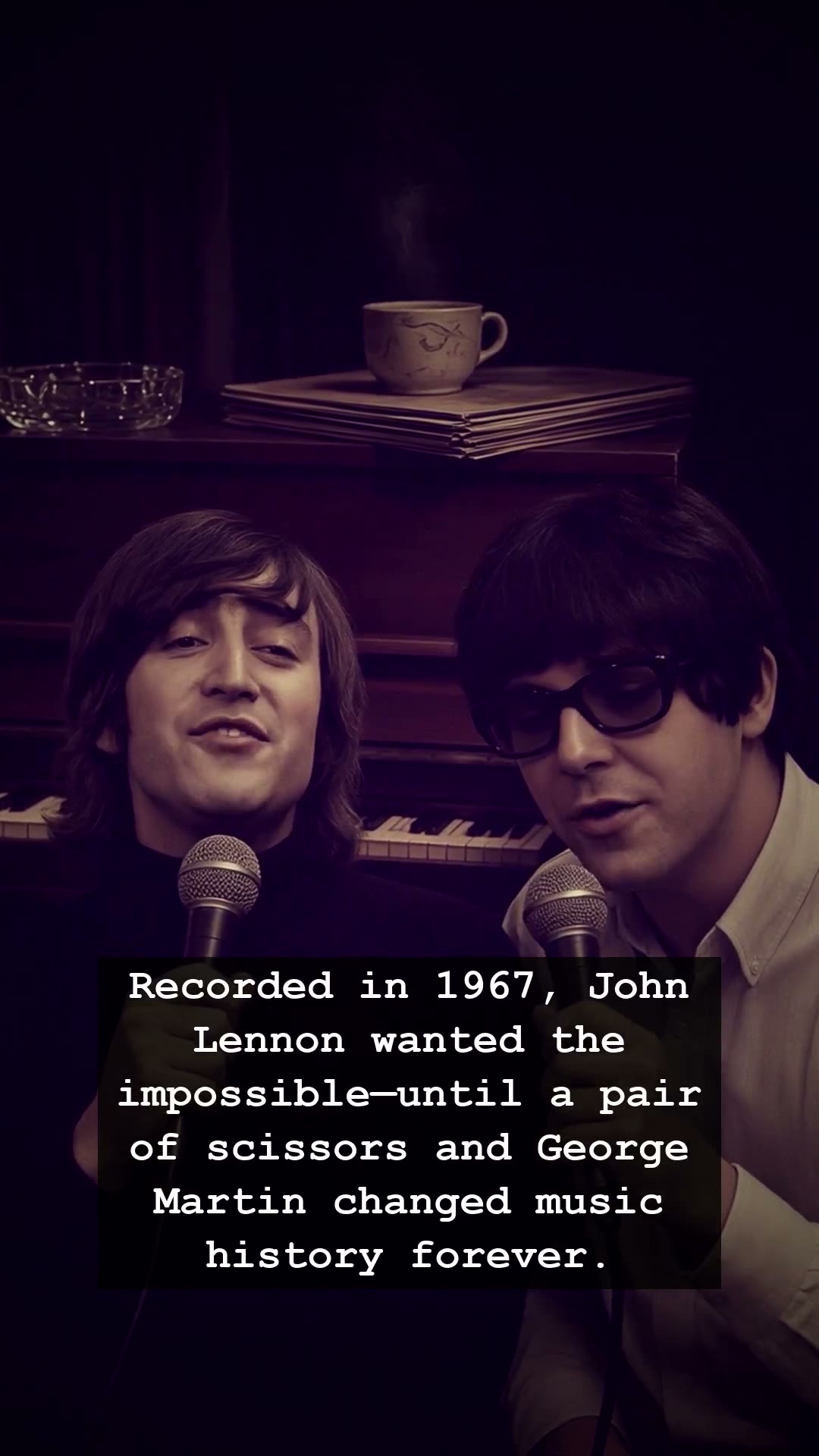
It was 1967, and the air in London was thick with the scent of rebellion and sonic experimentation. Inside the hallowed halls of Abbey Road Studios, John Lennon sat in a state of creative agitation. He had a vision for a song that would eventually become the haunting, surreal classic Strawberry Fields Forever. But there was a problem; the reality of the recording did not match the kaleidoscope of sounds swirling in his mind. He demanded the impossible, seeking to blend two different versions of the track that were recorded in completely different keys and tempos. To anyone else, it would have been a technical dead end, but then there was the steady hand of George Martin.
George Martin, the legendary producer often dubbed the fifth Beatle, understood that music was not just about melody, but about architecture. As Lennon paced the floor, frustrated by the limitations of the magnetic tape, George Martin saw the path forward. He realized that if he could alter the speed and pitch of the two disparate takes, he could stitch them together into a seamless, hallucinogenic tapestry. It was not just a studio adjustment; it was an act of sonic surgery. With a pair of scissors and the precision of a watchmaker, George Martin began the painstaking process of physically slicing the master tapes.
As the tape reels spun, the era of the Walkman and digital precision was still a distant dream. Back then, editing was a tactile, high-stakes gamble. Every snip was permanent, and every splice had to be perfect. As George Martin manipulated the tape speed, the song took on its iconic, dreamlike quality—a warped, ethereal sound that perfectly mirrored the psychedelic spirit of the mid-sixties. This was the birth of a masterpiece that defined a generation, proving that even the most chaotic artistic impulses could be tamed by the brilliance of a visionary producer.
This moment remains one of the most significant turning points in music history, showcasing the intense, often volatile synergy between Lennon and his producer. While the world focused on the drama of the band’s growing pains, George Martin was the stabilizing force, the conductor of the madness. His ability to translate the abstract, fragmented thoughts of the Beatles into cohesive art is exactly why their legacy remains untouchable. He didn’t just record their music; he sculpted the sound of an entire era.
Decades later, when we listen to the swirling strings and the distorted, hypnotic drums of Strawberry Fields Forever, we are hearing more than just a song. We are hearing the result of a legendary collision between stubborn genius and masterful patience. George Martin proved that the greatest magic doesn’t happen on a stage in front of a screaming crowd, but in the quiet, smoke-filled corners of a studio, where a pair of scissors can change the world forever. The next time you find yourself lost in the echoes of the sixties, remember the man behind the board who made the impossible sound effortless.