
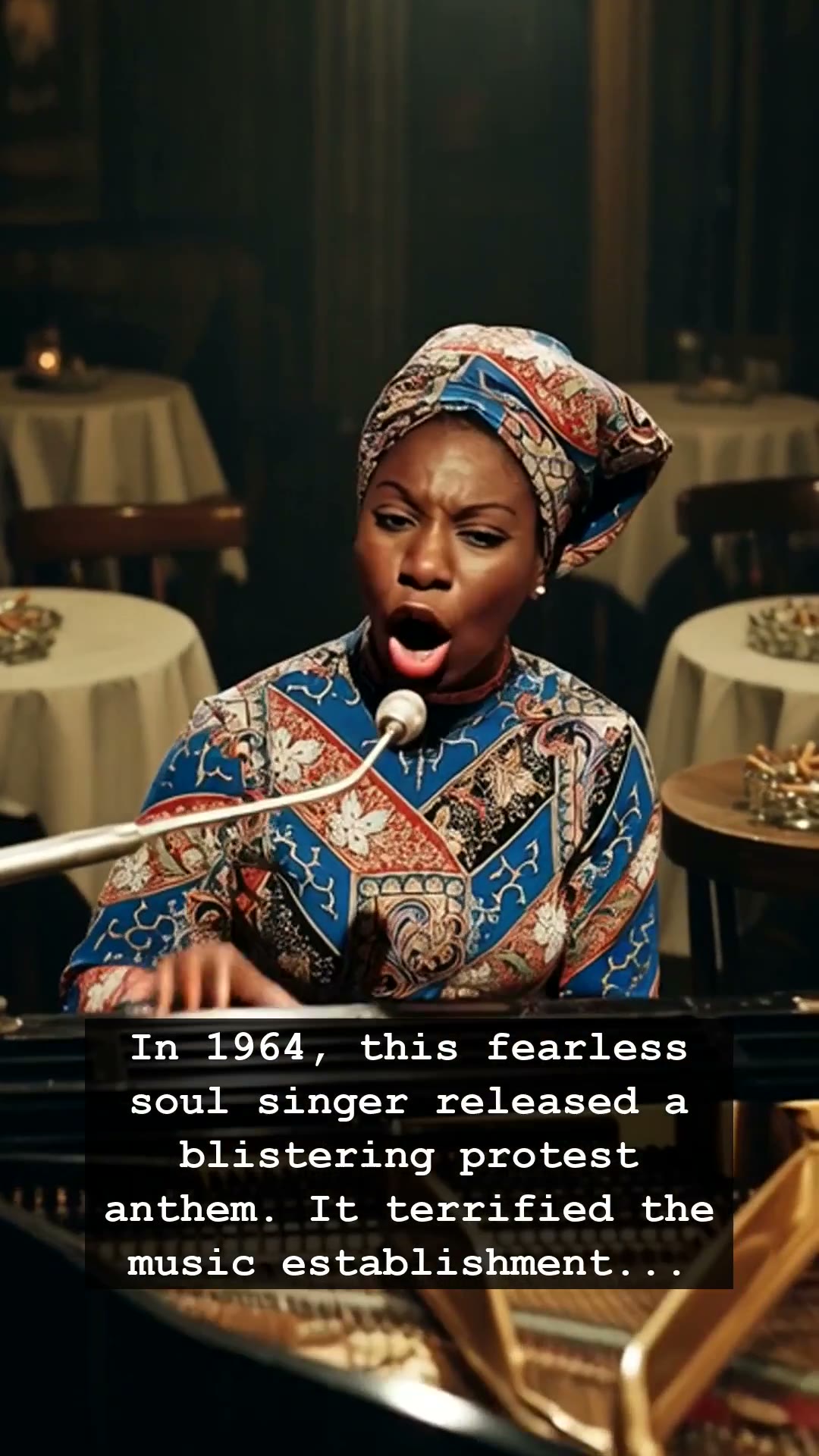
The year was 1964, a time when the American music industry preferred their stars to be soft-spoken and compliant. But Nina Simone was never meant to be comfortable. In the smoke-filled rooms of a nation teetering on the edge of the Civil Rights Movement, the High Priestess of Soul took to the studio to record a song that would not just top the charts, but act as a sonic Molotov cocktail. The song was Mississippi Goddam, a blistering, relentless protest anthem that didn’t just ask for change—it demanded it with a ferocity that caught the music establishment completely off guard.
Nina Simone did not write a typical folk-protest tune; she channeled the collective agony of generations into a swinging, theatrical nightmare that exposed the hypocrisy of the American South. The song was raw, jagged, and unapologetically furious. When the record hit the airwaves, stations across the country were terrified. The music industry, used to the polished, radio-friendly sounds of the early sixties, didn’t know how to handle an artist who refused to separate her art from the brutal political reality of the times. It was a moment of profound artistic courage that forever etched her name into the bedrock of American history.
To understand the gravity of this moment, one must remember the backdrop of the era. This was a world where Jukeboxes were the primary pulse of the neighborhood, and the radio was the gatekeeper of culture. Nina Simone was walking a tightrope between becoming a commercial sensation and a social pariah. Her career had already been marked by a transition from the classical concert halls she dreamed of as a child to the gritty, intimate jazz clubs of the Greenwich Village scene. But by 1964, the internal pressure had become unbearable. The bombings in Birmingham and the assassination of Medgar Evers had pushed her past the point of diplomacy, forcing her to trade her elegant stage presence for a voice that felt like an indictment of the status quo.
Her performance of the track at iconic venues during the mid-sixties became the stuff of legend. Witnesses described the air in the room turning electric, almost dangerous, as Nina Simone sat at the piano, her fingers punishing the keys while her voice cut through the silence like a jagged blade. It was the antithesis of the polished, choreographed performances later popularized by the MTV era. There were no gimmicks, no elaborate stage design—just a woman, a piano, and a truth so incandescent it scorched anyone who stood too close to the fire. It was this authentic, unflinching rage that made her music feel more vital than any hit record produced in a shiny, sterile corporate studio.
Today, we look back at the sixties as an era of revolution, but it is the haunting resonance of Nina Simone that reminds us that progress was bought with immense personal sacrifice. She paid a heavy price for her bravery, facing blacklists and intense scrutiny from a government that viewed her voice as a threat to national security. Yet, her legacy remains untarnished. Her defiance serves as a permanent reminder that true artistry is not just about entertainment; it is about holding a mirror to the soul of a nation. As we listen to those familiar, crackling recordings today, we are still hearing the echoes of a woman who refused to be silenced, ensuring that the fire she sparked continues to burn bright in the hearts of those who still believe that music can change the world.