
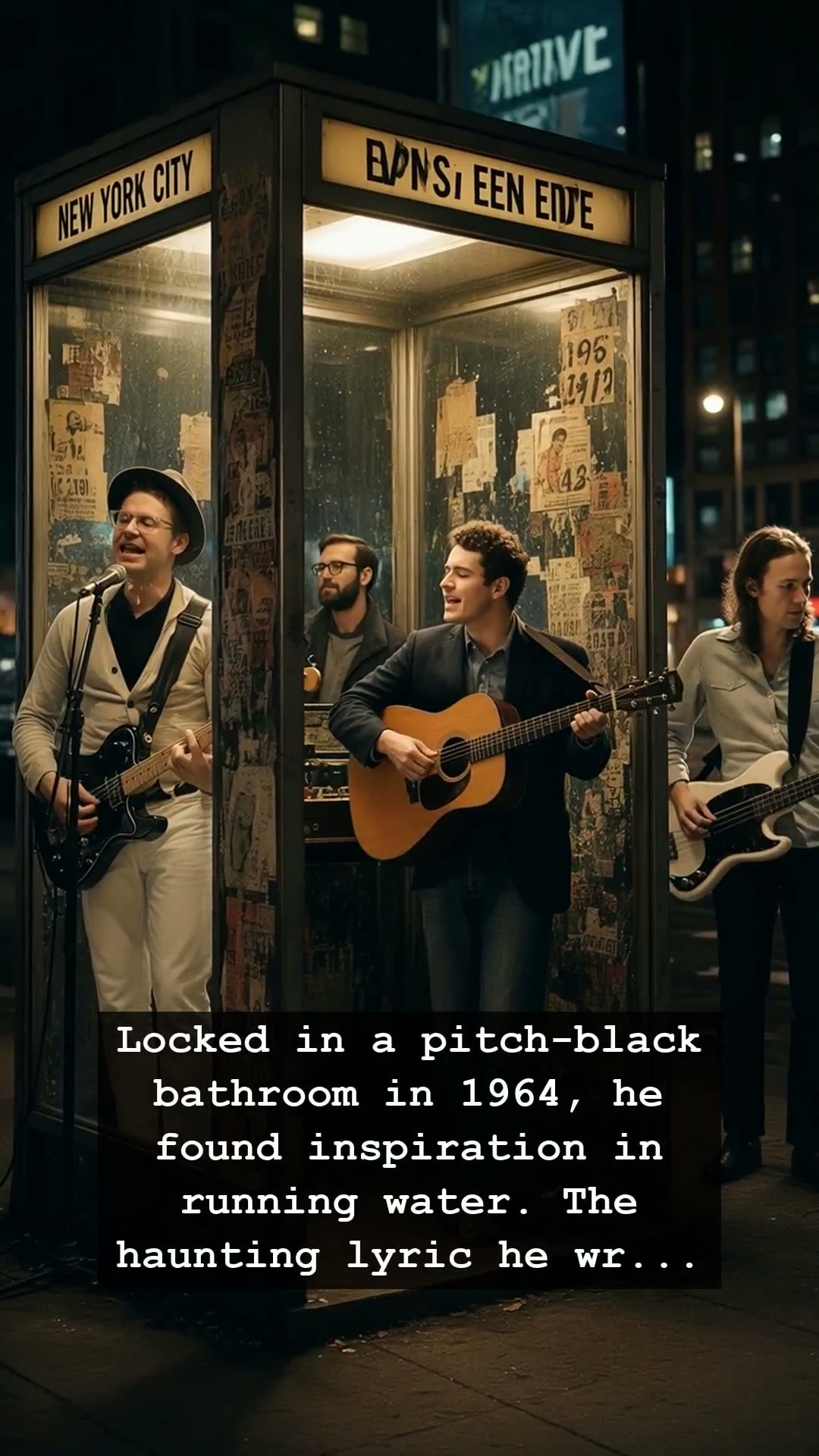
It was 1964, and the world was changing at a breakneck pace. The Beatles had just arrived in America, and the innocence of the early decade was beginning to fracture into something more complex, more introspective, and infinitely more profound. In a cramped, pitch-black bathroom in Queens, a young, anxious songwriter named Paul Simon sat on the cold tile floor. He was not looking for fame or the bright lights of a television studio; he was searching for the silence that lay beneath the roar of the modern world. With the lights killed and only the steady, rhythmic echo of a running faucet for company, Paul Simon whispered the opening lines to a song that would eventually define a generation: Hello darkness, my old friend.
That simple act of sensory deprivation birthed The Sound of Silence. While the music industry at the time was obsessed with the upbeat, jangly optimism of the British Invasion, Paul Simon chose to lean into the void. He understood that beneath the polished veneer of mid-sixties pop, there was a deep-seated loneliness gnawing at the youth culture. The bathroom’s acoustics, with their natural reverb, provided the eerie, haunting chamber for his early folk experimentation. It was a humble studio for a man who would soon become one of the most respected voices in American songwriting, proving that greatness rarely requires grand equipment, only an honest confrontation with one’s own solitude.
When the song first debuted, it did not take the charts by storm; in fact, it initially failed to make a dent. Yet, there was an undeniable magnetic quality to Paul Simon and his partner Art Garfunkel’s harmonies that could not be suppressed. By 1965, a folk-rock remix pushed the track to number one, cementing its status as an anthem for the disillusioned. It captured the specific, cold anxiety of the pre-Woodstock era, standing in stark contrast to the emerging psychedelic colors that would soon wash over the radio waves. It was a song that thrived in the shadows, a perfect soundtrack for a young person listening to a crackling transistor radio under the covers at night.
Looking back, the story of Paul Simon hiding in the dark speaks to the universal struggle of the artist. The track resonates decades later because it strips away the synthetic glitter of the music industry to expose the human condition. It reminds us of a time when songs were crafted with raw emotion rather than algorithmic precision. Even as we moved from the era of vinyl to the digital age, that opening line remains a touchstone for anyone who has ever felt out of place in a crowded, noisy world.
Decades after those lights went out in a New York apartment, the legacy of Paul Simon remains unshakable. He taught us that silence is not just an absence of sound, but a canvas for our deepest thoughts. As we look back at the history of American music, we find that the most enduring hits were not always born in professional recording booths, but in the quiet, desperate moments of human discovery. Next time you find yourself alone, listen closely; you might just hear the echoes of greatness calling out from the dark.