
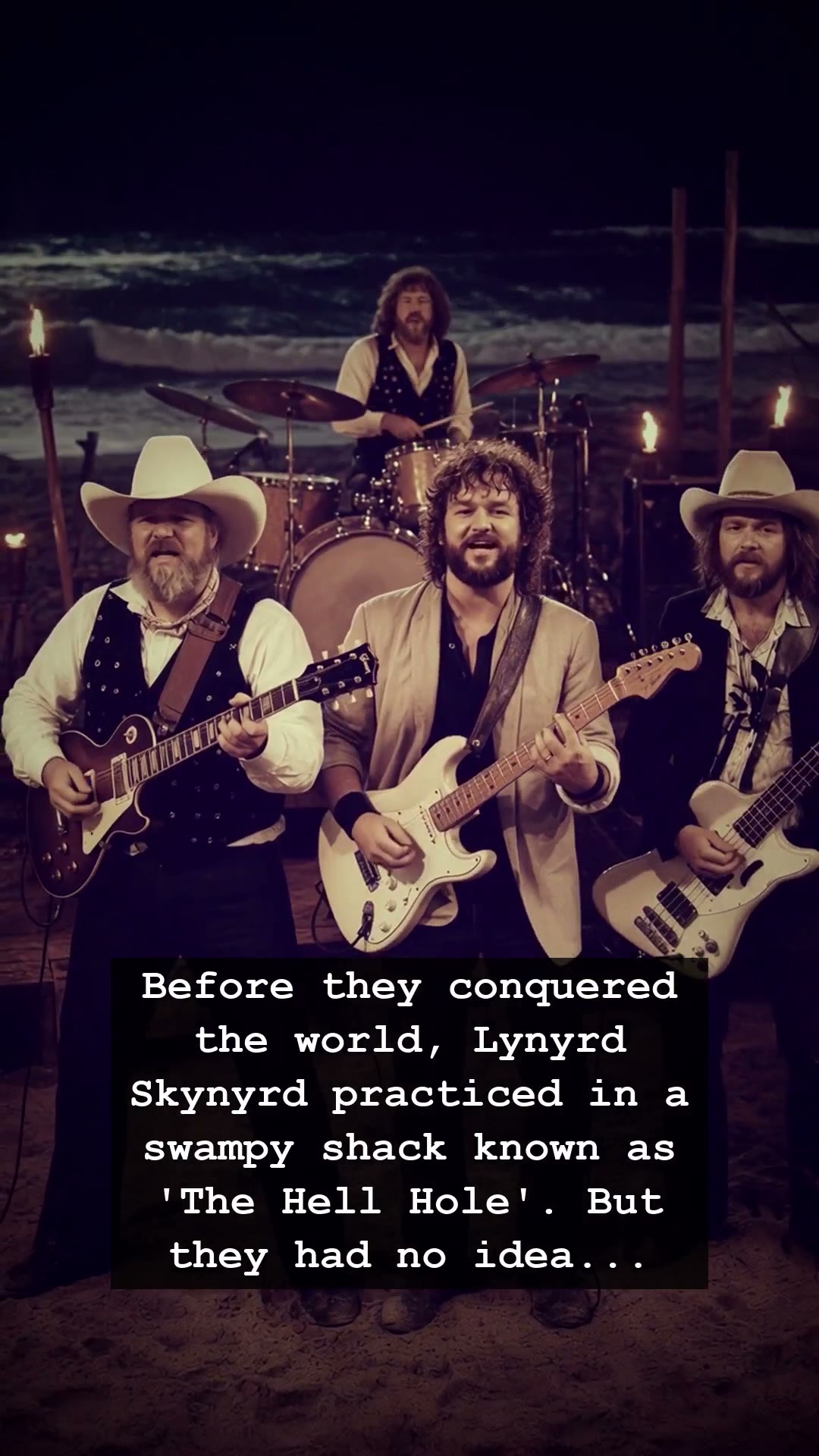
Before the stadiums, the roaring crowds, and the tragic plane crash that would forever immortalize their name, there was only a sweltering, windowless shack in the Florida woods. It was a place where the humidity was thick enough to chew, and the air was perpetually trapped in a state of suffocating heat. The locals simply called it The Hell Hole, but for a group of restless young musicians, it was the crucible where Southern Rock was truly born. Lynyrd Skynyrd did not emerge from a polished studio or a record label’s boardroom; they emerged from the sweat-drenched floorboards of this forgotten wooden cage.
Living in isolation, Lynyrd Skynyrd turned their lack of resources into a weapon. Without air conditioning to stave off the blistering Southern summer, the band spent hours, sometimes entire days, locked inside the shack. The heat was relentless, forcing them to play until their clothes were soaked through and their fingers were raw. It was in this claustrophobic environment that Ronnie Van Zant and his bandmates tightened their craft. The intensity of their rehearsals wasn’t just about discipline; it was about survival. Every riff, every harmonized guitar lick, and every jagged vocal line was tempered by the sheer physical toll of that cramped, swampy space.
The sound that defined the 1970s—a gritty, blues-infused rebellion—was actually a product of that isolation. Lynyrd Skynyrd were outsiders in their own right, forging a sonic identity that felt as wild and untamed as the Florida scrubland outside their door. They weren’t trying to capture the polished pop sensibilities of the era; they were capturing the raw, aching reality of blue-collar life. When you listen to the driving rhythm of their music today, you can almost hear the buzz of the cicadas and the sticky, heavy atmosphere of the room that forged their legend. It was an authenticity that radio stations and listeners in the 1970s had been starving for.
Even as they rose to superstardom, opening for the likes of The Who and conquering the charts, the shadow of The Hell Hole remained. It reminded them of the work, the hunger, and the brotherhood that fueled their ascent. The band’s trajectory is a classic American story of triumph and tragedy, a meteoric rise that was cut short by the devastating 1977 plane crash. Yet, the music they produced in those early, sweltering days has outlasted the fame. It resonates because it feels grounded in something tangible—something that was earned through pain and persistent, unglamorous labor.
Decades later, Lynyrd Skynyrd remains a cultural touchstone for anyone who loves the soul of Southern music. They proved that you don’t need fancy gear or an expensive producer to change the world; you only need a vision, a group of like-minded outcasts, and the audacity to keep playing when the world tells you to quit. Whenever you hear the iconic opening notes of their biggest hits, take a moment to look past the stage lights and imagine a small, shack in the middle of nowhere, where a group of young men were busy turning the heat of their struggle into a sound that would never fade away.