
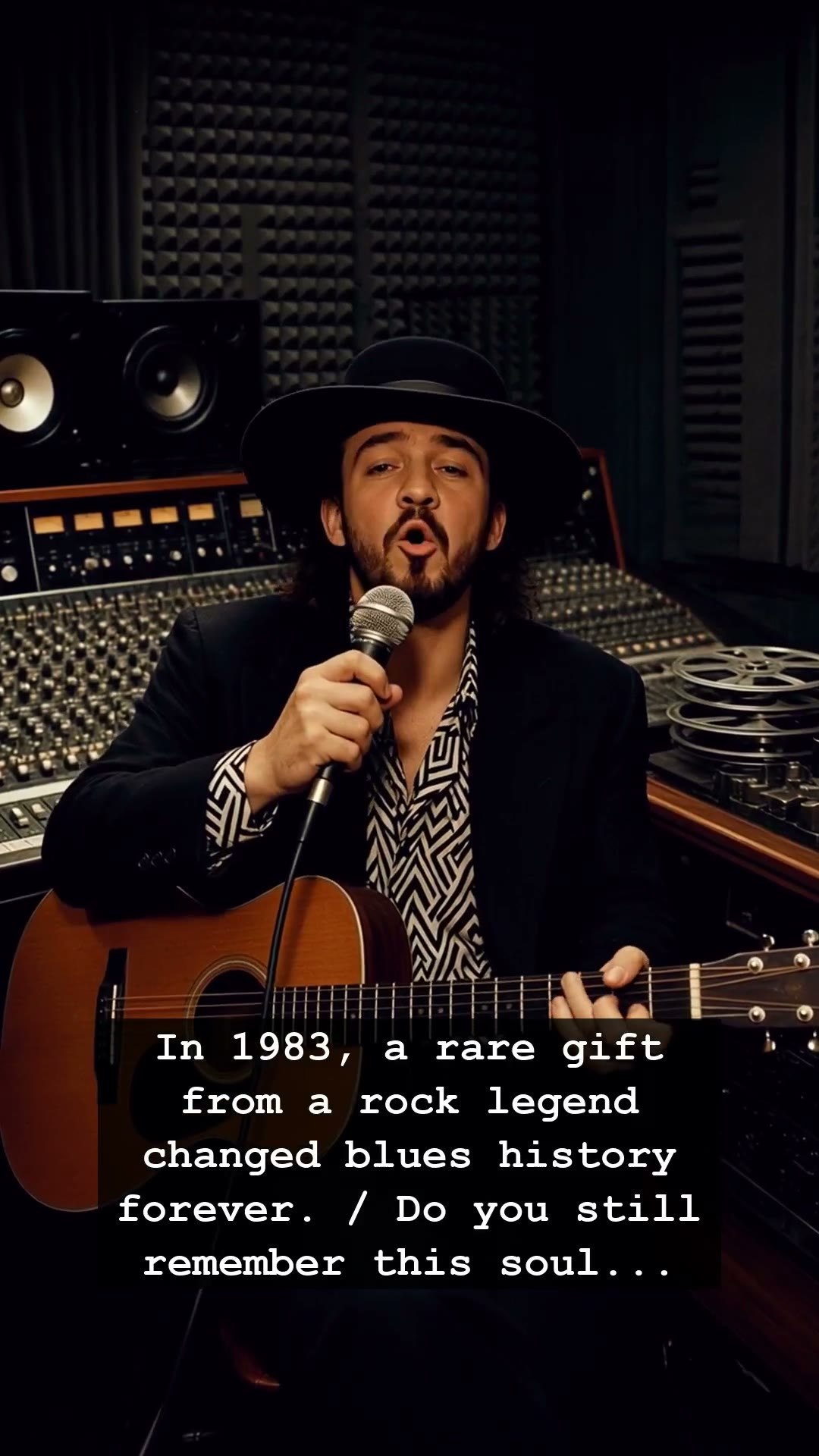
It was 1983, and the air in the music industry was thick with the neon glow of synthesizers and the relentless beat of disco, yet a quiet revolution was brewing in the shadows of the blues. While the world was busy obsessing over MTV, one man was about to bring the soul of Texas back to the forefront of rock and roll. Stevie Ray Vaughan, a man whose hands seemed to bleed pure electricity, was standing on the precipice of greatness. But the secret to his iconic, marrow-deep sound wasn’t just his unparalleled talent; it was a rare, mysterious gift from a rock legend that would forever alter the trajectory of blues history.
Deep within the walls of a dimly lit studio, Stevie Ray Vaughan clutched a vintage 1950s maple neck. This wasn’t just a piece of wood and wire; it was a conduit for a tone that felt like a haunting memory. The gift, bestowed upon him by a titan of the era who recognized a kindred spirit, became the spine of his most intimate instrumental work. When you hear the opening notes of Lenny, you aren’t just listening to a guitar; you are hearing the manifestation of that rare 1950s hardware. It unlocked a warm, buttery, and crystalline resonance that cut through the sterile pop production of the early eighties like a blade of light in a dark room.
Stevie Ray Vaughan didn’t play the blues; he lived it, channelled it, and eventually sacrificed himself for it. During an era when guitar heroes were being pushed aside for drum machines and shoulder pads, Vaughan’s raw, finger-picked intensity felt like a visceral, necessary jolt to the heart. He carried the weight of the Chicago blues masters on his shoulders while injecting it with a psychedelic, Southern fire that could rattle the rafters of any arena. The irony is that while the public was distracted by the glitz of the burgeoning video age, Stevie was busy connecting with the soul of the past, using that legendary guitar neck to weave tapestries of sound that remain untouched by time.
The drama of his life—his battle with demons, the frantic touring, and the sheer, overwhelming pressure of sudden global stardom—only adds to the mythos of his music. He was a man who played as if he were trying to communicate with ghosts, and in many ways, he was. That signature tone, birthed from the marriage of his gifted equipment and his own scarred spirit, created a bridge between the smoky juke joints of yesterday and the modern rock stage. It was a sound that made you feel the humidity of a Texas night and the ache of a broken heart all at once.
Even decades after his tragic departure, the legacy of Stevie Ray Vaughan continues to reverberate through every young guitarist who dreams of finding their own voice. His story reminds us that beneath the facade of stardom and the shifting trends of the music business, true artistry thrives on authentic connection. As you listen to his records today, perhaps on a classic turntable or a worn-out Walkman, take a moment to really hear the texture of that maple neck. It is more than just hardware; it is the heartbeat of a legend that refuses to fade away. What does his music stir in your soul after all these years?