
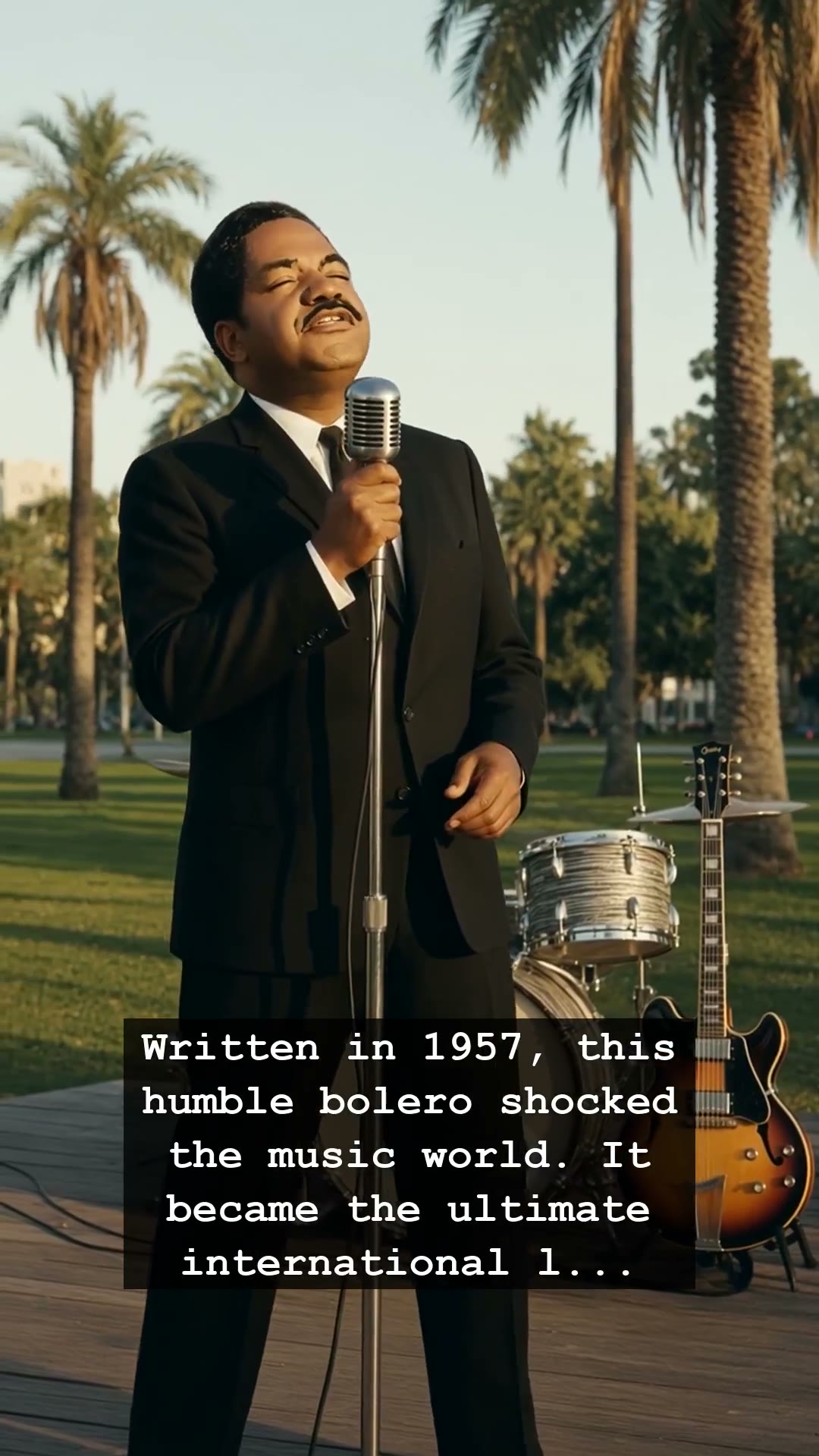
In 1957, when the airwaves were dominated by the rising tide of American Rock ‘n’ Roll and the slick production of early pop, a modest bolero emerged from Mexico to defy every expectation of the music industry. Music executives at the time were skeptical, dismissing it as too regional and too soft to cross the borders into the bustling, neon-lit United States. They couldn’t have been more wrong. The song was Sabor a Mi, and its creator was the brilliant, introspective Alvaro Carrillo. While teenagers were busy spinning Elvis records on their jukeboxes and the cultural shift toward the frantic energy of the late fifties was in full swing, Alvaro Carrillo managed to stop time with a melody that felt as old as the earth itself, yet as intimate as a whispered secret.
Alvaro Carrillo was no ordinary songwriter; he was a master of the human condition, a man who translated the weight of longing into chords that felt like heartbeats. Born in the rugged landscapes of Oaxaca, he brought a soulfulness to his composition that transcended language barriers. When he penned the lines that would define the romantic identity of a generation, he wasn’t just writing a love song; he was crafting an emotional anchor for those lost in the rapidly changing social landscape of the post-war era. The song quickly transcended its humble origins, finding its way into the repertoires of crooners and international stars who recognized that they were holding a piece of pure, distilled magic in their hands.
The genius of Alvaro Carrillo lay in his ability to capture the exact feeling of belonging to someone else. In an era where the world was becoming increasingly fractured—where the Cold War loomed and the search for identity through music became a frantic pursuit—his work offered a sanctuary. It was a stark contrast to the emerging sounds of the time, yet it resonated deeply with audiences from Mexico City to the jazz clubs of New York. Listeners found that beneath the surface of the growing American obsession with speed and the loud, electric glare of emerging genres, there was a profound need for the vulnerability that only a bolero could provide.
Despite the massive global success, the life of Alvaro Carrillo was marked by a melancholic undertone, a common thread among the artists who touch the sublime. His untimely death in 1969 left a void in the world of Latin music that has arguably never been filled. Yet, every time the opening notes of Sabor a Mi drift through the speakers of a dimly lit restaurant or crackle through a vintage radio, he returns. His legacy is etched not just in sheet music, but in the collective memory of millions who have used his words to express what they could not say themselves.
Even today, in an age of digital streaming and fleeting trends, the influence of Alvaro Carrillo remains unshakable. It is a testament to the fact that authentic emotion, when captured with such precision, never truly goes out of style. As we look back at the pioneers who shaped the soundscapes of the mid-20th century, we realize that while the technology of playback has evolved from vinyl to high-fidelity files, the ache in our hearts remains exactly the same. Do you remember the first time you heard it, and who you were thinking of when the melody finally took hold?