
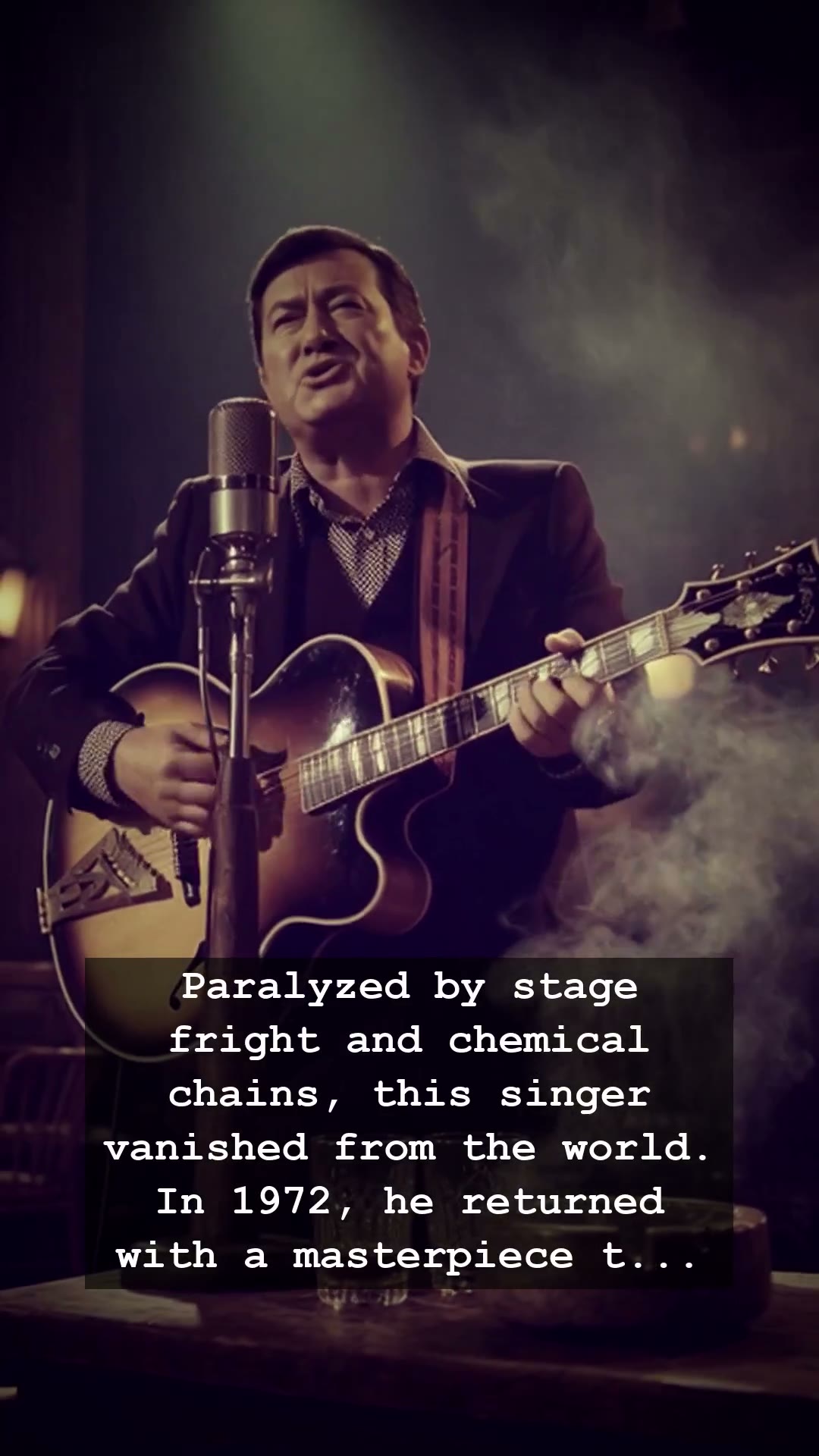
In the smoke-filled haze of a mid-century honky-tonk, music was more than just a melody; it was a lifeline. Yet, for Don Gibson, the very stage that defined his legend became a terrifying cage. By the late 1960s, one of the most prolific songwriters in the history of country music had effectively vanished from the public eye. Paralyzed by crippling stage fright and trapped in the suffocating cycle of chemical dependence, he retreated into a shadow world. Fans who had once spun his records on their beloved jukeboxes feared that the man who gave us the standard I Can’t Stop Loving You had finally lost his battle with the demons of fame. The industry moved on, leaving behind a silence that felt heavy and permanent.
But the spirit of a true artist rarely stays buried. In 1972, the music landscape was shifting—the era of the glossy Nashville sound was being challenged by a rawer, more personal kind of storytelling. Against all odds, Don Gibson emerged from his self-imposed exile, carrying a masterpiece that defied every rule of the commercial music machine. His comeback was not a calculated PR move; it was a gut-wrenching, raw confession. When he stepped back into the recording booth, he wasn’t trying to please a label executive; he was trying to exorcise the ghosts that had haunted him for a decade. The resulting tracks resonated with a haunting authenticity that felt like a bridge between the lonely, neon-lit nights of the 1950s and the introspective singer-songwriter boom of the early 1970s.
What made the return of Don Gibson so shocking was the vulnerability he displayed. In an era where stars were expected to maintain a polished, indestructible image, he chose to bleed into the microphone. He spoke to the millions who had struggled with their own hidden chains, those who found solace in his lyrics during long, lonely drives or quiet nights at home. This was the magic of the golden age of country music—it was never just about the chart positions or the glitz of the Grand Ole Opry; it was about the shared pain that music could somehow alleviate. Don Gibson understood this better than anyone, turning his private misery into a universal language of healing.
Even today, looking back at that pivotal year of 1972, the story of his resurgence serves as a powerful reminder of the resilience of the human spirit. It is a testament to the fact that talent is not a finite resource that dries up, but a flame that can be rekindled even after it has flickered to near extinction. Don Gibson did not just return to the charts; he returned to himself. His comeback remains a benchmark for artists who find themselves lost in the wilderness of their own making.
Do you remember the first time you heard that voice drift from your radio, signaling a second chance? The legend of Don Gibson reminds us that while the spotlight can blind us, the music itself remains our truest guide home.