
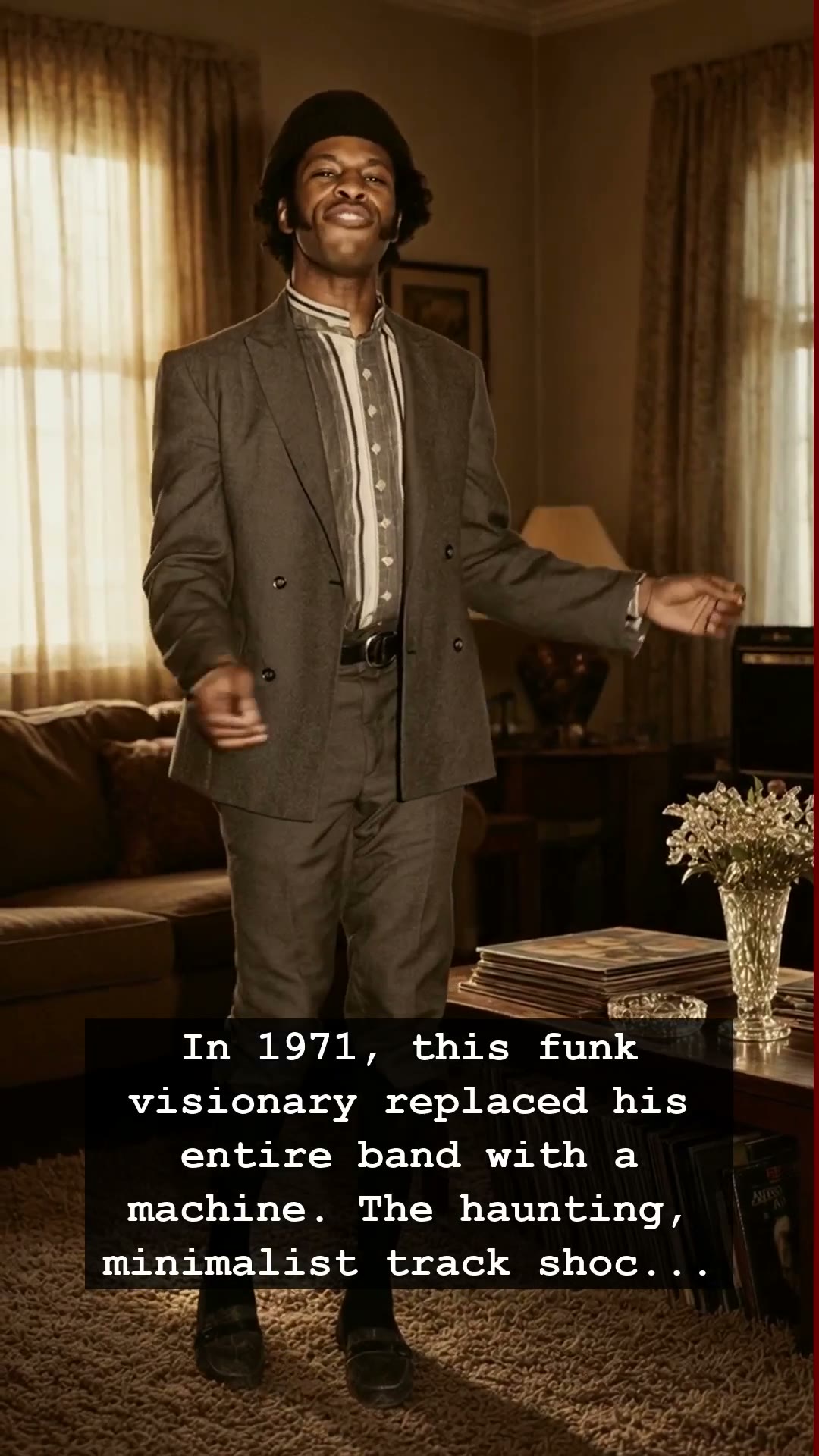
In the golden haze of 1971, the world of music was shifting. Sly Stone, the flamboyant architect of psychedelic soul, stood at the precipice of cultural divinity. His band, Sly and the Family Stone, had been the pulsating heart of the Woodstock era, a colorful kaleidoscope of unity and funk. But behind the glitz and the velvet suits, a darker, colder reality was brewing. In a move that shocked the record industry and his own bandmates alike, Sly Stone retreated into the tomb-like silence of his studio, effectively locking out the world and replacing the warmth of live musicianship with the sterile, mechanical rhythm of a primitive drum machine. The resulting track was haunting, stark, and utterly alien to the groove-laden hits that had defined his rise to fame.
This minimalist masterpiece, dripping with a haunting sense of isolation, climbed to the top of the charts while signaling a tragic rupture in Sly Stone’s life. To the listeners sitting in their living rooms, clutching their copies of the latest record, the music sounded like a visionary leap forward. In reality, it was the sound of a man dismantling his own paradise. The vibrant, collective energy that once defined the Family Stone was replaced by the cold, ticking precision of technology. It was an eerie premonition of the isolation that would soon consume him, as his drug-fueled descent turned the once-effervescent icon into a phantom of his former self, often failing to show up for stadium concerts while his fans waited in agonizing, confused silence.
Why did a man who championed human connection choose to bury himself in a machine? The answer lies in the crumbling pressure of late-sixties idealism and the crushing weight of sudden, monumental fame. As the decade turned and the optimism of the Summer of Love dissolved into the cynical grime of the early seventies, Sly Stone found himself trapped in the vortex of his own legend. The studio became his fortress and his prison, a place where he could exert total control while his personal world splintered beyond repair. He traded the shared sweat of a stage for the solitary flicker of a mixing console, turning his genius inward until it began to fold under its own gravity.
Looking back from the vantage point of today, the story of Sly Stone remains a visceral reminder of the duality of creative brilliance. He was a pioneer who pushed the boundaries of funk and soul further than anyone thought possible, yet his career serves as a somber cautionary tale about the cost of total artistic obsession. That specific track, released in the shadow of his band’s collapse, remains one of the most chilling artifacts of that era. It is a piece of music that feels both ahead of its time and deeply embedded in the tragic human condition.
Even now, decades after his disappearance from the spotlight, the ghost of Sly Stone still haunts the industry. We still listen to those records, searching for the man beneath the machinery, hoping to understand what happened in that dark room in 1971. His music continues to resonate because it is raw, unfiltered, and deeply human, even when he tried to strip it of all warmth. As you pull a dusty vinyl from the shelf tonight, take a moment to listen closely to the rhythm; perhaps you can hear the faint echoes of the man who dared to change the world before the machine finally took hold.