
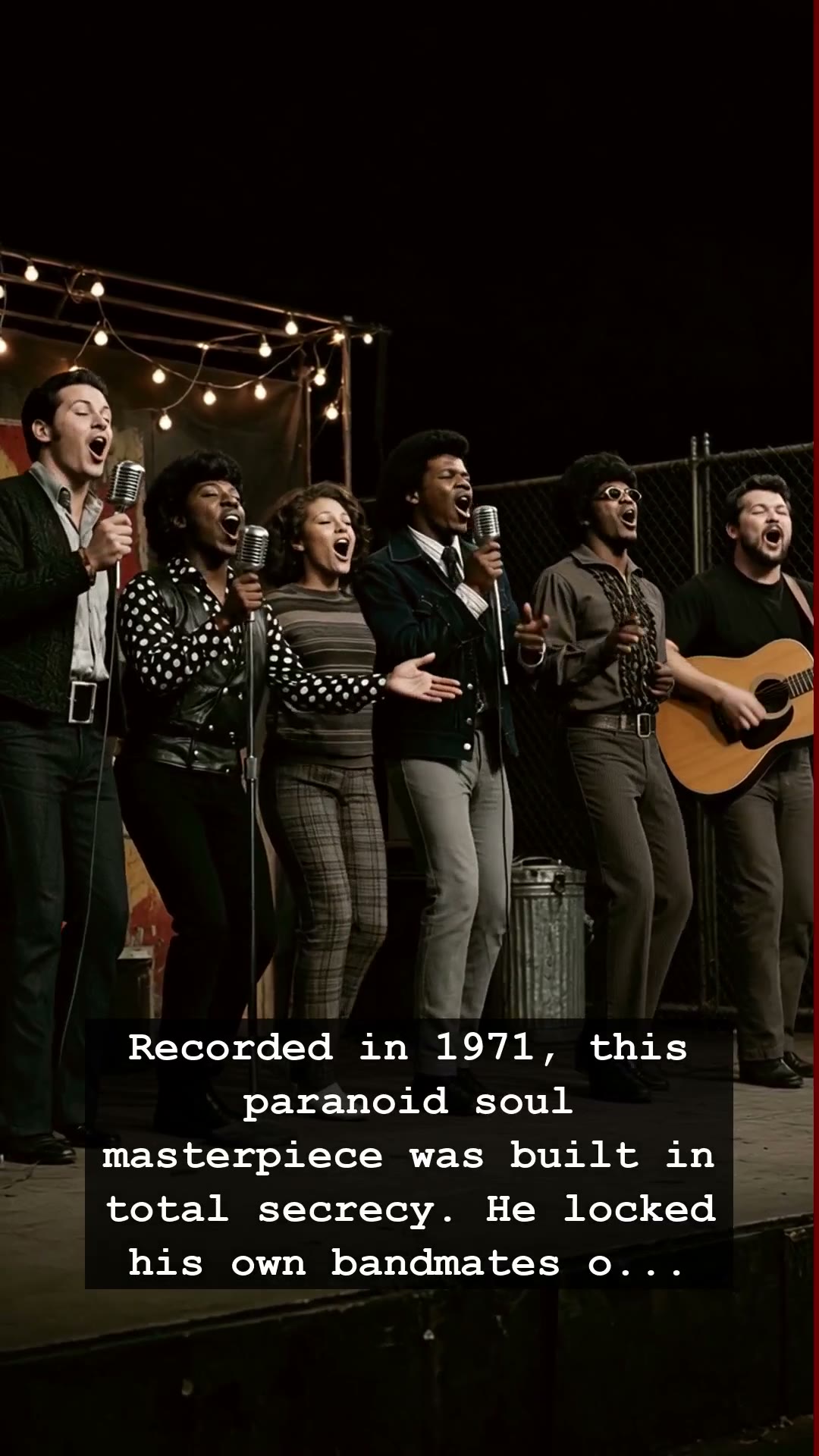
It was 1971, a year when the golden age of peace and love had curdled into something far more jagged and cold. While the rest of the world was distracted by the birth of the Walkman or the growing influence of the FM radio revolution, one man was descending into a private labyrinth of paranoia and sonic genius. Sly Stone, the charismatic visionary behind Sly and the Family Stone, was becoming a prisoner of his own success. The result of that isolation was the album There’s a Riot Goin’ On, a record so haunting and claustrophobic that it remains one of the most enigmatic chapters in the history of soul music.
Most bands operate as a unit, a brotherhood of sound, but Sly Stone decided to tear that model apart. In a move that shocked the industry, he essentially locked his own bandmates out of the studio. During those long, hazy nights in Los Angeles, he played almost every instrument himself. He was chasing a ghost of a sound—a murky, low-fidelity soul that mirrored the state of his own fractured mind. The upbeat, psychedelic exuberance that defined their Woodstock era had evaporated, replaced by a brooding, rhythmic intensity that felt like a slow-motion collapse of an empire.
To listen to that record today is to step into a time capsule of disillusionment. There is a palpable sense of tension baked into the master tapes. You can hear the ghosts of the era in the way the bass lines drag and the synthesizers groan. It was the antithesis of the polished pop machines that would later dominate the airwaves. Sly Stone was not trying to make a hit; he was documenting his descent into a world where fame had become a heavy, gilded cage. The secrecy was not just a stylistic choice; it was a desperate defensive mechanism against a music industry that demanded his soul in exchange for more chart-topping success.
Despite the chaos, or perhaps because of it, the album became a masterpiece of Funk and Psychedelic Soul. It set the blueprint for artists who would later use the studio as a private bunker, retreating from the public eye to weave their deepest anxieties into sound. The drama behind the scenes—the missed rehearsals, the erratic behavior, and the total withdrawal from his bandmates—became the stuff of rock and roll legend. It was a tragic, beautiful moment where personal breakdown fueled artistic breakthrough, creating a sonic landscape that felt both dangerous and deeply human.
Decades later, the legacy of Sly Stone in 1971 remains a stark reminder of the cost of genius. We often look back at the era of vinyl and analog tape with a sense of warm nostalgia, forgetting the grit and the loneliness that existed behind the velvet curtains. If you listen closely to the tracks on that album, you aren’t just hearing music; you are hearing the echo of a man standing alone in a room, trying to make sense of a world that had forgotten how to dance. Do you still remember the weight of that sound?