
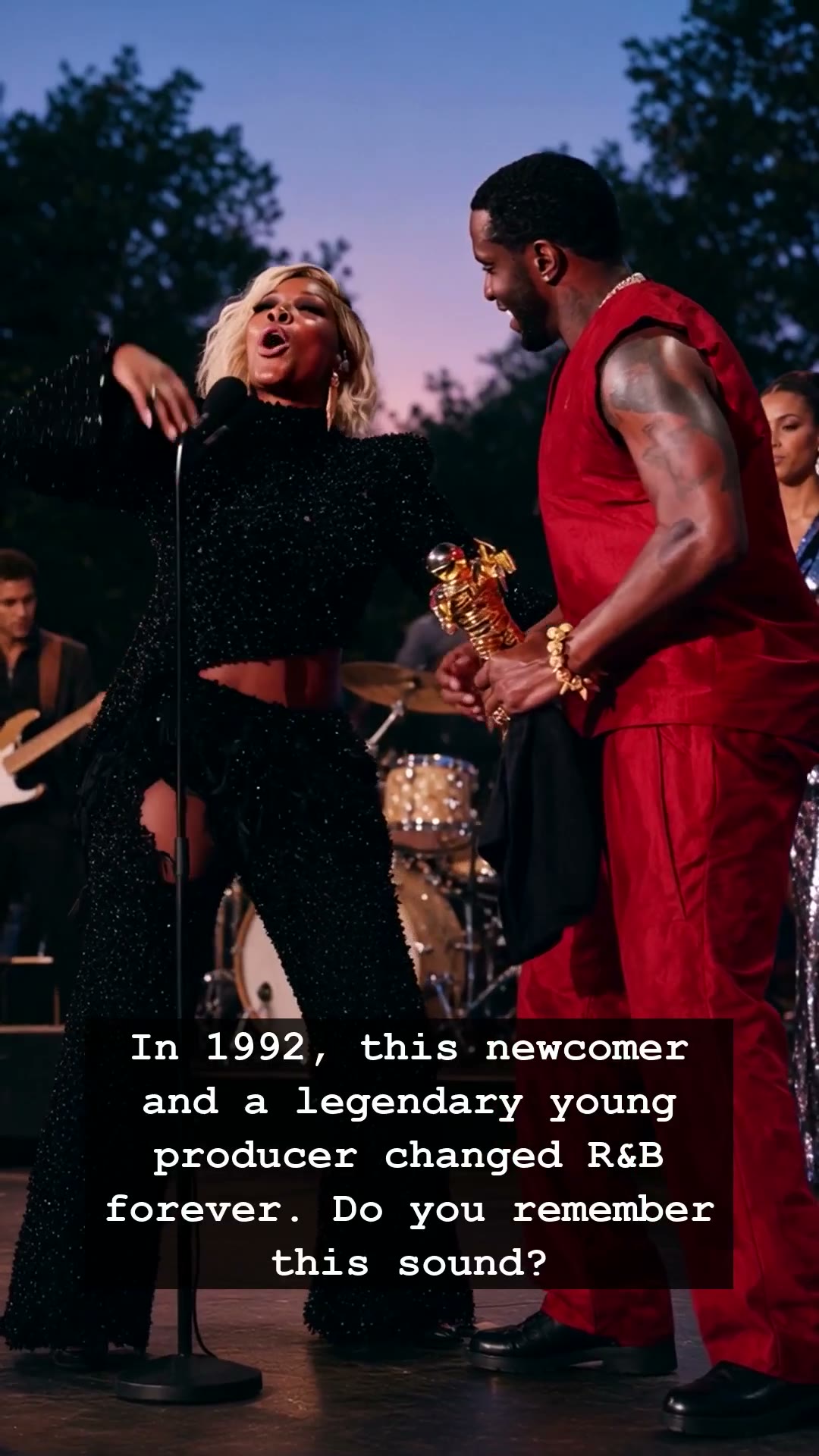
In the early nineties, the airwaves were still clinging to the polished, synthetic echoes of the eighties. The radio was a factory of perfection, but in the gritty, dimly lit corners of Uptown Records, a collision was about to shatter the status quo. A young woman named Mary J. Blige sat in a studio booth, ready to walk away from music entirely. She was raw, she was unfiltered, and she felt like a misfit in an industry obsessed with glitz. Then, an ambitious, fast-talking young producer named Sean Combs entered the frame. He saw not just a singer, but a voice for a generation that hadn’t yet found its soundtrack.
This wasn’t just another collaboration; it was a total stylistic overhaul. While the world was still mourning the loss of the soul-driven seventies and the glitz of Studio 54 had faded into legend, Mary J. Blige and Sean Combs were busy stitching together a new fabric. They took the soulful, gut-wrenching pain of classic R&B and fused it with the sharp, rhythmic grit of the burgeoning hip-hop culture. They didn’t just record a song; they invented a genre. This was the birth of Hip-Hop Soul, a sound that felt as personal as a diary entry and as street-smart as a midnight walk through Harlem.
At the time, the industry didn’t know what to make of them. Labels wanted the next diva, but Mary J. Blige was sporting combat boots, oversized jerseys, and a demeanor that refused to be managed or molded. Sean Combs, relentless in his vision, pushed her to channel every ounce of her personal trauma into the microphone. It was a volatile partnership. There were heated arguments, creative friction, and the looming pressure of a debut that could either launch a career or end it before it truly began. They were the original architects of the nineties aesthetic, influencing the style that would eventually define the era of MTV culture and the Walkman generation.
When that first hit finally pierced the airwaves, the shift was seismic. It wasn’t just music; it was a cultural shift that demanded authenticity over artifice. You could hear the pain, the street survival, and the unwavering strength in every note Mary J. Blige delivered. The production from Sean Combs provided a rugged, rhythmic backbone that made the music feel immediate and vital. For those of us who grew up with their tracks pulsing through our speakers, it was the moment R&B stopped trying to be polite and started telling the truth.
Looking back, the impact of that 1992 revolution is undeniable. It paved the way for every artist who dared to blend genres without apologizing for their roots. Even now, decades later, the raw emotion of those early recordings holds a power that digital perfection cannot replicate. It reminds us of a time when the music business was a wild west of creative risks and high-stakes gambles. Do you still remember where you were the first time that sound changed your world?