
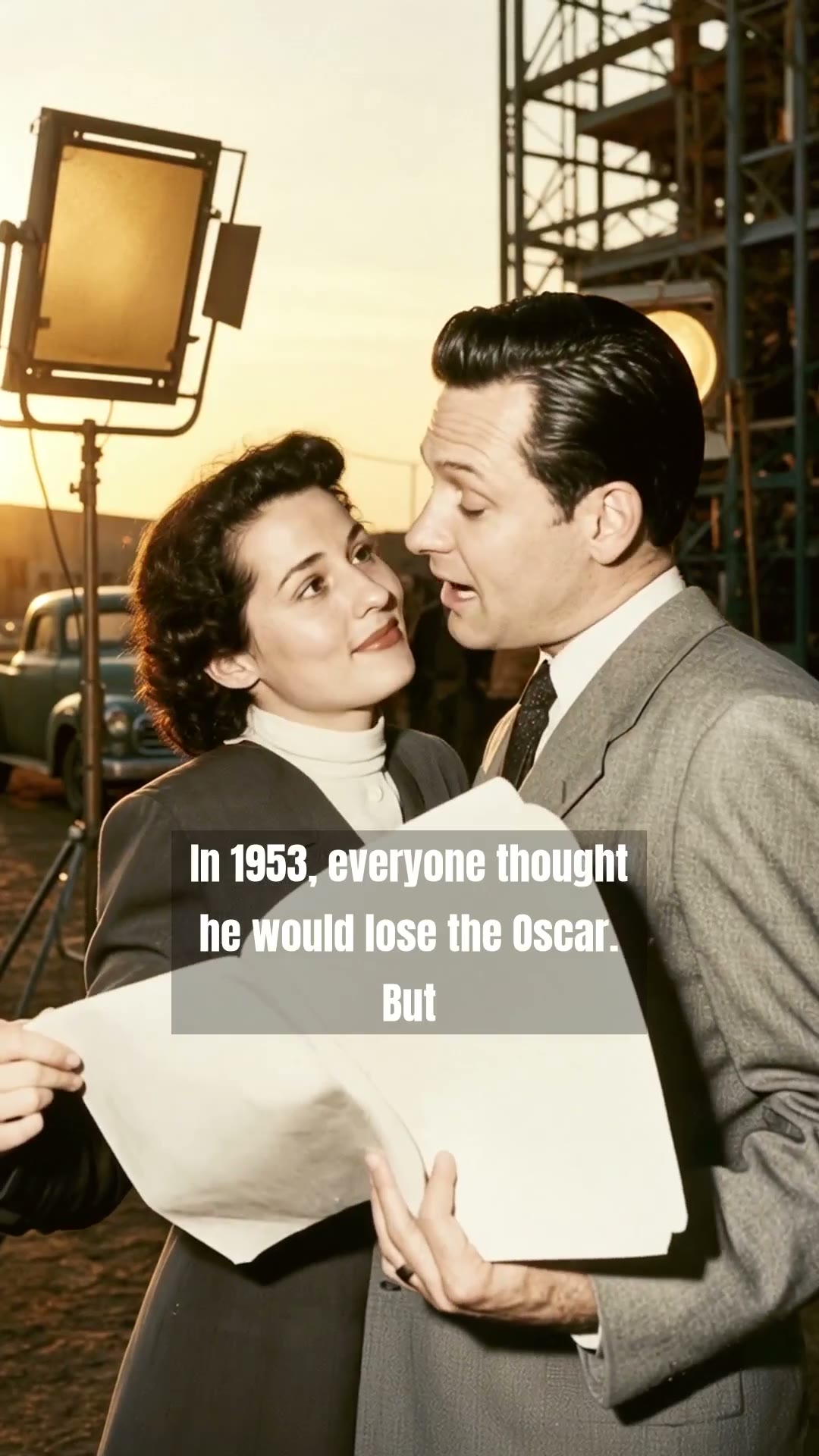
In the glittering era of Golden Age Hollywood, few stars possessed the rugged authenticity and effortless charisma of William Holden. Known for his piercing gaze and a deeply grounded approach to his craft, Holden was the quintessential American leading man of the 1950s. While modern audiences might look back at his filmography through the lens of digitally restored classics, there was a time when his name meant everything to those waiting in line at the local cinema. Among the many chapters of his storied life, one specific moment from the 1953 Academy Awards remains etched in the annals of Tinseltown history—a moment that redefined the humility and unpredictability of Oscar night.
Heading into that 1953 ceremony, the industry was abuzz with speculation. William Holden, nominated for his breathtaking performance as the cynical prisoner of war in Stalag 17, was widely considered the underdog. The competition was fierce, and the atmosphere in the RKO Pantages Theatre was thick with the scent of expensive perfume and nervous anticipation. When his name was finally called as the winner for Best Actor, the room seemed to hold its collective breath. Holden, clearly stunned by the result, walked to the stage with a sense of genuine disbelief that stood in stark contrast to the rehearsed speeches we see today. He approached the microphone, looked out at his peers, and whispered just two words: Thank you.
That brief, breathless acceptance remains the shortest in the history of the Academy Awards, a stark departure from the lengthy, carefully curated monologues that define our modern era. In those two syllables, William Holden captured a rare kind of sincerity that has become all too fleeting. He wasn’t there to perform an act of humility; he simply lived it. Throughout his career, Holden embodied the principles of Method Acting in his own quiet way, always seeking the truth in the eyes of his costars and the tension of a scene. He brought a weight to his roles, whether in the sun-drenched dramas of the mid-fifties or the grittier, complex thrillers that would follow in the 1970s.
For those of us who grew up clutching VHS tapes of his masterpieces, the memory of William Holden represents more than just a famous face on the silver screen. He was a symbol of an era where talent was measured by presence and character. His legacy is not found in the vanity of red carpet moments, but in the enduring power of films like Sunset Boulevard and Network. He reminded us that the most impactful messages often require very few words, a lesson that feels remarkably resonant in our noisy, modern landscape.
Even decades after his passing, the man behind the screen still commands our respect and admiration. He walked the path from the Golden Age into the New Hollywood era with grace, leaving behind a body of work that continues to influence generations of storytellers. Looking back at that brief, shocking moment in 1953, we are reminded that sometimes, the most profound statements are the ones we say when we are at a loss for words. We invite you to revisit his films this weekend, sit back, and remember the quiet strength of a true Hollywood legend.