
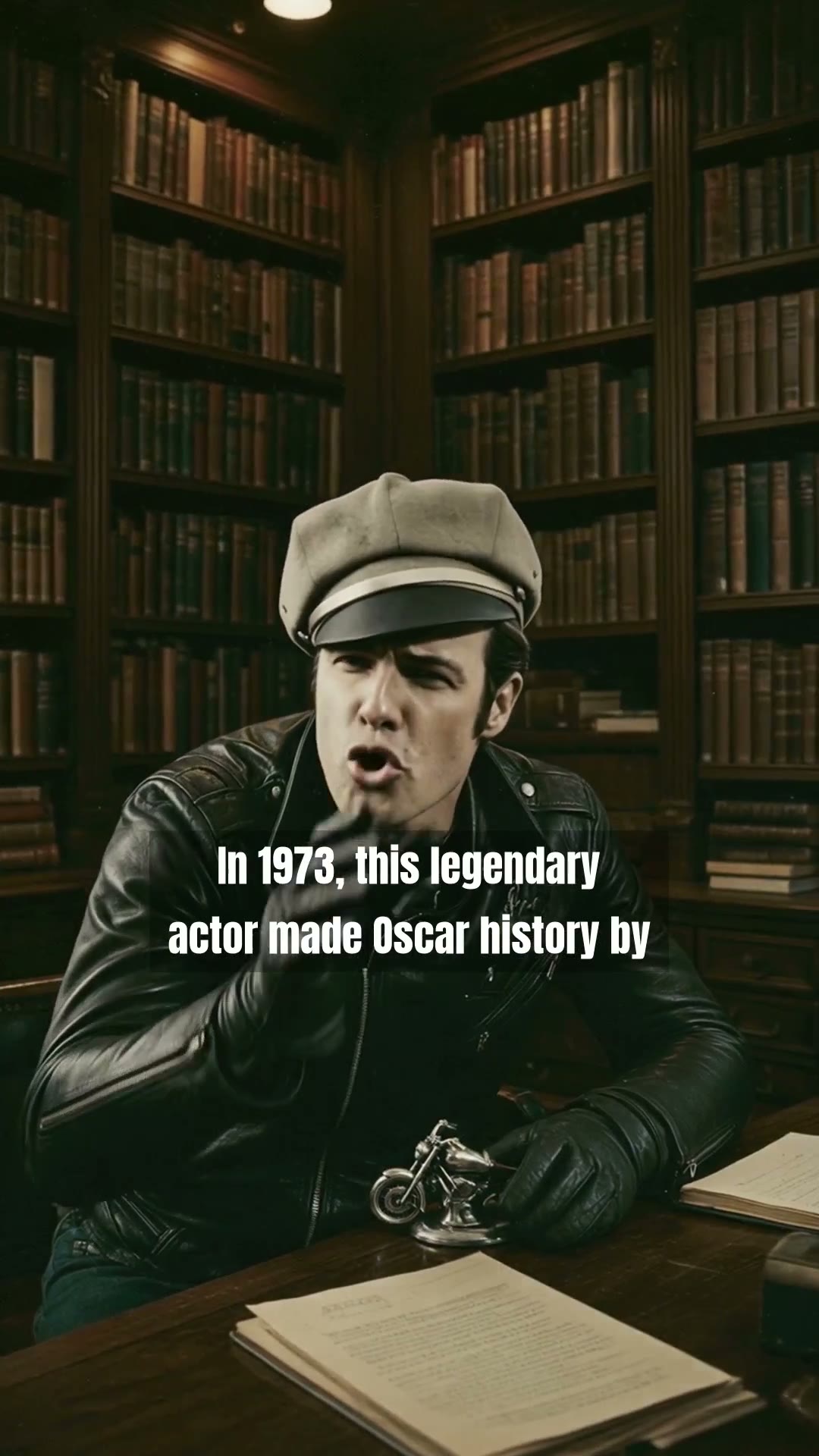
There are moments in the history of the Golden Age of Hollywood that feel etched in stone, forever preserved in the grain of flickering 35mm film. Yet, few events possess the seismic, transformative power of the 1973 Academy Awards. As the ceremony unfolded, the world expected the usual pomp and circumstance of Oscar Night, with tuxedos and gilded statues defining the evening. Instead, the industry faced an act of defiance that changed how we perceive the intersection of celebrity, politics, and the silver screen. When the winner for Best Actor was announced for his iconic role in The Godfather, the man whose name was called did not stand up. Marlon Brando, the ultimate practitioner of Method Acting, chose to stay home, sending Sacheen Littlefeather in his place to address the systematic mistreatment of Native Americans in cinema.
To understand the gravity of that moment, one must remember the stature Marlon Brando held at the time. By 1973, he was already an enigma, a man whose raw, naturalistic style had pioneered a new era of performance that moved away from the stilted dialogue of early film. He was not merely a star; he was an artistic force of nature who commanded the screen with a silent intensity that few have ever replicated. His refusal to accept the award was not a gesture of vanity, but one of deep, humanistic conviction. It was a rare instance where the art was intentionally placed below the moral necessity of the truth.
For those of us who grew up during the decades when film was synonymous with the tangible weight of a VHS tape sliding into a player, Marlon Brando represented the pinnacle of the craft. His career spanned the transition from the polished studio system to the gritty realism of New Hollywood, leaving a legacy that remains untouchable. Whether he was channeling the brooding rage of Stanley Kowalski or the quiet authority of Don Corleone, he taught us that a performance could do more than entertain; it could mirror the complexities of the human condition. His influence remains a gold standard for every actor who seeks to disappear entirely into their role.
Looking back, the 1973 protest serves as a poignant reminder of a time when the giants of the screen felt like truly towering figures with individual agency. It was an era where the Walk of Fame felt like a sacred path and every blockbuster release was an event that united communities. Marlon Brando stood at the center of this cultural tapestry, a titan who was never afraid to challenge the status quo, even at the peak of his commercial power. His choice to use the most prestigious platform in the world for a greater cause resonates today as a blueprint for artistic integrity.
As we revisit these vintage reels and dust off our old favorites, we are reminded that stars like Marlon Brando gave us more than just movies; they gave us a language of emotion and a sense of shared history. They forced us to look at the world differently, pushing boundaries both on and off camera. As the curtain falls on those golden decades, his legacy endures as a beacon of artistic truth, a testament to a time when cinema truly dared to matter in the hearts of millions. Let us continue to cherish these stories, for they are the heartbeat of a past that shaped our present.