
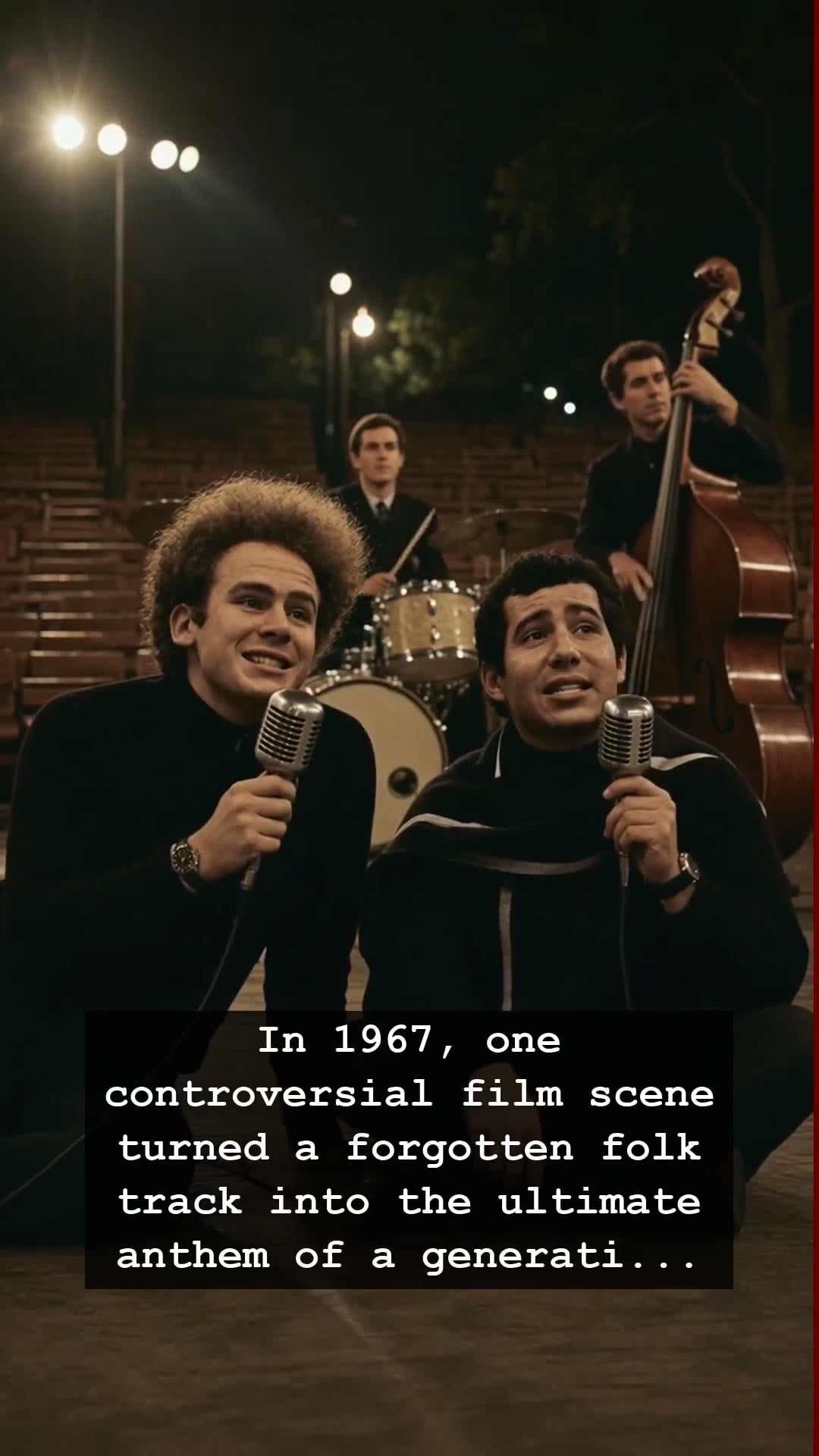
It is the opening sequence that haunts the collective memory of a generation. A young Dustin Hoffman, his face masked in a layer of profound, youthful alienation, drifts through a crowded airport terminal as if he were a ghost haunting his own life. Beside him, the camera lingers, but the air is filled not with dialogue, but with the haunting, crystalline harmonies of Simon and Garfunkel. This was the moment in 1967 when The Graduate changed the trajectory of pop culture forever, dragging a largely ignored folk track from the basement of obscurity into the blinding light of an immortal anthem. The Sound of Silence was no longer just a song; it became the definitive pulse of a nation grappling with disillusionment.
Yet, the story of Simon and Garfunkel is rarely as harmonious as their vocal blends. Before they became the voices of a decade, Paul Simon and Art Garfunkel were two ambitious kids from Queens, struggling to find their footing in a post-Woodstock world that was rapidly shifting under their feet. Their initial release of the song in 1964 had flopped, landing with a silence as heavy as the title suggested. It was only after a producer secretly added a rock beat behind their backs—without their permission—that the track began to climb the charts. This creative betrayal would simmer beneath the surface of their partnership for years, a testament to the friction between artistic integrity and the cold, mechanical demands of the music industry.
By the time Mike Nichols chose the song for his cinematic masterpiece, the duo was already on the verge of redefining the folk-rock landscape. The song tapped into something visceral—a deep, existential loneliness that felt unique to the baby boomers watching the American dream fracture. As the needle dropped on the vinyl, listeners weren’t just hearing a melody; they were hearing their own anxieties reflected in the lyrics about people talking without speaking and hearing without listening. It was the perfect backdrop for a generation caught between the buttoned-up expectations of their parents and the chaotic, neon-lit promise of a future they didn’t quite understand.
What makes the legacy of Simon and Garfunkel so enduring is this tension. They were the masters of the melancholic, the architects of a sound that felt both ancient and urgent. Their relationship was a tumultuous dance of intellect and ego, marked by professional breakthroughs that pushed them further apart as human beings. Even at the height of their success, the darkness of the music industry—the grueling tours, the pressure to produce the next hit, and the weight of representing an entire generation—was always looming in the background, just out of frame.
Decades later, when we hear those opening chords, we are transported back to a time of analog magic and raw human connection. We are reminded of the power of a single song to define an era, and how Simon and Garfunkel managed to capture the ephemeral feeling of being young, lost, and alive in America. As the echoes of their voices fade, we are left to wonder if we, too, are still hearing those words of the prophets written on the subway walls, waiting to be understood.