
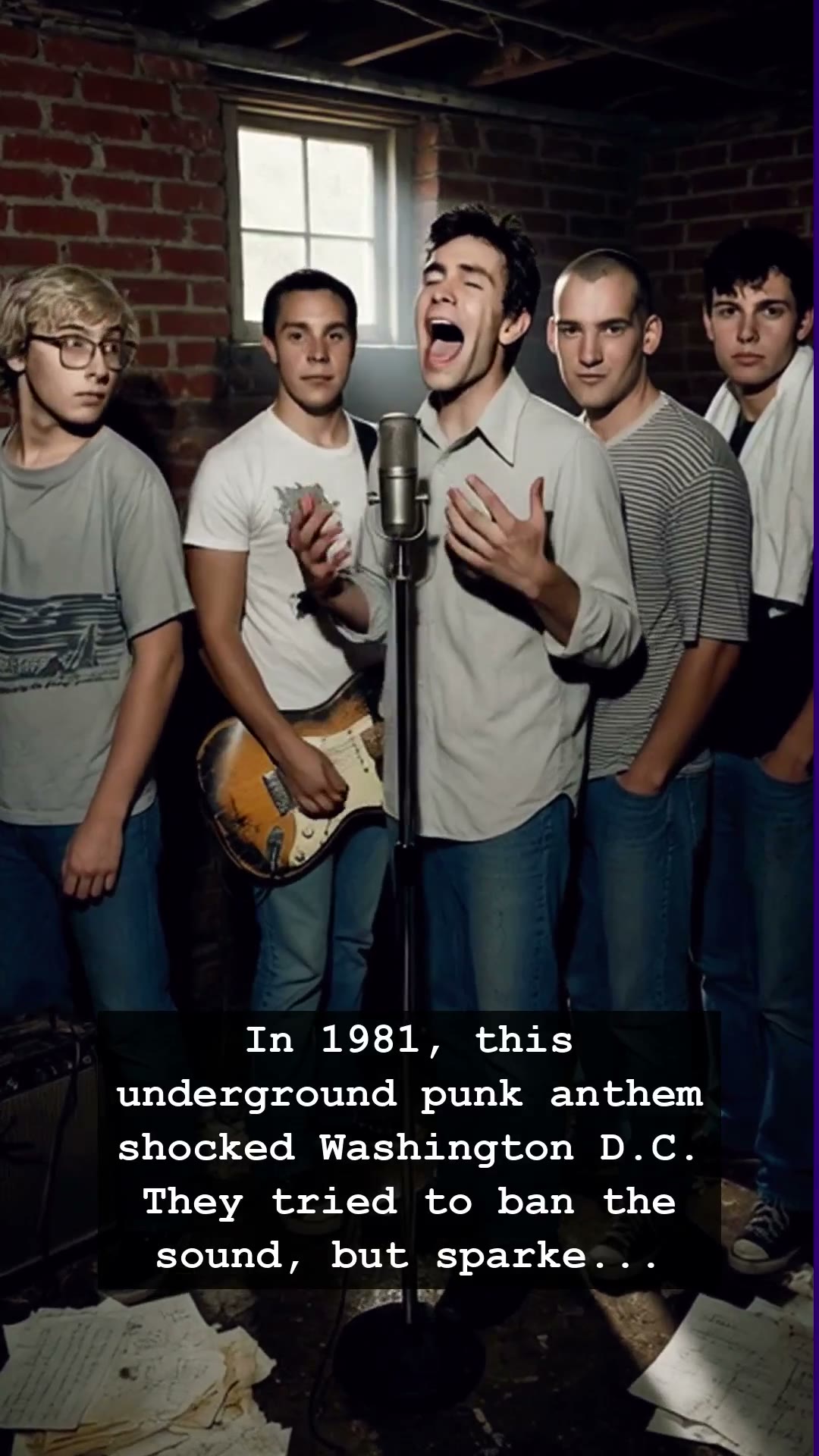
The year was 1981, and the air in Washington D.C. felt heavy with the scent of ozone and impending chaos. While the rest of the country was preoccupied with the gleaming, neon-lit promises of the early MTV era, a basement-dwelling firestorm was brewing in the nation’s capital. A group of defiant teenagers known as Minor Threat didn’t just want to play music; they wanted to dismantle the tired rock-and-roll clichés of their predecessors. When their raw, blistering sound first hit the local clubs, it wasn’t just a concert; it was an act of cultural sabotage that left the local authorities scrambling to suppress the noise.
At the center of this hurricane was Ian MacKaye, a visionary who steered Minor Threat away from the self-destructive hedonism that had become the hallmark of the punk scene. While many of their contemporaries were lost in a haze of cheap beer and hazy substance abuse, Minor Threat championed a radical form of purity. They demanded clarity in a world that prioritized numbness. The anthem that would soon become their legacy, Straight Edge, wasn’t just a song—it was a manifesto. It was a sharp, aggressive slap to the face of the status quo that whispered to the youth: you don’t need to destroy yourself to be a rebel.
The D.C. authorities tried to silence them, viewing their underground shows as breeding grounds for anarchy, but they underestimated the power of a message that resonated with the disenfranchised. Minor Threat operated with a DIY ethic that bypassed the corporate gatekeepers of the music industry. They recorded in cramped studios, distributed their own records, and played in venues that smelled of sweat and cigarettes, all while ignoring the industry suits who wanted to package and sell their fury. This wasn’t the polished perfection of 1980s synth-pop; it was visceral, honest, and terrifyingly real.
Looking back, the impact of Minor Threat is impossible to quantify. They didn’t just spawn a musical subgenre; they created an entire lifestyle movement that challenged the toxic intersection of fame and addiction. While the world outside was transitioning from the fading glamour of late-seventies disco to the burgeoning arena rock giants, Minor Threat remained anchored in the dirt and grit of reality. Their influence rippled through the decades, from the underground hardcore basements of the nineties to the modern discussions on mental health and sobriety in the arts.
Today, the memory of Minor Threat still burns with that same initial intensity. For those of us who remember the era of cassette tapes and physical concert flyers, their music serves as a time machine, transporting us back to a moment when a single song could change the trajectory of your life. They proved that true rebellion isn’t found in a bottle or a trend, but in the unwavering commitment to one’s own identity. If you ever feel the urge to escape the noise of the modern world, put on their records, turn the volume up, and listen to the sound of a revolution that refused to be silenced.