
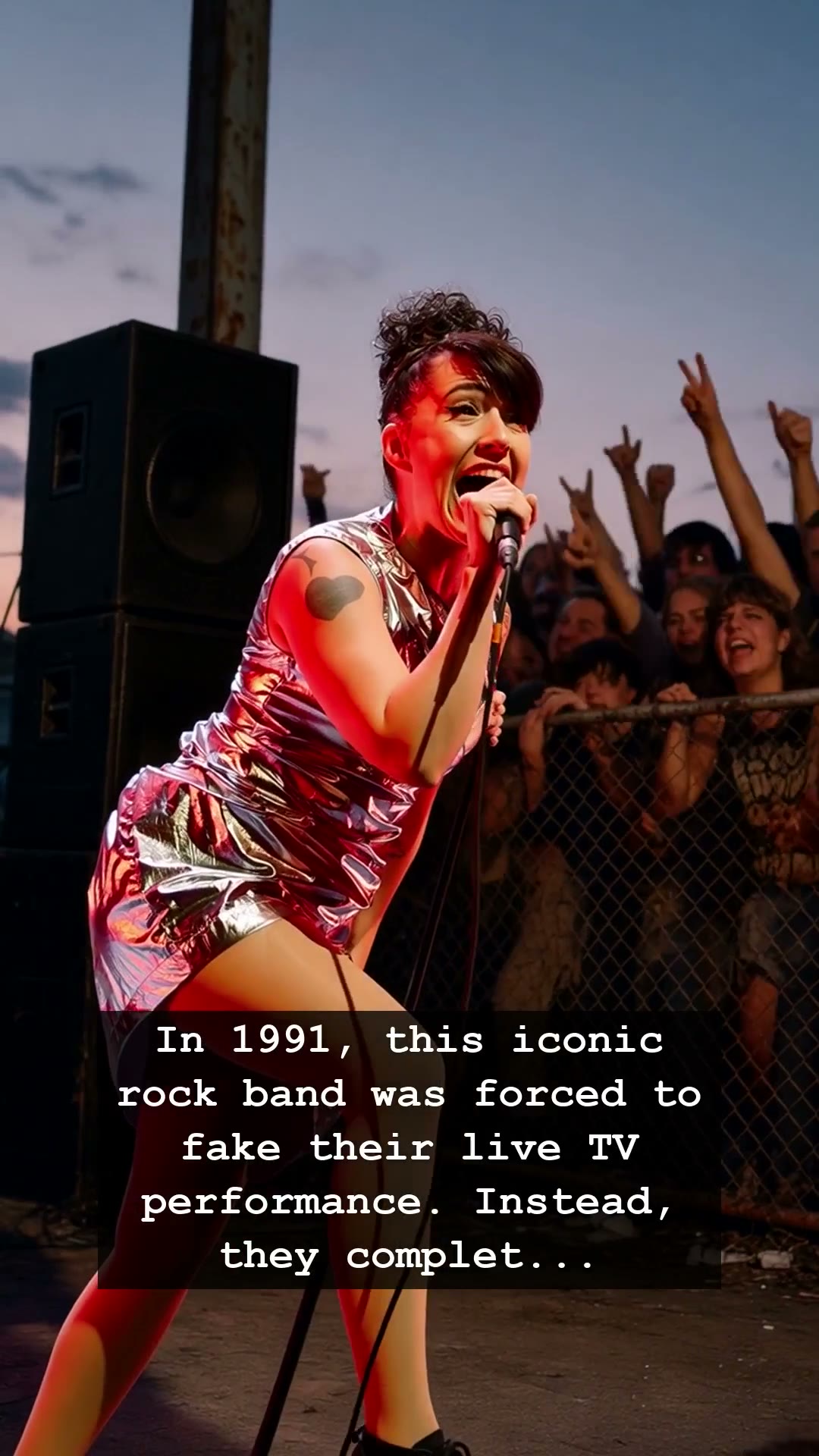
The year was 1991, an era where the flickering glow of the television set still commanded the dinner table and MTV dictated the heartbeat of global culture. For a generation raised on the polished, synthesized pop perfection of the eighties, the sudden arrival of Nirvana felt like a structural collapse in the musical landscape. While the world expected a standard, choreographed promotion for their meteoric rise, Kurt Cobain and his bandmates had other, far more volatile plans. They were invited to perform their anthem Smells Like Teen Spirit on a popular British television show, but they were forced to adhere to the era’s standard practice: lip-syncing to a pre-recorded track. To Nirvana, this was the ultimate betrayal of their punk-rock ethos.
Instead of playing along, the trio decided to wage a silent war against the glossy artifice of mainstream broadcast media. As the backing track began, the band members stood in a state of utter, performative apathy. Kurt Cobain approached the microphone and deliberately sang in a bizarre, low-pitched, faux-operatic baritone, distorting his voice into an unrecognizable growl. Krist Novoselic played his bass with an exaggerated, languid energy that felt like a parody of a rock star, while Dave Grohl mimed his drumming with a sneering detachment. They weren’t just refusing to lip-sync; they were actively dismantling the illusion of the live music performance right in front of a baffled television crew.
The studio executives were left trembling as the cameras rolled. This wasn’t merely a band being difficult; it was a defiant middle finger to the industry that had tried to package their raw, visceral sound for easy consumption. In an age where the Jukebox and the Walkman had turned music into a consumable commodity, Nirvana stood as a jarring, unpolished reality check. The performance remains one of the most famous acts of sabotage in music history, a moment where the authentic anger of the grunge movement collided violently with the rigid, sterilized world of corporate television.
Looking back at that moment, it serves as a powerful reminder of why Nirvana captured the zeitgeist so effectively. They were the patron saints of the disenfranchised, the voice of a generation that felt trapped in the plasticine sheen of the post-disco era. They didn’t want to be icons; they wanted to be real, even if that meant burning their own house down on national television. It was the antithesis of the carefully curated fame we see today, a raw nerve exposed in high definition.
Decades later, the echo of that broadcast still resonates with anyone who feels the constant pressure to conform. Watching it now, you don’t just see a band mocking a TV show; you see the death of one era and the messy, beautiful birth of another. It reminds us that sometimes, the most profound musical statements aren’t made by following the rules, but by aggressively, joyfully breaking them. Do you remember the first time you saw that performance, or did it catch you off guard when it finally reached your screen?