
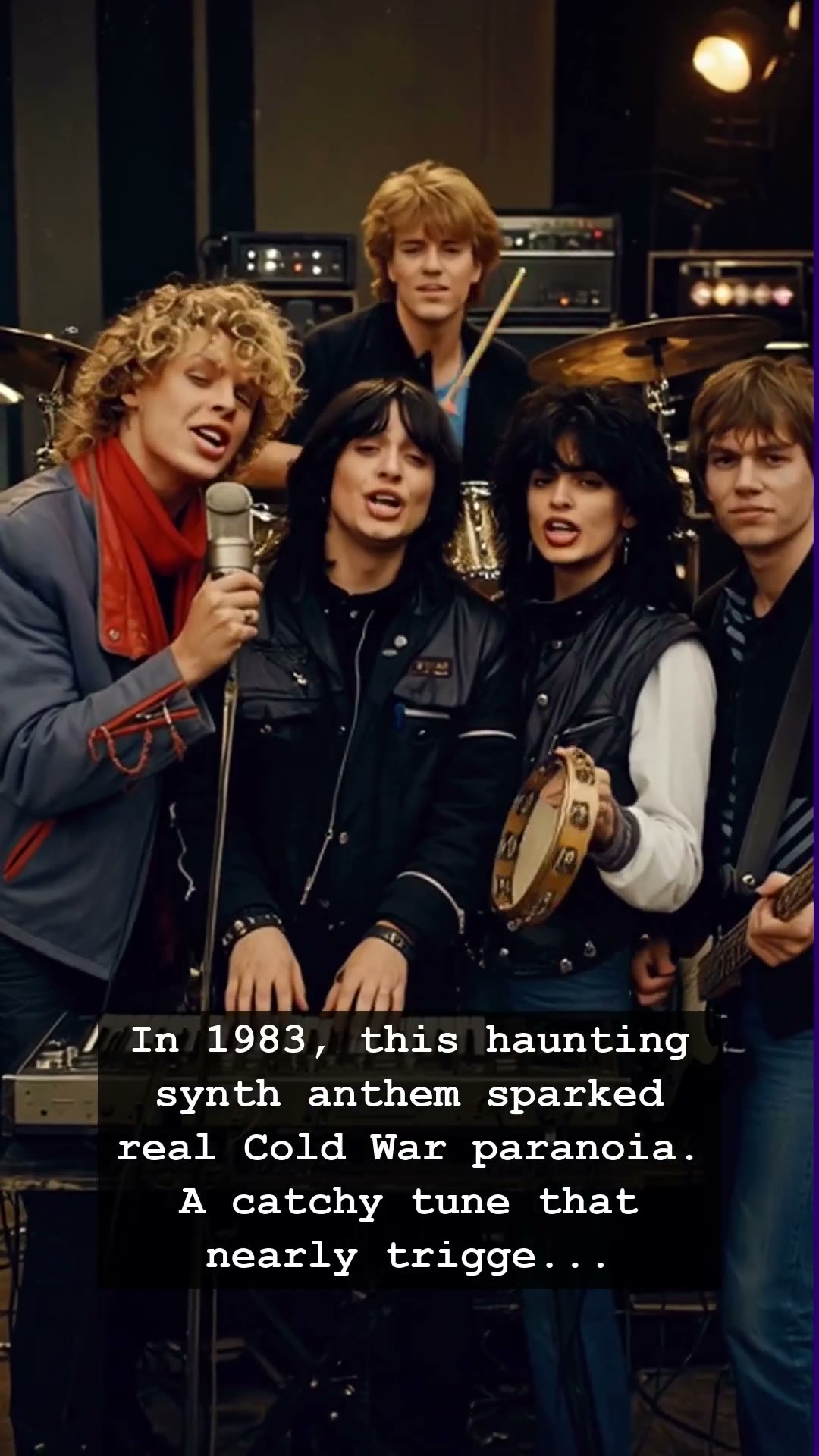
It was 1983, a year when the world felt like a powder keg waiting for a single spark. While teenagers were busy wearing neon leg warmers and discovering the magic of the Sony Walkman, a haunting synth-pop melody drifted across the Berlin Wall, carrying a message that was far more sinister than its upbeat tempo suggested. Nena, the German band fronted by the enigmatic Gabriele Susanne Kerner, released 99 Luftballons, a song that would inadvertently capture the suffocating anxiety of the Cold War era. What started as a catchy pop tune quickly transformed into an international obsession, leaving military officials on both sides of the Iron Curtain sweating over their radars.
The premise of Nena and her band’s breakout hit was deceptively simple: ninety-nine red balloons are released into the sky, mistaken for an unidentified aerial threat, and eventually trigger a full-scale nuclear war. It was a bleak, satirical nightmare wrapped in a danceable beat. As the song climbed the charts, from the vibrant airwaves of Europe to the competitive airplay of American radio, it struck a nerve that resonated deeply with a generation living under the constant shadow of the mushroom cloud. For many listeners, Nena became the voice of a confused youth who saw the absurdity of political posturing through the lens of a synthesizer and a drum machine.
Behind the scenes, the cultural impact of 99 Luftballons was unprecedented. It was the peak of the new wave movement, a time when the synth-pop aesthetic was redefining what music could sound like. Nena was not just a singer; she was a symbol of a divided Germany finding a common language through music. The song became so pervasive that it was played in bunkers and broadcast across borders, fueling rumors that the lyrics had actually triggered high-level military alerts. Whether or not it truly caused an international incident remains a topic of urban legend, but the sheer fact that the public believed it speaks volumes about the paranoia that defined the decade.
The genius of the track lies in its contrast. The juxtaposition of the bubbly, infectious melody and the apocalyptic narrative remains one of the most effective storytelling devices in pop music history. Nena delivered the vocals with a breathless urgency that mirrored the frantic nature of a world on the brink of collapse. Even today, hearing the opening synth chords transports listeners back to a time of hairspray, Cold War tension, and the frantic energy of MTV-driven pop culture.
Decades later, the legacy of Nena remains tied to that singular moment of global uncertainty. The song serves as a time capsule, reminding us that music has the power to reflect our deepest fears while simultaneously providing an escape. As the echoes of 99 Luftballons continue to pop up in movies and nostalgic playlists, we are reminded of how one artist managed to turn a simple balloon into a lasting warning. Have you ever wondered if the fear captured in that 1983 hit ever truly left us?