
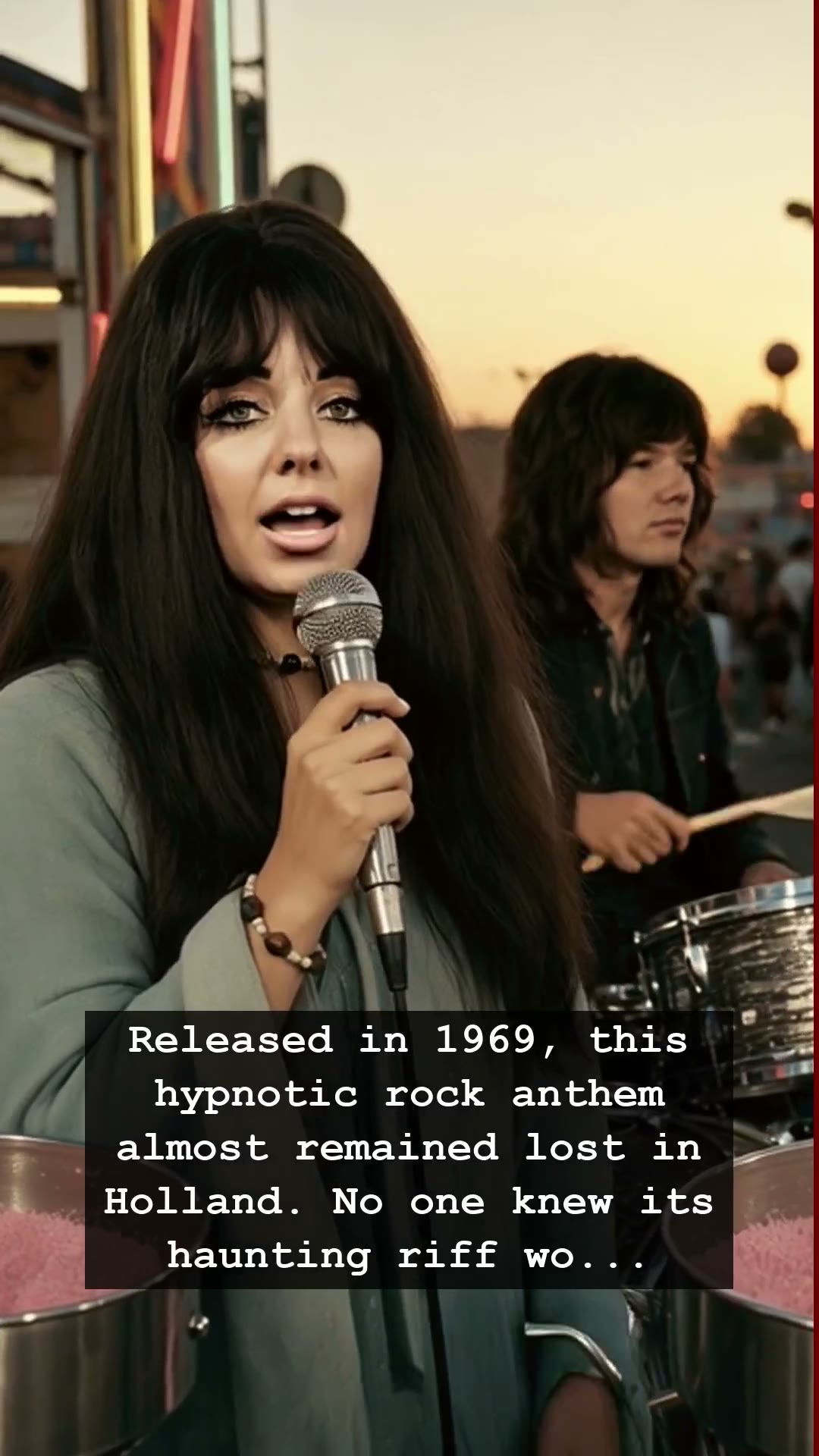
In the smoke-filled air of 1969, while the world was distracted by the final gasps of the Summer of Love and the looming shadow of the Vietnam War, a haunting riff was born in the quiet corners of Holland. Most music history books obsess over the bright lights of Woodstock or the decadent sprawl of Studio 54, but they often overlook the Dutch band Shocking Blue. Their hypnotic anthem, Venus, became a global phenomenon, yet beneath that catchy melody lay a much darker, brooding DNA that the mainstream would not fully grasp for decades. It was a sound waiting for the right moment to explode, a slow-burning fuse tucked away in the archives of European psych-rock.
Lead singer Mariska Veres was the heart of Shocking Blue, a woman with a voice that commanded the room with a mystical, almost ethereal intensity. While the band is frequently categorized by the pop sensibilities of their biggest hit, their true legacy is far grittier. Their arrangements possessed a jagged, skeletal quality—a raw tension that bridged the gap between psychedelic experimentation and the raw, unpolished energy of what would eventually be labeled as grunge. At the time, listeners were mesmerized by the groove, but they were unknowingly hearing the prototype for a revolution that wouldn’t find its true home until the flannel-clad era of the early nineties.
There is a profound sense of irony in how history remembers Shocking Blue. For years, the band’s deeper, more somber tracks were buried under the weight of their own chart success. It wasn’t until brooding frontmen of the Seattle scene started digging through their parents’ vinyl collections that the true influence of the band surfaced. They unearthed that haunting, distorted riff, recognizing in it a blueprint for the angst and alienation that defined an entire generation. It was the missing link between the experimental rock of the sixties and the heavy, distorted echoes that would later fill arenas worldwide.
To listen to Shocking Blue today is to step back into a world of analog warmth and hidden danger. It brings to mind the crackle of a needle hitting a worn-out record in a dimly lit basement, a sound that feels both ancient and startlingly relevant. The tragic beauty of their story—of a band whose true impact was delayed by decades—is a testament to how music transcends its time. Their career was not just a series of hit singles, but a ripple in a pond that eventually became a tidal wave.
As we look back at the landscape of twentieth-century music, the legacy of Shocking Blue remains a stark reminder that masterpieces are often hidden in plain sight. They captured a spirit of dissatisfaction and mystery that echoed far beyond the Dutch borders. Whether you are a fan of the classic rock era or a devotee of the grunge revolution, the haunting melodies of Mariska Veres and her bandmates invite you to look closer at the records you thought you knew. What other secrets are still waiting to be discovered in the dust of our musical past?