
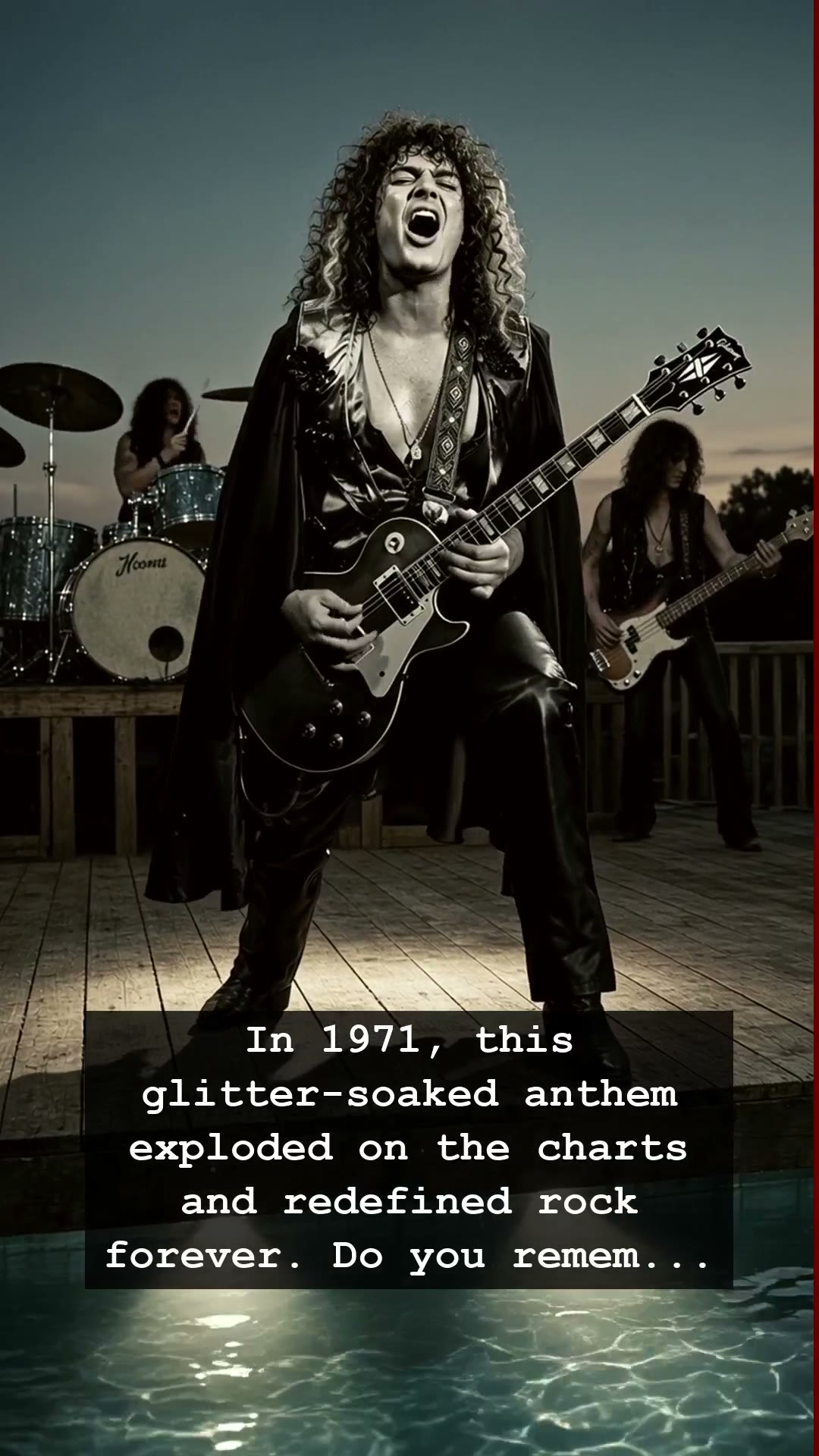
In 1971, the music world was still shaking off the hangover of the psychedelic sixties when a glitter-soaked anthem suddenly tore through the airwaves, changing rock music forever. It was not just a song; it was a manifesto of sequins, rebellion, and pounding piano chords. When Marc Bolan and his band T. Rex stepped onto the stage of Top of the Pops, the youth of Britain were not just watching a performance—they were witnessing the violent, beautiful birth of Glam Rock. For those of us who remember the era of jukeboxes and flickering tube televisions, that specific sound remains a haunting, electrifying heartbeat of our collective youth.
Before the world knew what hit them, Marc Bolan had transformed from a folk-rock dreamer into the high priest of glam. T. Rex was the vehicle for this transformation, bringing a sense of theatrical danger and sexual ambiguity to a landscape that had become too serious. As Bolan draped himself in satin and glitter, the fans responded with a hysteria that hadn’t been seen since the height of Beatlemania. It was a time when the darkness of reality was masked by the sparkle of stage costumes, and for a few minutes in 1971, the music felt like the only thing that mattered in an increasingly uncertain world.
The genius of the T. Rex sound lay in its simplicity—a driving, stomping rhythm that felt primitive yet perfectly polished. Behind the scenes, the pressure of fame was mounting, fueled by the relentless demands of the burgeoning music industry and the internal tensions within the band. Yet, every time Bolan stepped into the studio, the magic felt effortless. He understood that rock and roll wasn’t just about the notes; it was about the persona, the attitude, and the willingness to stand out in a crowd. This was the era where music videos were still a dream, and the magic happened in crowded clubs and late-night radio broadcasts.
Looking back, it is impossible to divorce the success of T. Rex from the cultural atmosphere of the early seventies. As we transitioned from the idealism of the Woodstock generation to the grit of the mid-decade, T. Rex provided the perfect escape. They were the bridge between the hippie folk of the late sixties and the flamboyant excess that would eventually give way to the birth of punk. Even as the decades passed and the trends shifted, the impact of those chart-topping anthems remained etched into the fabric of rock history, influencing everyone from David Bowie to the stars of the eighties.
Today, the legacy of T. Rex serves as a reminder of a time when rock stars were larger than life, shrouded in mystery and glittering scandal. We often look back at the photos of Bolan, his hair wild and his eyes reflecting the stage lights, and we feel a pang of nostalgia for an era that felt unapologetically authentic. Whether you discovered them on a crackling vinyl record or through the radio, the music of T. Rex still carries the power to transport us back to a time when life was a grand, rebellious performance. Do you remember where you were when the glitter revolution first took hold?