
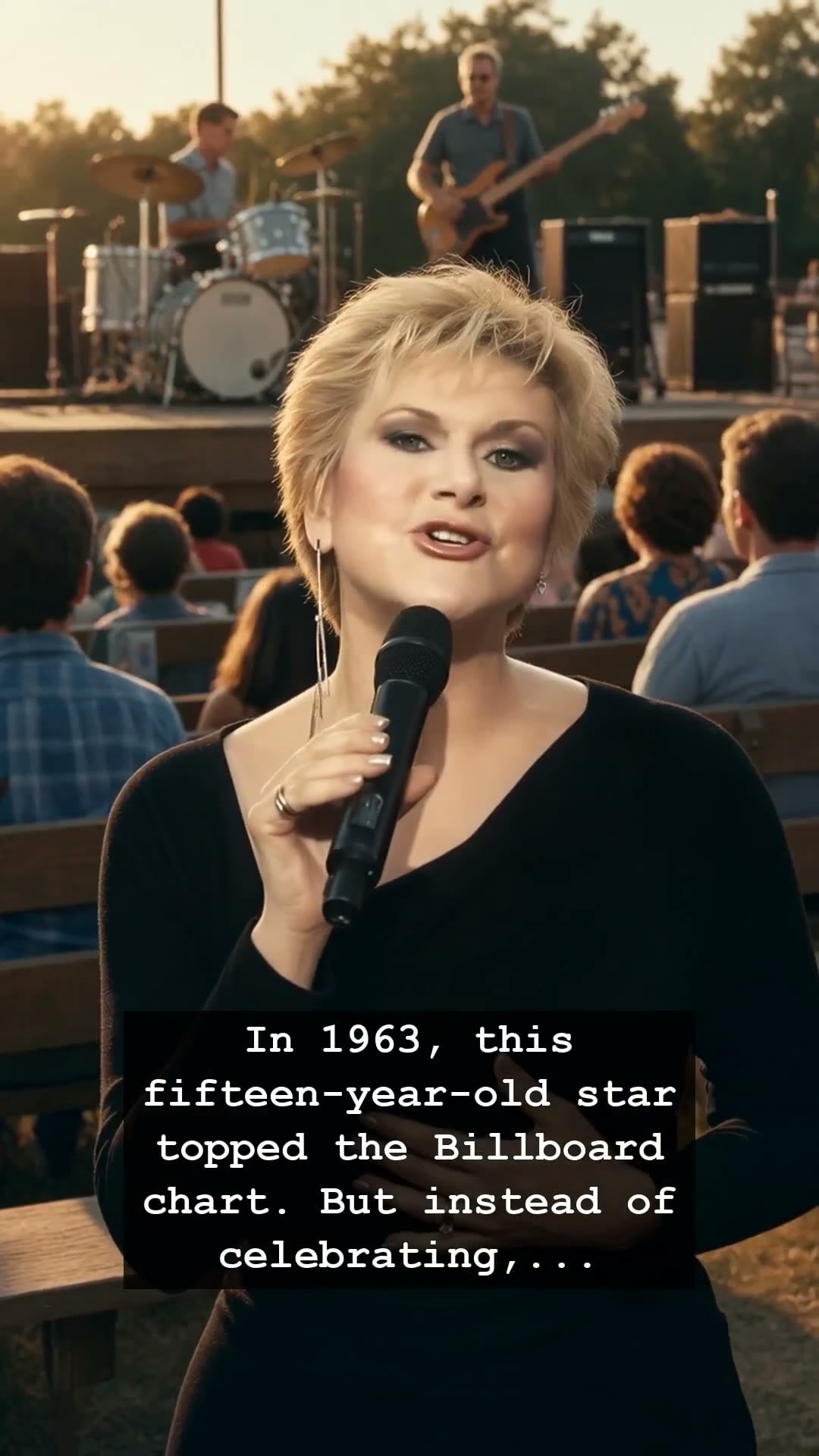
In the spring of 1963, while the rest of the world was mesmerized by the burgeoning innocence of the early sixties, a fifteen-year-old girl named Little Peggy March was busy making history. She became the youngest female artist to ever top the Billboard Hot 100 chart, a record that stood for decades. Her voice, a sweet and soaring instrument, propelled ‘I Will Follow Him’ into every home, Jukebox, and transistor radio across America. It was the kind of meteoric rise that usually spells the start of a wild, jet-setting life of fame. Yet, for Little Peggy March, the reality behind the curtain was far more grounded and, perhaps, a little surreal.
While her voice dominated the airwaves, the reality of her life remained anchored in the mundane halls of a suburban high school. There was no champagne celebration at a flashy club or a tour bus waiting to whisk her away. Instead, her parents and her school principal insisted that she walk straight back into her classroom. While her single was cementing its place in musical history, Little Peggy March was sitting at a wooden desk, grappling with the complexities of algebra. It is a jarring image: the girl whose voice was being beamed into millions of homes during the golden age of pop radio was being held back by a homework assignment and a strict attendance policy.
This era was defined by a strange dichotomy. The cultural landscape was shifting, with the innocence of the pre-British Invasion era colliding with the sudden, overwhelming pressure of national celebrity. For Little Peggy March, the sudden transition from a regular teenager to a number-one hitmaker meant balancing two worlds that rarely overlapped. She was simultaneously a household name and a student who had to ask permission to skip class to perform on national television. Her story reminds us that beneath the gloss of 1960s pop stardom, there was a raw, human tension between professional ambition and the simple necessity of growing up.
What makes the legacy of Little Peggy March so enduring is this very contrast. She represented the quintessential teen idol, a symbol of the polished, optimistic sounds that filled the air before the more psychedelic and rebellious waves of the late sixties took over. ‘I Will Follow Him’ remains an anthem of youthful devotion, a song that still sparks instant recognition the moment the opening strings begin to play. It transports listeners back to a time when melodies were simple, emotions were earnest, and the world felt like it was waiting for something big to happen.
Looking back, the story of Little Peggy March is a bittersweet reminder of how fleeting and fragile fame can be. She proved that even with a chart-topping hit, one could not escape the firm grasp of reality. Today, her music remains a time capsule, preserving the spirit of 1963 with every note. If you ever find yourself listening to the golden oldies, remember the young girl who sang her heart out, only to return to her textbooks the very next morning. It is a story of music, grit, and the quiet beauty of being a star before your time.