
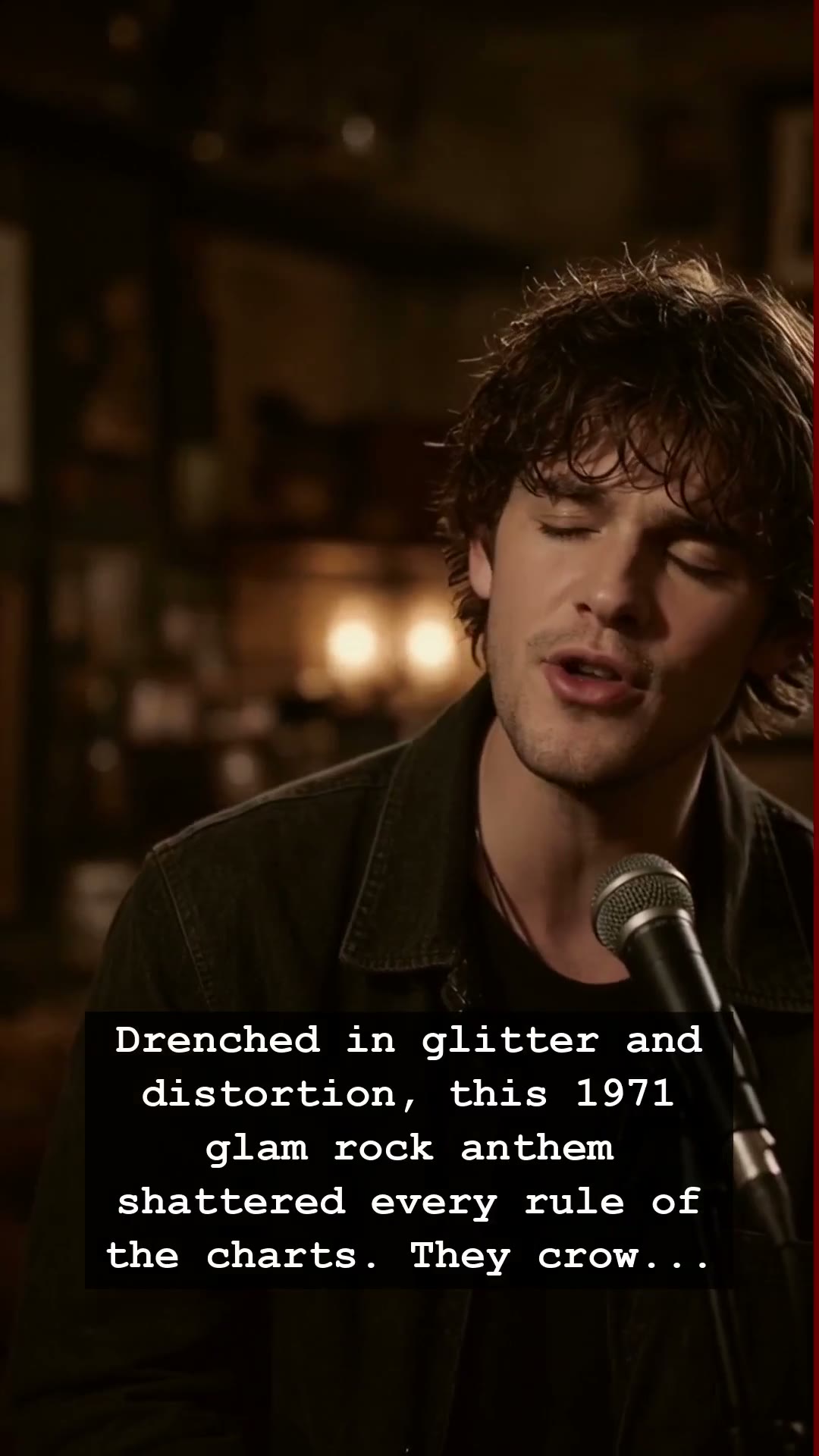
It started with a whisper of distortion and ended with an explosion of sequins that changed the face of popular music forever. In the summer of 1971, while the radio airwaves were still clinging to the folk-rock sensibilities of the late sixties, a song broke through the British charts like a bolt of lightning. It was not just a hit; it was a manifesto for a new generation that had grown tired of protest songs and earth tones. This was the moment T. Rex, led by the enigmatic Marc Bolan, transformed from an acoustic duo into the architects of glam rock, crowning a new king of excess in a world of greasepaint and stage lights.
The anthem in question, Get It On, arrived with a hypnotic boogie beat that felt both prehistoric and futuristic. As the Jukeboxes in smokey pubs across London began spinning the record, the music world took notice. Marc Bolan was a star born from the rubble of underground obscurity, stepping into the spotlight with feathered boas and face glitter. He understood that rock and roll was not just about the notes played, but about the spectacle of the delivery. T. Rex brought a sense of danger back to the charts, blending the swagger of Elvis Presley with a cosmic, otherworldly energy that resonated with teenagers bored of the status quo.
Behind the polished sheen of the top-of-the-charts success lay a turbulent reality. The rise of T. Rex was meteoric, and the pressures of sudden fame were as intoxicating as they were destructive. Bolan lived life in the fast lane, a whirlwind of velvet suits and late-night studio sessions, capturing the frantic energy of a band that felt they were reinventing the wheel. The band’s transition into glam rock was not merely a fashion choice; it was a survival mechanism in a competitive era that demanded constant reinvention. They defied the rules of the industry, prioritizing the sheer joy of the groove over the complex compositions that had dominated the era of psychedelic rock.
To look back at this era is to see a snapshot of a culture on the verge of change. Before the ubiquity of MTV or the personal soundtrack convenience of the Walkman, the impact of T. Rex was felt through the physical energy of a live performance and the heavy rotation of vinyl. The band captured the tension of the early seventies, a time when the optimism of Woodstock had faded into a cold reality, and the only way to cope was to dress up, turn the amplifiers up to eleven, and dance until the world stopped spinning.
Even today, the legacy of T. Rex remains a testament to the power of pure, unadulterated swagger. Marc Bolan left us too soon, but the ripple effect of his influence is felt in every artist who understands that being a rock star is as much about the mystery as the music. The glitter may have long since faded from the stage, but the boogie beat of 1971 stays with us, a reminder of the night the rules were shattered for good. Do you still remember the first time those opening chords caught your attention and changed the way you heard rock and roll?