
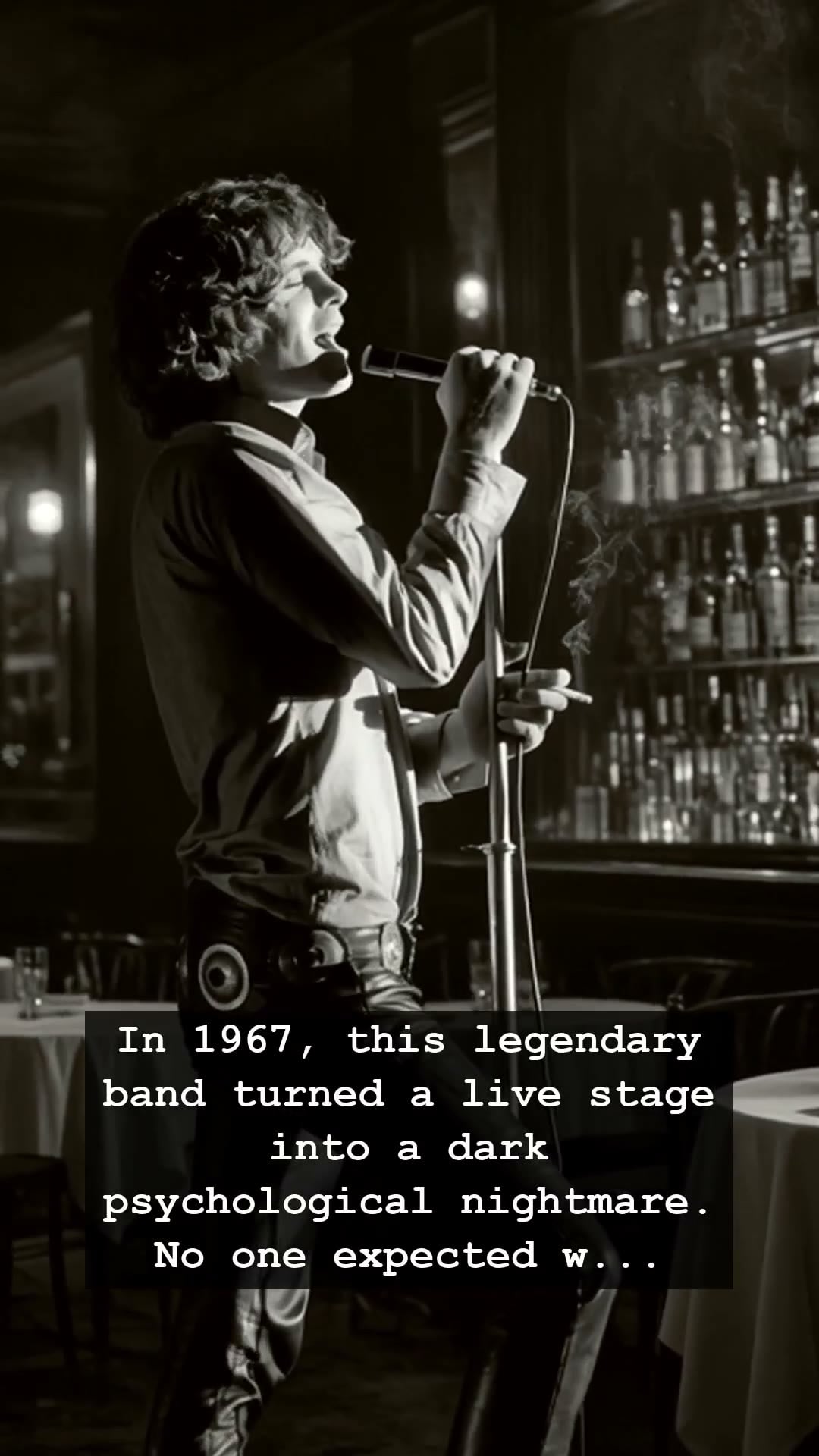
In 1967, the air in Los Angeles was thick with the scent of rebellion and the hazy promise of the Summer of Love. But at the Whisky a Go Go on the Sunset Strip, the atmosphere was shifting into something far more sinister. The Doors were playing a residency that felt less like a rock concert and more like an occult ritual. Jim Morrison, the band’s enigmatic frontman, had been spiraling through a cocktail of substances and intellectual darkness, searching for a sound that could pierce the thin veil between entertainment and raw, human agony. No one in the audience realized they were about to witness a psychological breakdown broadcast in real-time.
As the band played The End, a sprawling, sprawling epic of Oedipal confusion and existential dread, the music took on a life of its own. The guitars by Robby Krieger became rhythmic, hypnotic pulses, while Ray Manzarek’s organ provided a funereal backdrop that echoed through the small club. Then, Jim Morrison began to improvise. The lyrics shifted from a simple farewell to a sprawling, spoken-word monologue that felt like a descent into the subconscious. It was a terrifying psychological exit, a chilling goodbye that moved beyond the typical tropes of 1960s rock and roll and into a realm of pure, unadulterated fear. The club owner, terrified by the unfolding scene, reportedly unplugged the power, but the haunting resonance of that night had already taken root.
To understand the gravity of that moment, one must look at the era itself. While the rest of the world was dancing to the upbeat rhythms of Motown or the polished melodies of the British Invasion, The Doors were carving out a niche in the shadows. Jim Morrison was the ultimate vessel for this transition—a poet who treated the stage like a confessional booth for his own demons. The contrast between the bright lights of the emerging MTV era that would eventually follow and the dark, smoke-filled intimacy of 1967 is stark. The Doors didn’t just play music; they curated an experience that demanded the audience participate in their own unraveling.
That night at the Whisky a Go Go remains a cornerstone of rock mythology because it showcased the duality of fame. For Jim Morrison, the stage was a place to be free, but it was also a place to be consumed. The pressure of the spotlight, the expectations of the counterculture, and his own internal volatility created a friction that could only produce sparks as dangerous as these. Even decades later, listening to the recorded versions of those live sets, you can hear the tremor in his voice—a raw, vulnerable edge that modern production techniques simply cannot replicate. It captures a moment where art became indistinguishable from reality.
Today, the legacy of Jim Morrison continues to cast a long shadow over music history. He wasn’t just a singer; he was an icon of the tragic artist, a man who burned too bright and left behind a trail of unanswered questions. Whether you are a long-time fan who remembers the hum of a needle on vinyl or a new listener discovering the haunting beauty of his poetry, the story of The Doors serves as a reminder of the raw power that music once possessed. As we look back on those formative days on the Sunset Strip, we are reminded that sometimes, the most enduring art is the kind that refuses to play it safe, choosing instead to stare into the abyss and wait for the echoes to return.