
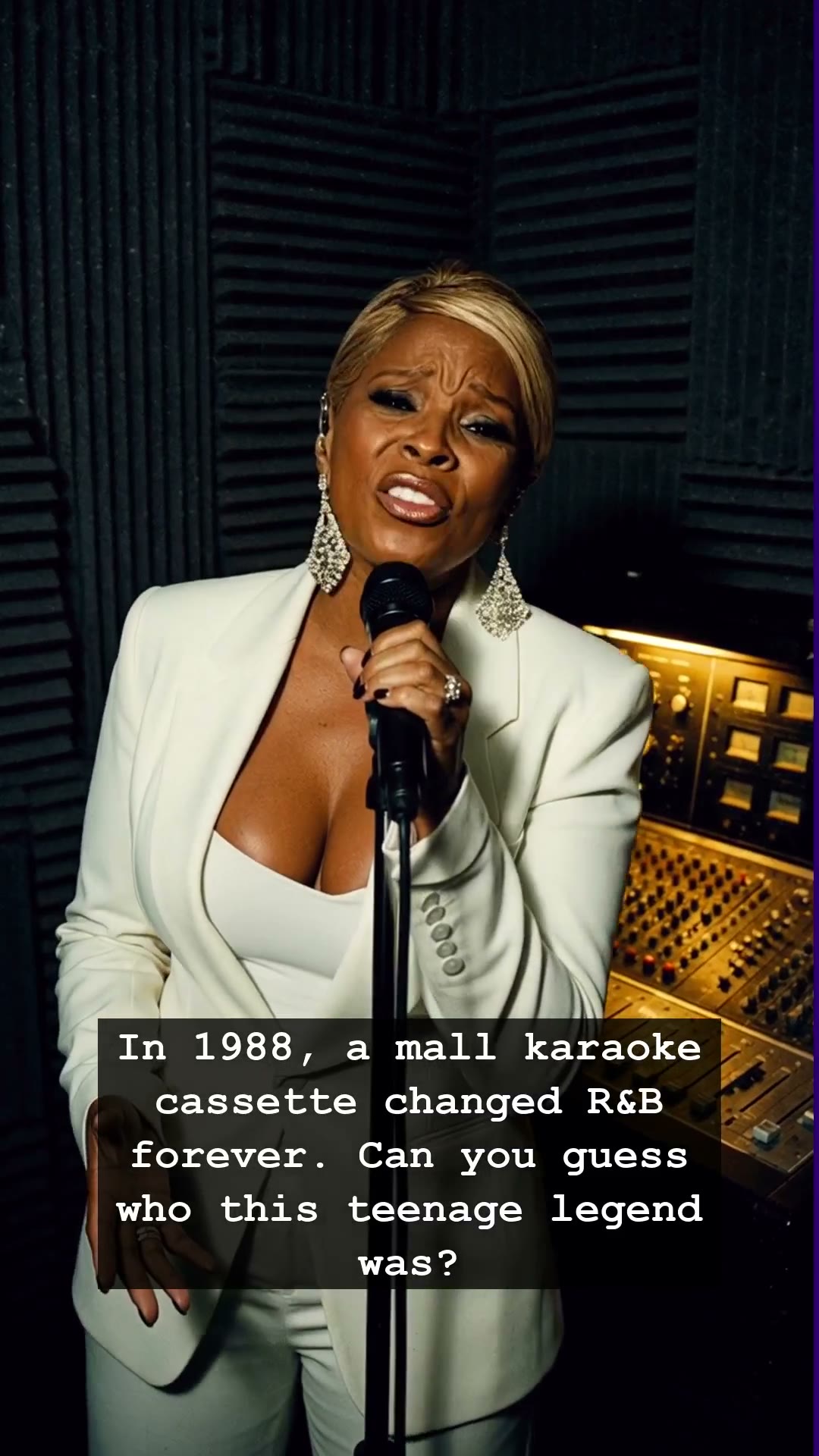
The year was 1988, a time when the rhythmic pulse of American music was shifting gears, moving away from the polished synthesizers of the early eighties toward something more raw, soulful, and deeply personal. In a suburban mall, a teenage girl with a voice that carried the weight of a thousand sorrows stepped into a cramped karaoke booth. With no expectations and no industry connections, she belted out a cover song into a plastic microphone, recording it onto a simple cassette tape. She had no idea that this grainy, amateur recording would soon travel from a shopping mall kiosk to the desks of the most powerful executives in the music industry, forever changing the landscape of R&B.
That teenager was none other than Mary J. Blige, a young woman whose voice would eventually define the nineties and bridge the gap between soulful R&B and the burgeoning hip-hop culture. While the world was busy dancing under the strobe lights of Studio 54 or listening to the latest synth-pop hits on their Walkmans, Mary was crafting a sound that felt like a secret whispered in the dark. The tape eventually found its way into the hands of Jeff Redd, an artist who recognized an untouchable, authentic pain in her vocals. It was the kind of voice that couldn’t be manufactured in a corporate lab; it was earned on the street and perfected in the soul.
Before she became the Queen of Hip-Hop Soul, Mary J. Blige was just a girl from the Bronx, wrestling with the complexities of identity and survival. Her rise was anything but smooth. The music industry of the late eighties and early nineties was a volatile arena, defined by intense competition and high-stakes drama behind the scenes of major record labels. When she finally stepped into the studio, she didn’t just sing songs; she bled into the microphones. She brought a visceral, emotional honesty to her tracks that resonated with a generation tired of superficial pop icons. She wasn’t playing a character; she was singing the truth of her existence.
The journey from that mall karaoke booth to global fame is a testament to the power of raw, unpolished talent. During an era when image was often prioritized over substance, Mary J. Blige forced the world to stop and listen to the grit in her tone. It was a cultural pivot point, marking the moment when the street-smart vulnerability of hip-hop finally collided with the melodic tradition of classic soul. Her music didn’t just fill the airwaves; it provided a soundtrack for the heartache and resilience of everyday people, cementing her legacy in the pantheon of American musical legends.
Looking back at that era, it is incredible to think how a single, serendipitous moment in a mall changed everything. We often romanticize the polished masterpieces of the past, forgetting that so many legends began with a humble dream and a cheap cassette tape. Mary J. Blige remains a symbol of that authenticity, reminding us that no matter how much the industry changes, a true, piercing voice will always find its way home. Next time you play your favorite classic record, remember that behind every legend, there is a story of a beginning just as quiet and human as yours.