
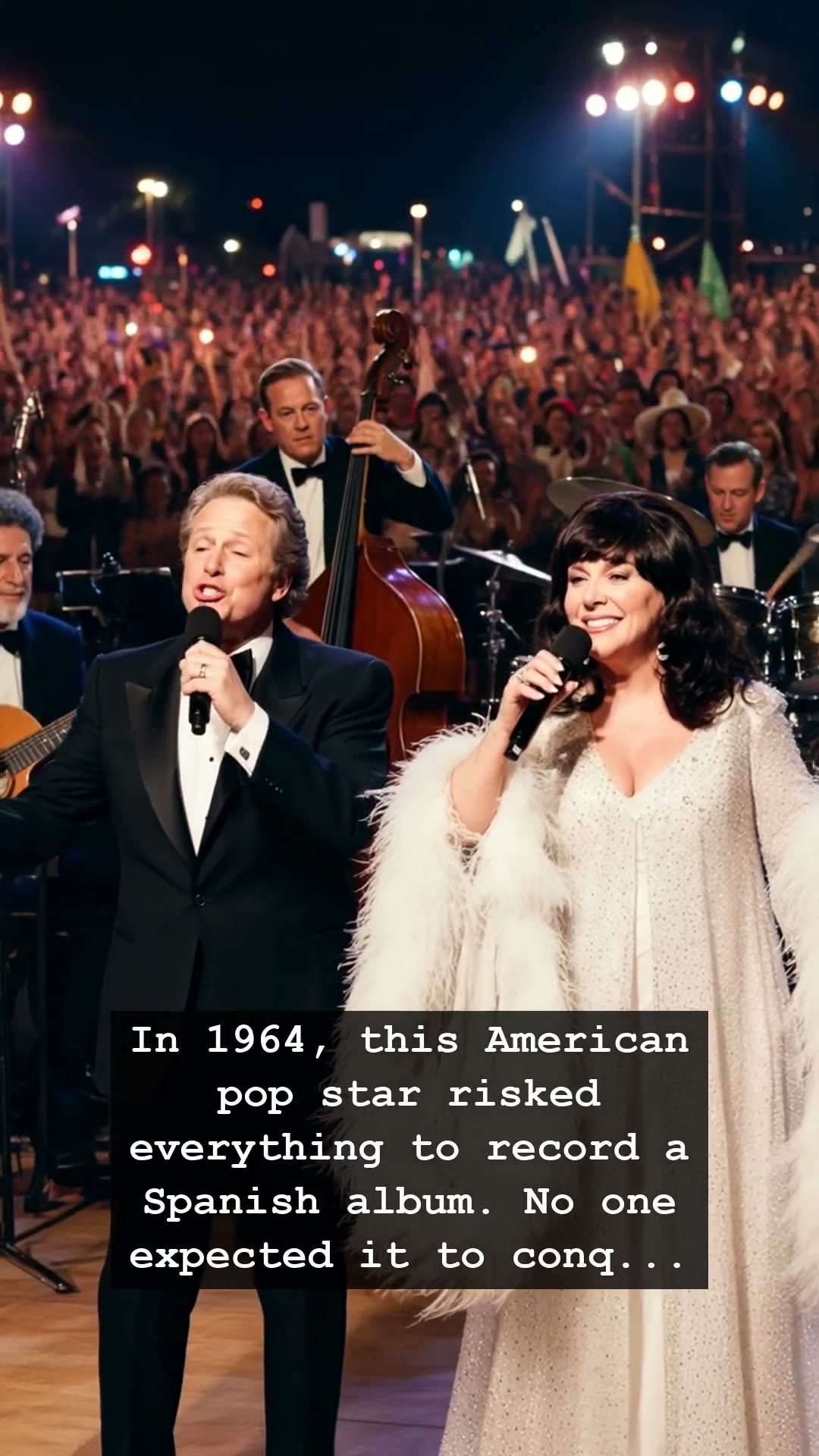
In 1964, the American music industry was a kingdom ruled by the polished sounds of pop and the rising tide of the British Invasion. Record executives lived in fear of deviating from the formula, clinging to the safety of the jukebox hits that dominated the airwaves. When Eydie Gorme, a beloved pop star known for her powerhouse vocals and mainstream appeal, announced she wanted to record an entire album in Spanish, the industry response was swift and brutal. They called it career suicide. They believed that a crossover into the bolero genre would alienate her loyal fan base and relegate her to the bargain bin of history. But Eydie Gorme had a different vision, one that transcended the rigid walls of the Billboard charts.
She took an unthinkable gamble by partnering with Trio Los Panchos, the legendary Latin ensemble whose intricate harmonies and soft guitar melodies were the heartbeat of Spanish-speaking households everywhere. The collaboration was risky, ambitious, and utterly unconventional for a mainstream American artist. While the world was dancing to the frenzy of the early sixties, Eydie Gorme and Trio Los Panchos retreated into the studio to craft something timeless. The result was Amor, an album that defied the skepticism of every suit in Hollywood. It was not just an experiment; it was a revelation that bridged two worlds that rarely dared to meet in the mid-sixties.
When the first notes of the title track echoed through radios across the globe, the critics were silenced. The lush, romantic arrangements of Trio Los Panchos, paired with the crystal-clear, emotive delivery of Eydie Gorme, resonated deeply with listeners who were tired of the shallow pop hits of the day. The album did not just sell; it became a multi-million-selling global sensation that cemented Eydie Gorme as a true musical pioneer. It proved that music, at its core, is a language of emotion that requires no translation to be felt in the soul.
This success story captures the essence of a time when artists still took massive risks for the sake of their art. Long before the era of digital algorithms and focus-grouped singles, Eydie Gorme followed her own instinct. Her partnership with Trio Los Panchos served as a reminder of the raw power of musical chemistry, an alliance that felt like a secret whispered in a crowded room. It remains one of the most remarkable chapters of 1960s music history, a testament to what happens when talent refuses to be confined by labels or expectations.
Decades later, the warmth of these recordings still feels like a nostalgic journey back to a more romantic era. Whether you heard these songs playing on a dusty turntable or caught a glimpse of their performance on a grainy television screen, the magic of the music remains intact. Eydie Gorme and Trio Los Panchos did more than just break records; they broke barriers, leaving behind a legacy that still echoes through the corridors of music history. As we look back on their journey, we are reminded that sometimes, the biggest risks lead to the most enduring rewards. Does the haunting melody of their collaboration still strike a chord in your heart today?