
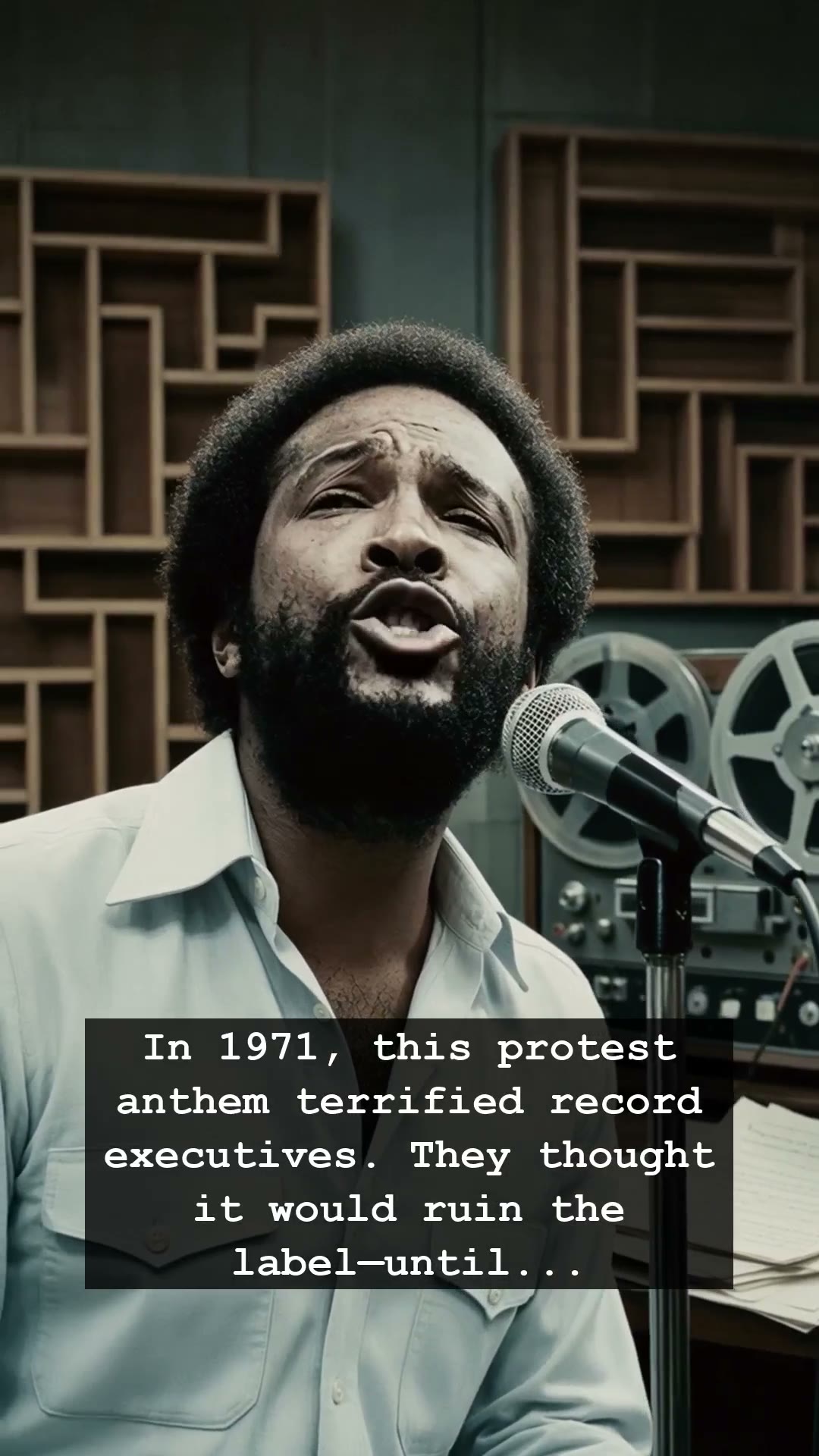
In 1971, the air in America was thick with the suffocating tension of the Vietnam War and deep-seated civil unrest. Inside the polished halls of Motown Records, a collision was brewing between the hit-making machinery of Berry Gordy and the soul of his most complex star. Marvin Gaye, a man usually reserved for smooth love ballads and romantic duets, walked into the studio with something dangerous: a protest song titled What’s Going On. When he first presented the record to label executives, they were visibly terrified. To them, the song was not a hit; it was a career-ending disaster that threatened the label’s pristine, commercial image. They argued that protest music didn’t belong in the Motown catalog, fearing it would alienate their core audience and destroy the brand they had spent over a decade perfecting.
For months, the song sat in limbo, gathering dust in a vault as Motown leadership debated its fate. Marvin Gaye was insistent, refusing to release another commercial single until this track saw the light of day. The internal conflict was palpable, turning into a tense standoff between the artistic vision of a genius and the bottom-line concerns of a corporate juggernaut. It was a classic struggle of the era: the battle between the soul of the artist and the demands of the industry. The record was essentially being held hostage, deemed too controversial for the mainstream, a dark reflection of the chaotic world outside the studio walls that the label wanted to ignore.
The miracle occurred through a bizarre, accidental political blunder that shifted the entire landscape. A high-ranking executive, acting against his own better judgment, sent the record to a radio station in a move intended to test the waters, only to be overwhelmed by the immediate, electric response from listeners. The song was already being played on air before the top brass could recall it. The public demand was instantaneous and undeniable; people were starving for a voice that spoke to the reality of their suffering and confusion. Forced by the public’s embrace, the label had no choice but to push the release. What began as a threat to Motown’s reputation turned into the most significant artistic statement of Marvin Gaye’s career.
When you listen to the track today, the richness of the instrumentation and the haunting, layered vocals of Marvin Gaye still carry the weight of a nation in transition. It echoes the same raw energy that defined the protest movements of the seventies, a time when music was the primary medium for social change. It was a shift away from the polished pop of the earlier decade toward something more visceral and honest. The success of the album transformed Marvin Gaye from a crooner into a spokesperson for a generation, proving that art could indeed challenge power and win.
Today, we look back at this moment as a pivotal turning point in musical history. It reminds us that behind every classic record there is often a hidden struggle, a moment where a single choice could have erased a masterpiece forever. Marvin Gaye stood his ground when the odds were stacked against him, and in doing so, he left an indelible mark on the soul of America. As you spin this record on your turntable tonight, listen closely to the lyrics; they remain as relevant and urgent as they were half a century ago.