
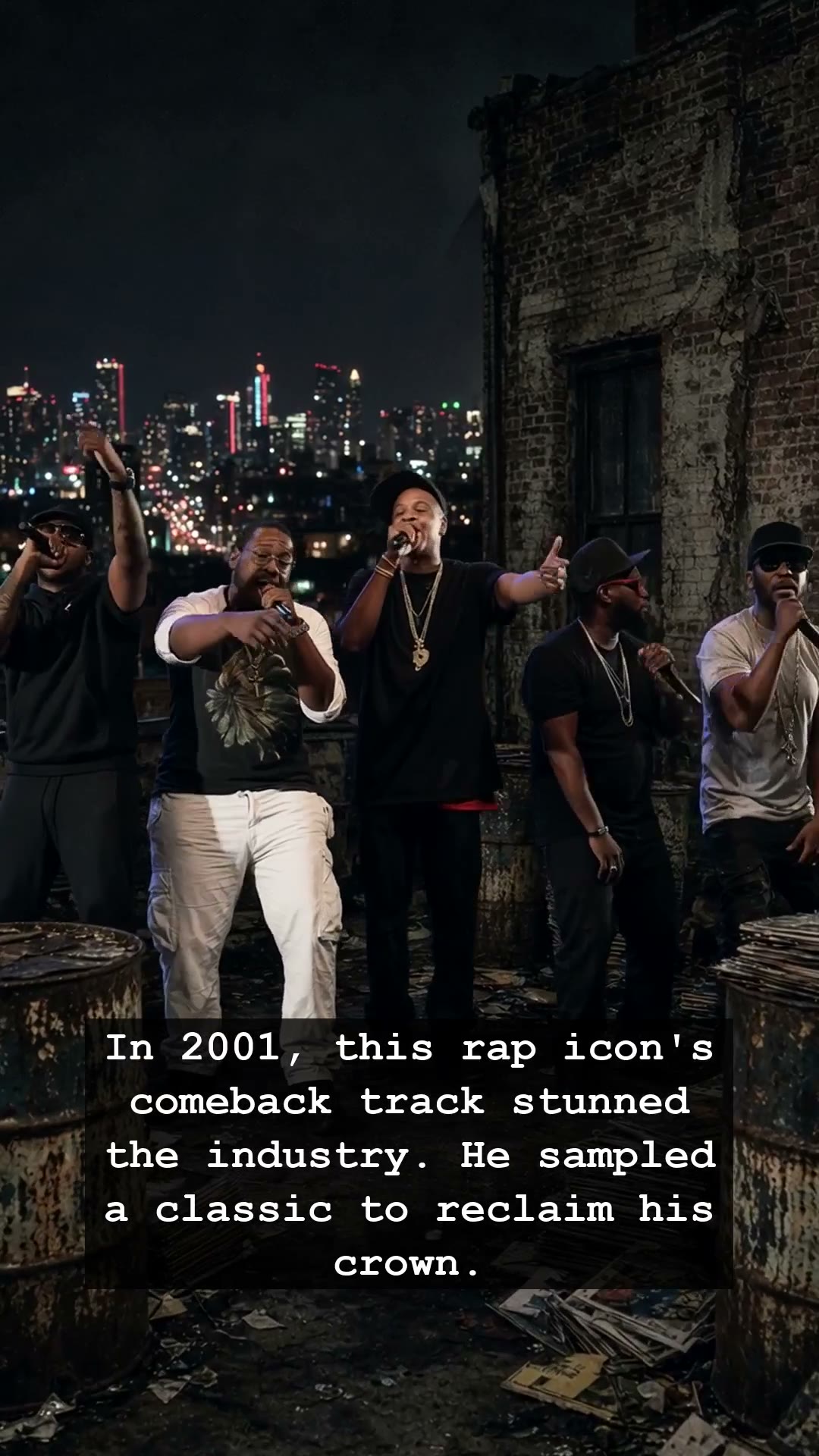
In the cutthroat landscape of 2001, the rap industry was a pressure cooker of shifting loyalties and mounting tensions. Jay-Z, a man who had already survived the ruthless streets of Brooklyn, found himself at a crossroads where his relevance was being questioned by peers and pundits alike. Everyone thought he was finished, written off by a cynical music press that smelled blood in the water. But then came the opening track of his seminal album, The Blueprint. It was not just a song; it was a declaration of war. By sampling the soulful, golden era warmth of The Doors’ 1968 classic Five to One, Jay-Z didn’t just reclaim his crown—he set the entire industry ablaze with a lyrical precision that hasn’t been matched since.
To understand the gravity of this moment, one must remember the era. The hip-hop scene was gripped by the shadow of the East Coast versus West Coast rivalry, a haunting specter that had claimed the lives of icons just years prior. Jay-Z stood in the eye of this storm, facing down Mobb Deep and Nas with a cold, calculated audacity. The genius of his comeback lay in how he bridged the gap between the gritty, soulful sounds of the past and the high-stakes, corporate-adjacent rap world of the new millennium. The sample provided a nostalgic texture, a bridge to a bygone era of rock rebellion, which Jay-Z exploited to position himself as the undisputed king of New York.
The tension within the recording studio was palpable. Producers and engineers recall a man possessed, someone who viewed the microphone as a weapon of total destruction. He wasn’t just performing; he was dissecting his rivals with surgical accuracy. This was the dark side of fame—the realization that staying on top requires a constant, exhausting battle against those eager to see you fall. As the needle dropped on that iconic sample, it reminded listeners of the power of music to reflect our deepest societal fractures and our most primal competitive instincts.
Beyond the drama and the diss tracks, the track served as a bridge between generations. It took the rebellious spirit of the late 60s, a time when vinyl records spinning on a Jukebox represented the pinnacle of youth culture, and fed it directly into the bloodstream of an MTV-dominated generation. Jay-Z managed to make the past feel like the future, proving that true artistry lies in the ability to recycle and redefine the sounds of history to tell a modern story of survival. It was a masterclass in psychological warfare hidden within a perfectly crafted rhythm.
Even decades later, the reverberations of that moment continue to echo. We often look back at the early 2000s as a simpler time of CDs and Walkmans, but for Jay-Z, it was a pivotal test of character. He emerged from the smoke of the feud not just as a rapper, but as a cultural architect who understood that to lead, one must sometimes be willing to burn down the house and rebuild it in their own image. It serves as a haunting reminder that in the world of legends, the only way to prove you belong at the top is to dare everyone else to try and pull you down. Next time you listen to the classics, pay close attention to the samples; they carry the ghosts of the past, waiting for someone bold enough to wake them up.