
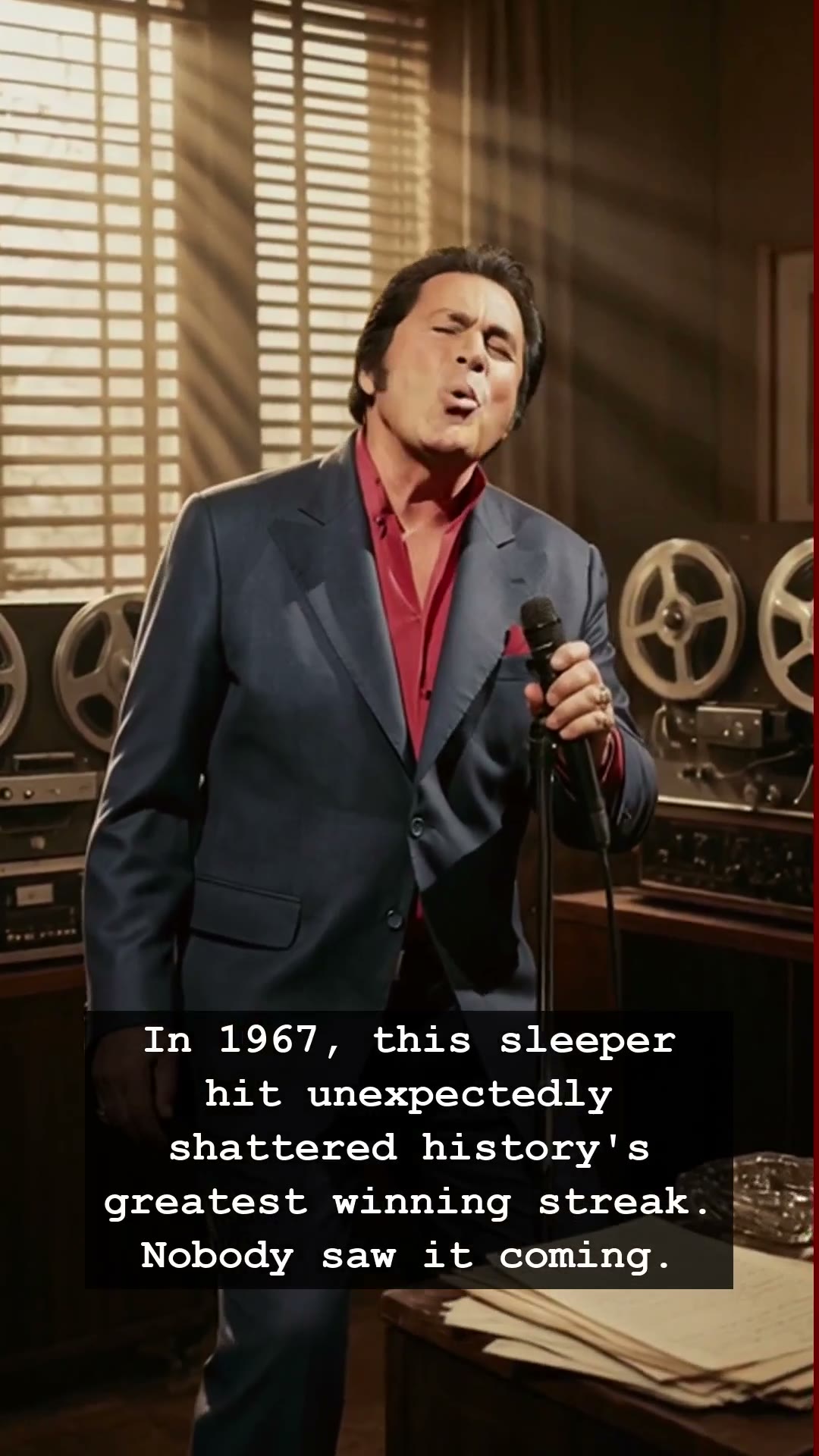
It was early 1967, and the airwaves belonged to the Fab Four. For years, the British charts were a fortress, seemingly impenetrable to anyone who didn’t go by the names Lennon or McCartney. When a singer named Engelbert Humperdinck stepped into the recording booth with a ballad titled Release Me, the music world expected another footnote. Instead, what happened next sent shockwaves through the industry, turning a romantic crooner into an overnight global phenomenon and bringing the greatest winning streak in pop history to a sudden, screeching halt.
At the time, The Beatles were riding an unprecedented wave of consecutive number-one hits. The public had grown accustomed to the inevitable arrival of their latest masterpiece at the top of the charts. Yet, Engelbert Humperdinck possessed a secret weapon: a voice that dripped with raw, unfiltered heartbreak. When he appeared on television to perform the song, his rugged charm and emotive baritone resonated with a generation tired of the frantic pace of the mid-sixties. As the record spun on jukeboxes across the country, it became clear that the tide was turning. People weren’t just listening to the track; they were feeling the weight of the lyrics.
The rivalry wasn’t born from malice, but from a clash of cultural gravity. While the pop elite were busy redefining the psychedelic era, Engelbert Humperdinck tapped into something universal—the agonizing beauty of letting go. When the charts were updated, the reality set in: the momentum had shifted. The Beatles had been dethroned by a man whose stage name sounded like a character from a bygone opera, yet whose appeal was undeniably contemporary. It was a moment of pure musical drama, a classic underdog story that captured the collective imagination of the decade.
Behind the scenes, the pressure on Engelbert Humperdinck was immense. He was thrust into the spotlight of a rapidly changing industry, where the transition from soulful ballads to the budding sounds of arena rock was already underway. The success of Release Me opened the doors to a career spanning decades, marked by sold-out residencies and that signature velvet voice. His rise was a testament to the fact that in the music industry, even the most legendary dynasties are vulnerable to a song that speaks directly to the human heart.
Decades later, looking back at the era of the Walkman and the influence of early television specials, the impact of that specific moment in 1967 remains profound. It serves as a reminder of how quickly the landscape of popular culture can shift. Engelbert Humperdinck didn’t just sing a hit; he defined an inflection point in the story of modern music. Even now, hearing the opening notes of that song transports listeners back to a smoky lounge or a quiet street corner where the world felt just a little bit smaller. Do you remember where you were when the winning streak finally ended?