
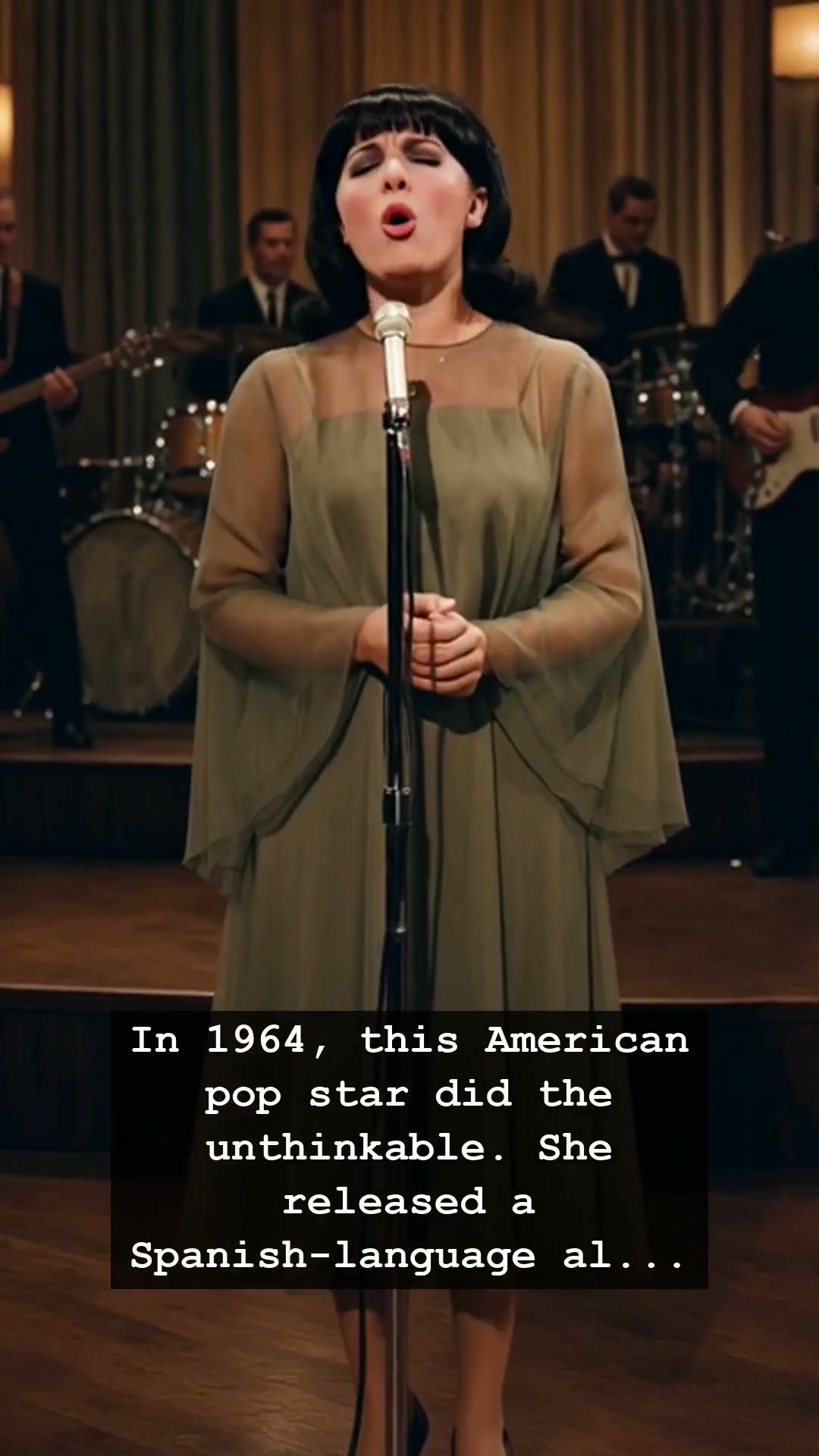
In the golden age of American pop, the industry was a predictable machine. Singers stayed in their lanes, labels dictated the sound, and the radio was a gated garden. But in 1964, a powerhouse vocalist did the unthinkable, shattering the cultural barriers of the era with a single, bold decision. Eydie Gorme, a beloved fixture of American television and a staple of the sophisticated pop scene, turned her back on the safe, English-language hits that had built her career. She retreated into the studio to record an entire album in Spanish, a move that critics whispered was professional suicide. Yet, what emerged from those sessions was not a flop, but a cultural phenomenon that swept across the Americas, proving that music could bridge divides long before the digital age made the world a smaller place.
Eydie Gorme was already a household name, known for her impeccable phrasing and the electric chemistry she shared with her husband, Steve Lawrence. They were the epitome of the mid-century lounge glamour, regulars on the variety show circuit where the glow of a warm spotlight and the sound of a live orchestra defined success. During an era where the Jukebox was the heartbeat of every corner diner and the transition from vinyl to the radio was the primary way we experienced life, taking a risk on a Spanish-language album was a radical departure from the mainstream script. Many in the industry feared she would lose her domestic audience, alienating the very fans who tuned into their television sets every week to catch the latest standard.
However, Eydie Gorme possessed a deep, soulful connection to the material she chose. By blending the sophisticated arrangements of American pop with the passionate, rhythmic sensibilities of Latin music, she created a sound that felt both familiar and exotic. When the album was released, it didn’t just chart—it conquered. From the bustling streets of Mexico City to the immigrant neighborhoods in New York, the record became a sensation. It resonated with a sincerity that was often missing from the polished, manufactured pop of the 1960s. She managed to command respect in two worlds simultaneously, a feat that very few artists of her stature dared to attempt.
Looking back at that era of the mid-sixties, it is easy to view history through a narrow lens, forgetting the risks taken by those at the top of their game. Eydie Gorme did not need the validation of a new market, yet she chased the authenticity of the sound she loved. It is a reminder of a time when stars were more than just curated images; they were vocalists with the courage to experiment. The success of those recordings remains a brilliant footnote in American music history, standing as a testament to the fact that passion often speaks a universal language.
Today, as we look back on the archives of the 20th century, the legacy of Eydie Gorme remains vibrant and untarnished. Her voice carries the weight of a bygone era, reminding us of the thrill of discovery and the beauty of taking the road less traveled. Whether you remember hearing her tracks drifting from a warm radio in your family home or are just now discovering the depth of her catalog, the magic she captured in 1964 still holds the power to move us. Her daring musical experiment wasn’t just a win for a pop star; it was a victory for the art of music itself, proving that even the most unexpected choices can leave a melody that echoes for generations to come.