
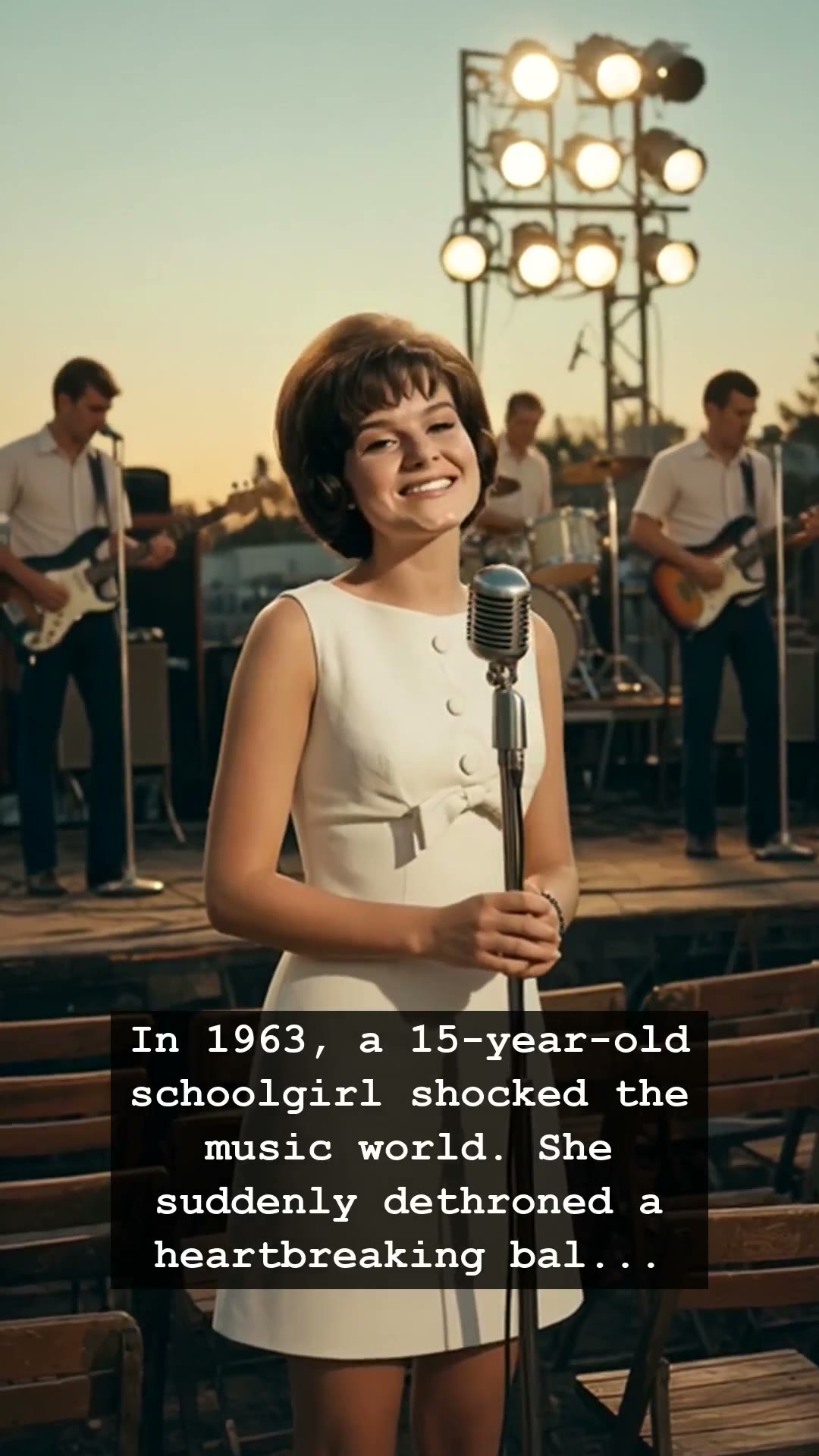
It was April 1963, a time when the Jukebox in every local diner was humming with the anxieties of a changing world. Skeetters Davis had gripped the nation with her haunting ballad The End of the World, a song that felt as heavy as the Cold War tensions of the era. But then, a sudden shift occurred in the cultural landscape that no one saw coming. A fifteen-year-old schoolgirl, with nothing but a clear, sweet voice and a modest blue dress, stepped into the recording booth and pulled off one of the most stunning Billboard upsets in history. This was the moment Little Peggy March ascended to the throne of American pop, forever changing the trajectory of teen stardom.
Born Margaret Annemarie Battavio, the girl who would become known to the world as Little Peggy March was a suburban wonder. She was not a product of grit or rebellion; she was a genuine voice of innocence in an era transitioning from the wholesome echoes of the fifties to the turbulent, colorful tides of the sixties. When she recorded I Will Follow Him, she didn’t just sing a song; she captured the collective heart of a generation coming of age. The track soared to number one, making her the youngest female artist to reach the top of the charts—a record that remained untouched for decades. It was a dizzying ascent, turning a girl who should have been worrying about algebra homework into a household name overnight.
Behind the bright lights of the television sets and the spinning vinyl, the reality of fame for a teenager was vastly different. Little Peggy March was thrust into a grueling circuit of performances and public appearances, often dwarfed by the heavy machinery of the music industry. The pressure was immense, yet her voice remained a beacon of clarity amidst the chaos. While the older guard of the industry struggled to understand the shift in teenage tastes, Little Peggy March thrived, her performance becoming an anchor for those who preferred the melodic, heartfelt pop of the early sixties over the burgeoning, darker sounds that were brewing just beneath the surface of the mainstream.
What makes the story of Little Peggy March so enduring is the stark contrast between her youth and the weight of her sudden impact. She represented the final golden hour of the innocence that defined early sixties American radio. Her success serves as a window back to a time when pop songs were simple, direct, and capable of uniting a nation in a way that feels almost impossible in our modern, fragmented digital age. She wasn’t just a singer; she was a momentary portal to a simpler, more melodic past.
Today, when we hear the opening notes of I Will Follow Him, we aren’t just listening to a hit record; we are transported back to the era of drive-ins and AM radio. Little Peggy March remains an essential thread in the tapestry of American music history. Though the charts have moved on and the industry has evolved into something unrecognizable, the sweet, resonant voice of that fifteen-year-old girl remains frozen in time, a timeless reminder of the power of a melody to capture a nation’s soul. Do you remember where you were the first time you heard that voice?