
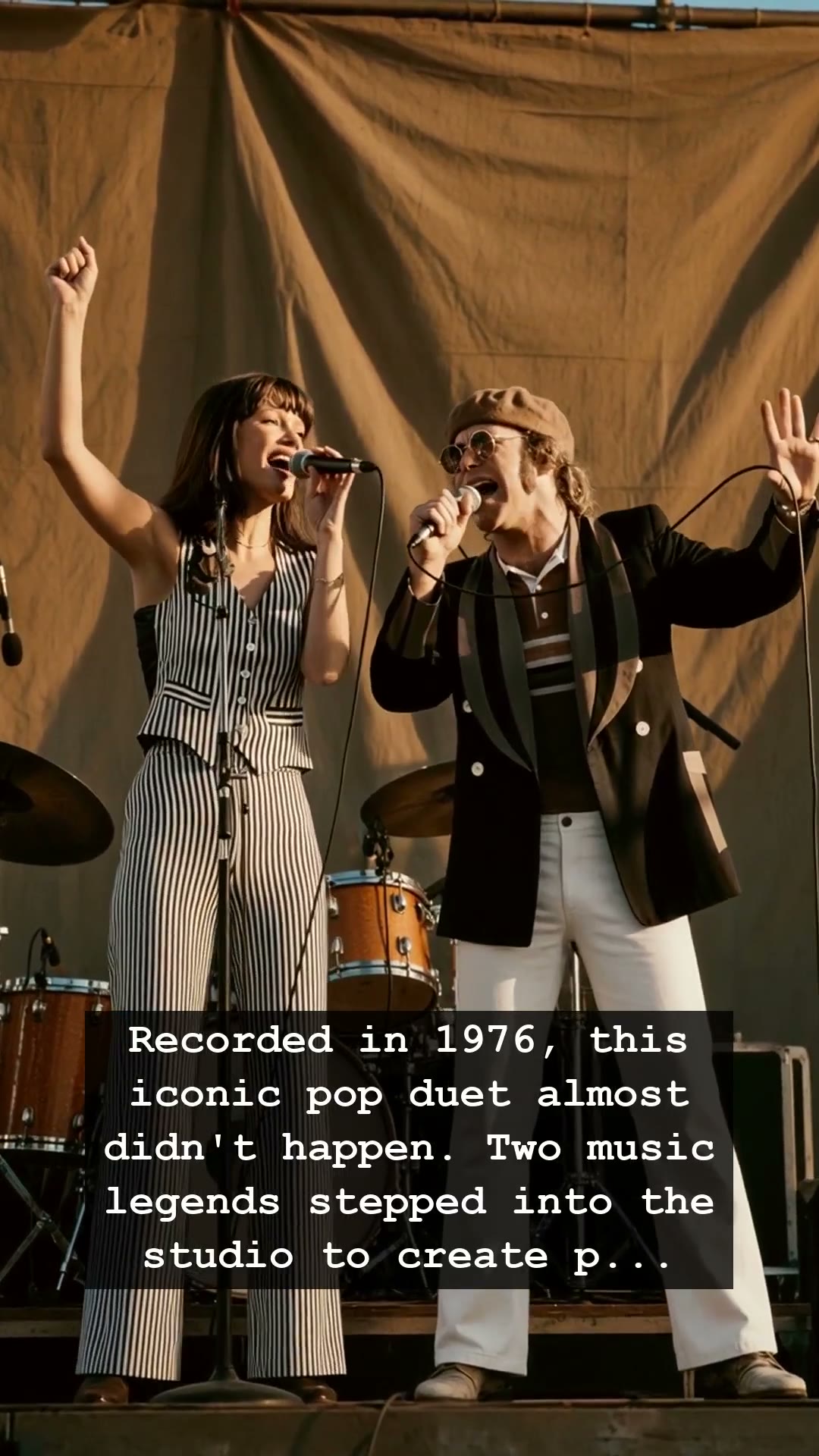
In the sweltering heat of 1976, the world was changing. Disco was beginning its hypnotic takeover of the clubs, and the golden era of singer-songwriters was hitting a fever pitch. Amidst this cultural whirlwind, two legends walked into a studio, unaware that they were about to craft a piece of pure pop alchemy. Elton John and Kiki Dee, two icons of the decade, combined their voices for a song that would define a summer of love, yet few people realize that this chart-topping duet almost never came to pass. It remains one of those rare, lightning-in-a-bottle moments where the stars perfectly aligned despite the chaos of the music industry.
At the time, Elton John was arguably the biggest star on the planet. He was a force of nature, fresh off a string of hits and pushing the boundaries of rock and pop with his flamboyant stage presence and unmistakable piano melodies. Kiki Dee, meanwhile, was a powerhouse vocalist who had struggled to find her footing in the mainstream despite her immense talent. When they stepped up to the microphone to record Don’t Go Breaking My Heart, the chemistry was instantaneous, yet the process was shrouded in professional hurdles. The song was written under the pseudonym Ann Orson and Carte Blanche, a playful nod to the secret nature of the collaboration that only added to the mystery surrounding the record.
Recording at a time when the Jukebox was the heartbeat of every roadside diner and the Walkman was still a futuristic dream, the track felt like a throwback even then. It was a sophisticated, upbeat ode to classic soul duets, a polished gem that defied the grittier trends of the mid-seventies. Behind the scenes, the studio environment was intense. Elton John was juggling global stardom with the crushing pressures of fame, while Kiki Dee had to hold her own against a man who could easily command the entire room with a single chord. The result was not just a song; it was a playful, flirtatious masterpiece that seemed to capture the essence of a decade caught between innocence and indulgence.
Even today, the song retains an undeniable magic that transports listeners back to a world of spinning vinyl and late-night radio requests. It represents a brief, beautiful moment where the heavy drama of the rock world faded away, replaced by pure, infectious joy. The collaboration proved that even in an era often defined by excess, ego, and internal band conflict, music could still be a vessel for genuine connection. It remains a staple of nostalgia, an anthem for those who remember the sound of a needle hitting a record and the simple thrill of a perfect melody.
As we look back at the trajectory of Elton John and his storied career, this duet stands out not just for its commercial success, but for its enduring heart. It is a reminder that the best music often comes from the most unexpected partnerships. Next time you hear those opening notes, take a moment to appreciate the history contained in those three minutes—a testament to the golden age of pop that refuses to be forgotten.