
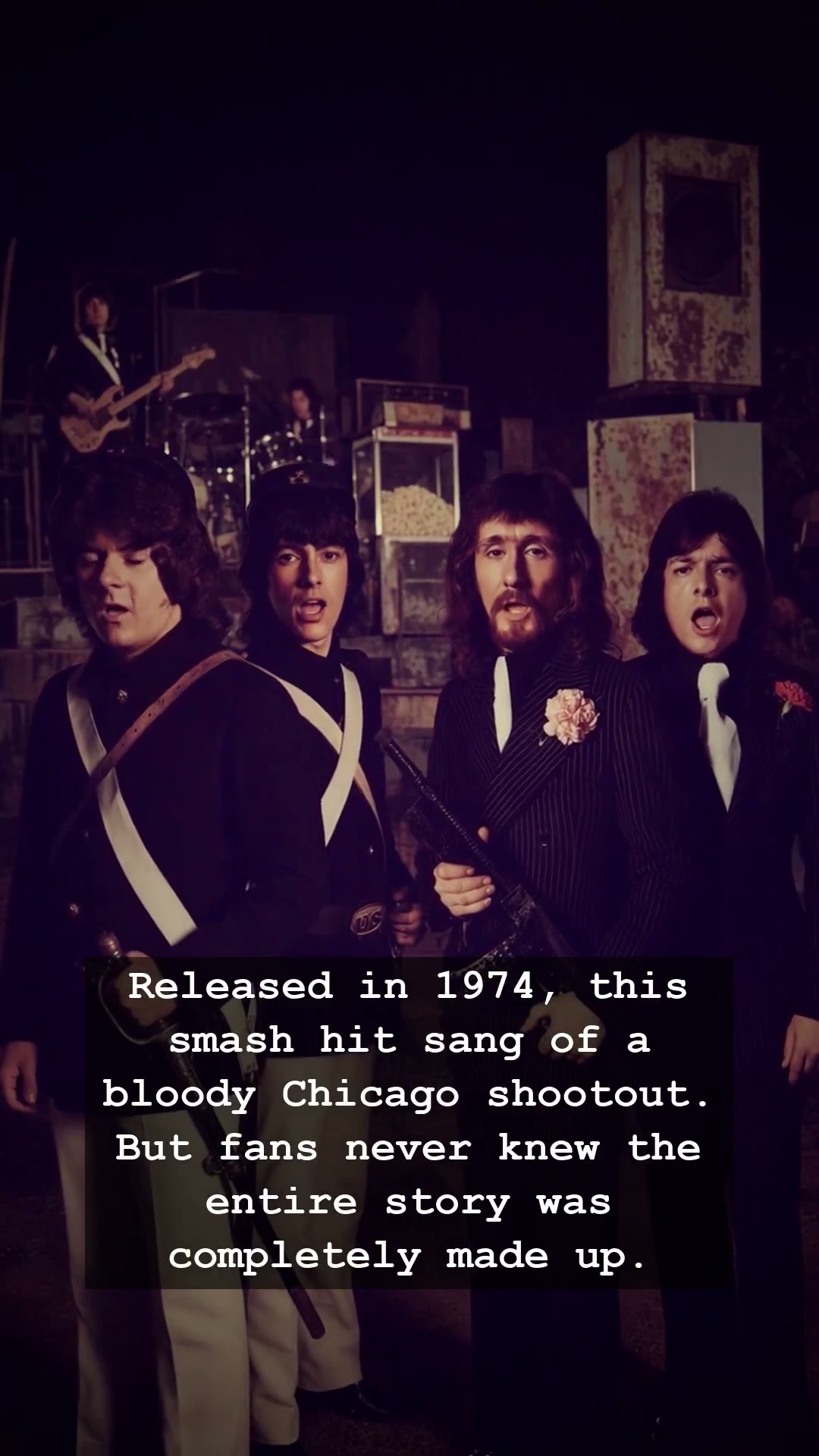
In the summer of 1974, the airwaves were dominated by a haunting, melodic narrative that felt like a gritty scene straight out of a Prohibition-era gangster film. The Night Chicago Died, performed by the British pop group Paper Lace, became an overnight sensation, climbing to the top of the charts with its vivid depiction of a violent shootout between the police and Al Capone’s notorious gang. Listeners across the globe, huddled around their transistor radios or playing the track on their record players, were swept away by the dramatic tale of a soldier’s heartbreak and a city burning in the crossfire. For years, the song was treated as a historical anthem of 1920s chaos, yet there was one staggering detail that most fans never realized: the entire bloody tragedy was a complete fabrication.
Paper Lace, a band hailing from Nottingham, England, had no actual connection to the streets of Chicago. While the song sounded like a weathered piece of American folklore, it was penned by songwriters Mitch Murray and Peter Callander, who had never even visited the Windy City. They capitalized on the intense, cinematic storytelling that defined much of the mid-70s music scene, weaving a fictional tapestry of machine guns, brave officers, and a desperate lover waiting for a phone call that would never come. It is a testament to the power of the era’s pop craftsmanship that a group from the English Midlands could successfully convince the world of an event that never actually took place.
Looking back, it is fascinating to see how Paper Lace captured the collective imagination during the post-Woodstock, pre-disco transition. The music industry of the 1970s was an era where the boundary between reality and theatrical performance was constantly blurring. MTV was still a few years away, meaning the listener’s mind was the only stage available. By tapping into the dark, romanticized mythology of American gang culture, Paper Lace managed to create a sound that felt dangerous, authentic, and undeniably urgent. It was the kind of record that made you pause what you were doing, whether you were folding laundry or driving with the windows rolled down, just to catch the final, dramatic chorus.
Historians eventually cleared the record, noting that there was no such historic shootout, but the revelation did little to dampen the song’s legacy. If anything, the truth adds a layer of surreal charm to the hit. Paper Lace became one-hit wonders in the United States, yet their contribution to the musical landscape remains immortalized in every jukebox and classic rock compilation. It reminds us that music does not always have to be factual to be true; it only needs to evoke a genuine emotion.
Decades later, when the opening notes of The Night Chicago Died crackle over the speakers, we are transported back to a time of analog magic and imaginative storytelling. It stands as a curious artifact of 1974, proving that sometimes, the most captivating stories are the ones crafted purely from thin air. As we revisit these classic tracks, we are reminded that music is often just a beautifully constructed lie that tells us the truth about how we feel.