
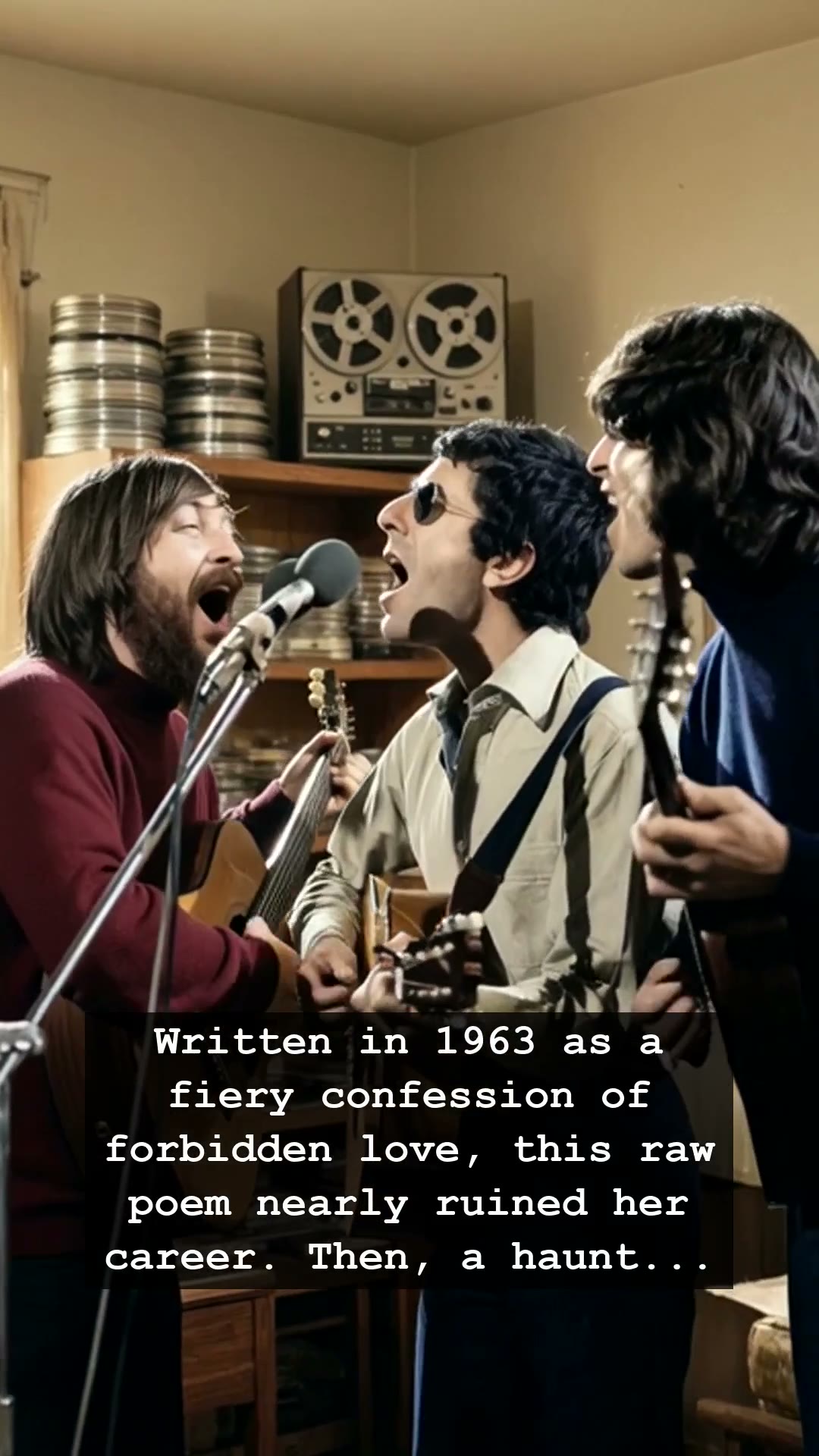
In 1963, a poem written as a desperate, fiery confession of forbidden love threatened to shatter a woman’s reputation and burn her career to the ground. That woman was June Carter, caught in the suffocating gravity of a love she wasn’t supposed to feel. The man she was writing about was already a country music titan, a man whose darkness was as deep as his voice: Johnny Cash. At the time, their love was a secret held in the shadows, a dangerous spark that society, their families, and their own moral compasses demanded they extinguish. Yet, the emotion was too potent to contain, leaking out in lines that spoke of a burning desire that felt like being trapped in a ring of fire.
While the lyrics dripped with the heat of betrayal and desire, it was the sound that immortalized the song. Legend has it that Johnny Cash had a dream—a vision of a haunting mariachi horn arrangement that would lift the track from a simple country ballad into something primal, urgent, and cinematic. When he brought that brassy, ominous sound into the studio, he transformed a private confession into a crossover legend that bypassed the charts and went straight into the American soul. It was the sound of a man standing on the precipice of ruin, choosing his heart over his legacy, and effectively changing the landscape of country music forever.
This was an era defined by the crackle of the Jukebox and the raw, unfiltered truth of the American experience. Johnny Cash and June Carter were not merely performers; they were two souls colliding in the public eye, their relationship often marred by the pressures of fame and the heavy fog of addiction that Johnny struggled to navigate. To look back at the creation of Ring of Fire is to look back at a time when music didn’t just entertain—it bled. The song served as a mirror to their internal turmoil, a sonic testament to the idea that true love is often a trial by fire, a transformative experience that burns away the ego until only the truth remains.
The success of the song acted as a bridge, pulling them closer together through the chaos of their individual lives. While the world danced to the beat of the trumpets, June and Johnny were locked in a slow-motion dance of salvation. Their story remains one of the most compelling narratives in music history because it was never clean or simple. It was messy, human, and devastatingly honest. It reminds us that behind every great hit of the sixties, there was a human being grappling with the consequences of loving too hard.
Today, the legacy of Johnny Cash and June Carter endures not just because of the melody, but because of the vulnerability they dared to expose. When you hear those iconic horns kick in, you aren’t just listening to a radio staple; you are hearing the echo of a secret that could no longer be kept. It is a haunting, beautiful reminder that the most timeless music is often born from the very things we are most afraid to say out loud.