
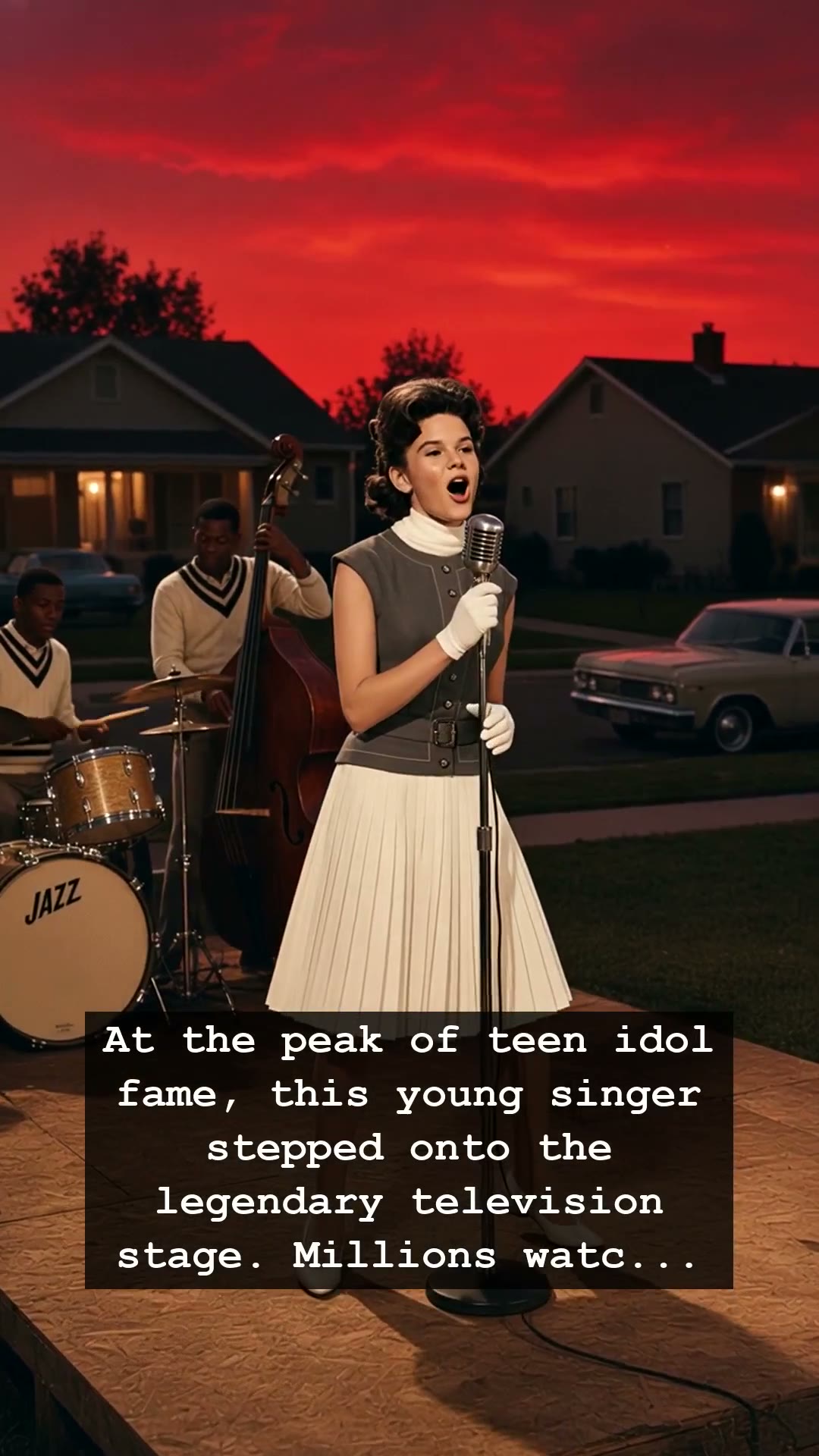
The year was 1963, a time when the crackle of a jukebox was the heartbeat of every soda fountain in America. Millions of families gathered around their glowing television sets, unified by the flickering black-and-white broadcasts of the era. It was during this golden age of innocence and emerging pop culture that a fifteen-year-old girl named Little Peggy March stepped onto a legendary television stage. With her wide-eyed charm and a voice that seemed far too mature for her tender age, she captured the hearts of a nation. As she stood under the hot studio lights, she wasn’t just singing a song; she was defining the quintessential teen idol archetype that would dominate the decade.
Little Peggy March, born Margaret Annemarie Battavio, became a household name overnight. Her hit song I Will Follow Him didn’t just climb the charts; it rocketed to the number one spot on the Billboard Hot 100. At only fifteen, she secured her place in history as the youngest female artist to ever top the charts at the time. This was the era of poodle skirts, high-waisted trousers, and the dawn of the British Invasion, yet Peggy held her ground as a homegrown American sensation. The transition from a local girl with big dreams to an international star happened at a dizzying speed that few could comprehend.
Behind the glamorous curtain of 1960s stardom, however, life was a whirlwind of pressure and relentless schedules. Little Peggy March was thrust into a world of endless tours and television appearances, often caught between the whims of music producers and the realities of being a high school student. The industry back then operated like a well-oiled machine, churning out hits with surgical precision. While audiences saw a polished, smiling teenager, the reality involved navigating a complex entertainment landscape where young talents were often exploited. Yet, her professional poise never faltered, allowing her to weather the sudden storm of fame that had enveloped her young life.
What makes the story of Little Peggy March so enduring is not just her chart-topping success, but the nostalgia it evokes for a simpler time. Her music serves as a sonic time capsule, transporting us back to a world of transistor radios and backyard sock hops. The innocence captured in her performance remains a stark contrast to the gritty, cynical music landscape that would later emerge in the late 1970s and 1980s. When you hear that opening melody today, it carries the weight of a thousand memories—of first dances, summer nights, and the boundless optimism of a generation on the cusp of great change.
Looking back, her legacy is a testament to the fleeting yet permanent nature of pop music. Little Peggy March remains an icon of that brief window when music was transitioning from the rock and roll rebellion of the fifties into the sophisticated soul and pop sounds of the sixties. Whether you were watching her live on television back then or discovering her timeless tracks through a dusty record collection, her influence is undeniable. She reminds us that even in the face of rapid cultural shifts, a beautiful melody and a genuine voice can bridge the gap across generations, keeping the magic of 1963 alive forever.